
Kostenlose Sofortanalyse
Airbnb-Umsatz für jede Adresse oder Stadt anzeigen
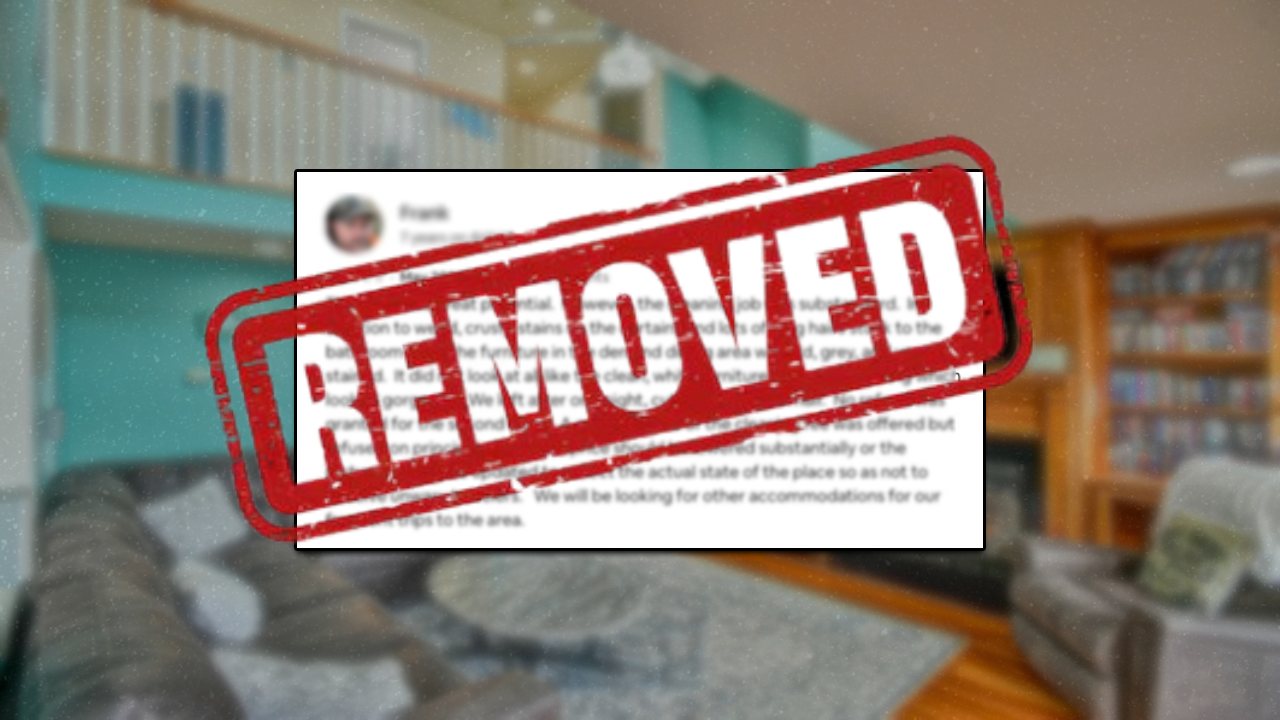
Hosts cannot delete an Airbnb review directly — no matter how unfair it feels. Airbnb only removes a review if it violates the platform's Reviews Policy, and as of 2026, you get exactly two dispute attempts per review before the case closes for good. Here's when a removal request works, how to build one that holds up, and how Airbnb's review system actually works.
Understanding Airbnb's Review System
Reviews drive bookings. They influence your search ranking, your conversion rate, and whether a guest books your place over a competitor's — which is exactly why earning 5-star reviews matters as much as it does. Even the best hosts occasionally get a review that doesn't reflect what actually happened.
How Airbnb's Double-Blind Review System Works
Neither host nor guest can see the other's review until both sides submit or 14 days pass after checkout — whichever comes first. You can't read what a guest wrote about you before leaving your own review, and they can't read yours. This design keeps both reviews honest and removes the incentive to retaliate.
When Airbnb Will Remove a Review
Not every review that feels unfair qualifies for removal. Airbnb's guidelines define specific, limited categories — general dissatisfaction with a stay does not qualify.
Reviews That Violate Content Policies
Content-policy violations are the easiest to get removed because they're the easiest to prove. A review qualifies for removal if it:
- Contains discriminatory language or hate speech
- Includes personal attacks or harassment
- Reveals private information (your full name, exact property address)
- Contains explicit content
- Includes spam or fraudulent claims
Airbnb's automated triage catches many of these before a human reviewer even sees the case. Match your dispute to a specific policy category — vague claims of unfairness get rejected.
Retaliatory Reviews
A retaliatory review happens when a guest leaves negative feedback specifically because you enforced house rules or reported a policy violation. Airbnb treats these as biased and removes them when you prove the connection. Common scenarios:
- A guest damages your property, you request payment, they refuse and leave a bad review.
- A guest smokes in a non-smoking rental, you charge a cleaning fee, they retaliate with a review.
- Guests throw an unauthorized party, you report it, and they respond with a negative review.
You need to prove two things: a real policy violation occurred, and reporting it — or requesting payment for it — is what triggered the review. Understanding how reviews impact your booking rate makes clear why fighting retaliatory feedback is worth the effort.
Irrelevant Content
Reviews about things unrelated to your listing can also qualify for removal. A complaint about a nearby restaurant, a grievance with Airbnb's platform itself, or a review left by a guest who never checked in don't reflect an actual stay. Airbnb removes these because they mislead future guests.
How to Submit an Airbnb Review Removal Request
Following the right process matters. Here's exactly how to do it:
- Submit a review removal request through Airbnb.
- Find the specific review you want removed.
- Select the removal reason that matches the policy violation — be precise.
- Explain clearly how the review violates that specific policy. Don't just say it's unfair.
- Upload supporting evidence: message screenshots, timestamped photos, damage documentation.
- Submit the request.
Keep all guest communication inside Airbnb's messaging system. It creates a timestamped record Airbnb can review directly — instead of relying on your word against the guest's. Clear house rules documented on your listing page also strengthen your case by establishing what guests agreed to before booking.
Building a Case That Gets Reviews Removed
Evidence quality separates successful removal requests from denied ones. For retaliatory-review claims, you need to demonstrate both the violation and the causal link to the review.
Gather and submit:
- Timestamped photos of damage or violations
- Screenshots of relevant message exchanges
- Records of any reimbursement or cleaning-fee requests you submitted
- Your house rules as listed on your property page
- Witness statements, if applicable (neighbor noise complaints, security footage)
A host who submits security-camera footage showing occupancy well over the listed maximum — combined with neighbor noise complaints — has a materially stronger case than one relying on a description written after the fact. Document violations in real time, not retrospectively. Hosts who also invest in listing optimization tend to attract better-matched guests, which reduces the frequency of disputes in the first place.
What Happens After You Submit a Request
Airbnb reviews the request and evidence against its Reviews Policy, then makes one of two decisions: the review stays up, or it's removed and the guest is notified.
As of 2026, hosts get two dispute attempts per review. If your first request is denied, you can resubmit once with updated evidence before the case closes permanently. Many cases now go through automated triage before reaching a human reviewer — so how precisely your evidence maps to a specific policy category matters far more than a general explanation of why the review feels unfair.
Frequently Asked Questions
Can a host remove a bad Airbnb review? No host can remove a review directly. Only Airbnb can remove one, and only if it violates the Reviews Policy — for discrimination, harassment, private information, irrelevant content, or proven retaliation.
How many times can I dispute the same review? Two attempts total. If your first dispute is denied, you can resubmit once with additional evidence before the case closes for good.
Can hosts see a guest's review before leaving their own? No. Reviews are double-blind — neither side sees the other's review until both are submitted or 14 days pass after checkout.
What's the fastest way to get a retaliatory review removed? Document the policy violation before or during the incident — not after. Keep all communication inside Airbnb's messaging system and collect timestamped evidence (photos, security footage, message screenshots) that clearly connects the violation to the review.
Does responding to a bad review help? Yes. A calm, factual public response to a review you can't get removed shows future guests your professionalism. It won't erase the review, but it shapes how prospective guests interpret it. Strong guest communication practices throughout the stay can also prevent the kind of friction that leads to negative feedback in the first place.
The Bottom Line
You can't delete a review you dislike — but you can get a genuinely policy-violating one removed if your evidence is specific and clearly mapped to one of Airbnb's actual removal categories. Focus on documenting incidents as they happen, not on crafting a compelling case afterward. That documentation is what determines whether your two dispute attempts succeed.
Want to understand how your listing's review performance stacks up against local competitors? BNBCalc shows you occupancy rates, revenue benchmarks, and market data for any short-term rental market — so you can make decisions based on numbers, not guesswork.
Airbnb Tax Deduction Calculator
Paying too much in taxes? We have the perfect solution. Simulate an Airbnb home purchase below.
Purchase Price
$450K
Structure Value
70%
Apply Trump's Tax Cut (Bonus Depreciation)
Depreciation
$117,695
Interest
$21,600
Tax
$6,750
Year 1 Deduction
$146,045
Want to claim this deduction? Get a free cost segregation benefit analysis from CSA Partners — no obligation.
Get Full Analysis