Free instant analysis
Reveal Airbnb revenue for any address or city
Quick Summary
Merritt moved into short term rentals because New York's long term tenant rules wore him down, and he's built his management business as full service rather than co-hosting. Then came the Poconos. Five properties under one landlord, an inspection that came back cosmetic, and a two year contract whose only exit was handing it to another approved operator.
Jeremy pegs the growth at more than doubled in the last year, while Merritt puts it at two and a half times over three years. Neither one corrects the other. Whichever you believe, sizing up a market the way he sizes up Syracuse starts with the market data.
Key Points
- The Poconos deal was a package of five properties under one landlord, carrying a monthly nut of about $14,500 to $14,800 before utilities. Merritt says he probably lost 10 to 15K on it.
- Once the Poconos properties went live, the maintenance the inspection never flagged showed up. A hot tub pump that didn't work, a bed caving in, closet doors falling off, and three cleaners fired in a single month.
- His only way out was a contract line allowing assignment to another approved operator. He told the group taking it over they'd likely need another 15K in furnishing and maintenance.
- Merritt estimates Syracuse has maybe 300 active listings, and Jeremy works out that he's about 5% of them.
- For Syracuse event weekends he stacks a 20% premium on top of what PriceLabs is already peaking, and he ran about a 30% boost through the solar eclipse at 100% occupancy.
- One managed property was forecast at around 30K and did "52, I believe" over the year, and that owner went on to buy a Fort Lauderdale property Merritt was preparing to launch.
- He describes a max of 15 properties and 11 right now, plus a virtual assistant two weeks into training who put the team on Slack and moved it from Trello to Asana.
Full Transcript
Listen to the full episode on Apple Podcasts, Spotify, or YouTube.
Jeremy: And we are live with the Short-Term Rental Pros Podcast. I'm here today with my friend Merritt, who flew in this morning from Syracuse, New York to join us on our live in-person podcast set in Dumbo, New York. This is Merritt's second time on the pod and a lot has changed really since the last time we had you on, so I'm excited to get into that.
Merritt, man, thank you so much for coming. And for those who don't know you and your story, let's dive into it.
Merritt: Yeah, awesome. Thanks for having me. I'm glad to be here. So me and Jeremy, we met in Hollywood, California about a year ago, right?
Jeremy: Yeah, at a conference, in person. Great way to meet people, in person.
Merritt: Yeah, that was fun. That was really fun.
So anyways, I've been in real estate for a while. I have a couple of long-term rentals that are no longer long-term rentals, but I decided to dip my toe into the short-term rental space because I was kind of sick of the long-term tenants and problems I was having in that space. And being as we live in New York State, it's kind of a difficult state for landlords. There's a lot of tenant rights and such, and obviously there's ways to do that right, but I kind of wanted to be like, hey, let me pivot and see what happens, a different tenant base. So I transformed one of my duplex units into a short-term rental.
Pretty much everyone I told, you know that saying where people are like, don't tell small minds big dreams? You share a big dream with someone, they'll try to crush it, try to put it down. That happened. I was like, I want to turn this into a short-term rental. Pretty much everyone was like, no dude, that's an urban property, like a very urban area. It's not your typical vacation property in any way. Pretty much no one said it was a good idea. I was like, I'm doing it. I don't care, I'm doing it.
So I kind of threw it together, cheap furniture, and as everyone does with their first unit, they do the best they can. And when the first few months went by, I was pretty much hooked. I was like, this is sweet. From the get go, I was very systems focused. So I built up systems from the very beginning. I started with PriceLabs from day one. I didn't just try to manually do everything. I knew that there was a way that was going to help me automate things.
So anyways, long story short, fast forward to today, that was about two years ago, maybe two and a half. And I decided and realized that not very many people in that market, there wasn't very many good management companies in that market for short-term rentals. There was basically a void there, because a lot of people were asking me about it. So I pivoted and said, hey, listen, I'm going to offer management to other folks. And from there I grew pretty quick. Our max was 15 properties, but mostly organically, and grew up the management side of the business. And then since then I converted my other unit and then bought another property as well.
So yeah, that's kind of my journey. Just trying to build a short-term rental management company and enjoying the ride as I do it.
Jeremy: So tell me, so you got married at what, 19 years old?
Merritt: Yeah, 20.
Jeremy: We're going to go a little personal here.
Merritt: 20, yeah.
Jeremy: I know you, we have a personal relationship. So I want to dive into some.
Merritt: Nope, no problem. Let's do it.
Jeremy: So you got married at 18. 20, sorry.
Merritt: We're going to go down to 18. We're going to 16, right?
Jeremy: Got married at 16.
Merritt: 14.
Jeremy: Okay. So you had your first kid at 12.
So you have four kids right now. To me, I'm 27, I'm engaged. I couldn't even fathom, frankly, at 20 years old, getting married, having my first kid. How old were you when you had your first kid?
Merritt: 21.
Jeremy: Yeah, 21. To me, that was just never anything I thought was in the wheelhouse, but that's your reality.
Merritt: Yeah.
Jeremy: So how has that, I mean, it really seems like you're really coming into your own as an entrepreneur now, and you're 35. So how did having kids at a young age, how did that factor into your personal business and entrepreneurial development?
Merritt: Yeah, that's a great question. I think I've always had an entrepreneurial spirit, but it didn't really blossom until more recently. I've always been kind of the side hustle guy. One of the things I did, and this is before Gary Vee made it cool kind of thing, I would flip stuff. So I always had that kind of hustle and drive, seeing the value of something and arbitrating that value into something else. That's kind of always been within my spirit.
And I'm also a musician and a producer, so that element has a business element there too, right? Of building kind of a network of people that I'm connecting with, other individuals that I'm helping record and produce their music. So I've always had that entrepreneurial spirit, but none of those things ever really took off. It's hard to scale flipping garage sale stuff. It's hard to scale that unless you have a team or whatever.
Jeremy: And trading your time for money.
Merritt: Yeah, exactly. And another way, time intensive, research intensive on top of that. People who do that at scale need warehousing, and there's a lot. But it was more the aspect that I've always had an entrepreneurial spirit, right?
So fast forward to more recently when I decided to build this business. I already had four kids. My youngest was probably two or three. But the main thing for me, and we were talking about this before we jumped on this podcast, is I really want time freedom. And the thing I noticed when I was doing short-term rentals is there's a lot more leverage in your time exchange for money, right? The amount of time you put in versus the amount of money.
And part of that was because of the systems. From day one, I was automating guest messages, which is something that most people who have one unit aren't thinking that way. They're dropping off banana bread and keys to their first guests. I was, from day one, wanting to automate it as much as possible. As a matter of fact, my very first reel on the topic was on how to automate your time when I had one unit.
So what I realized very quickly is this industry is extremely technology heavy. Airbnb is a technology platform. And I think as a result, all of these sub-companies that help support hosts have arisen more than other businesses, because in the production business, everything is still very manual. It's hard to automate things. So when I realized that, I was like, geez, the amount of time in exchange for the amount of money, it makes sense to pour into this.
And so the reason I'm mentioning time in relation to your kid question is I want time freedom, right? I don't want another job. I don't want another 40, 45, 50 hour a week or more job. I actually want to no longer exchange time for money. So that's kind of why I'm leaning into this business model in general, is that it's just really easy to automate and build systems so that I can earn my time freedom back.
Jeremy: And I think, so what was it, three weeks ago, we were on one of our group calls and my virtual assistant, one of my virtual assistants, led the call and she shared how we met, how she got onboarded, the systems we have in place. And then you took action from that call and you had your first virtual assistant, what, like two days later? And now.
Merritt: Maybe not that soon, but yeah.
Jeremy: Yeah, or I don't know, really quickly thereafter. And you were telling me on the way here that they're crushing it. And have they freed up your time more or less? And yeah, tell me, how has that been, adding that additional team member to your.
Merritt: Yeah, absolutely. So I've been talking with a bunch of different people. I post a lot online, I have a social media presence, so you get daily, hey, I'm a VA. I'm sure you get that too, right? But there's a couple I've been kind of keeping in touch with, because I knew that that moment was coming, where that would be a helpful addition. But I think seeing it firsthand, and actually being on the phone and talking and asking questions.
Jeremy: You were engaged.
Merritt: Yeah, no, exactly. So it was very much a catalyst moment, in the fact that I kept telling myself it's too early, too early, right?
Jeremy: And I did that. I did that a couple of years ago.
Merritt: Yeah, I mean, I only have 11 properties right now, right? So I'm still pretty small.
But needless to say, I actually already did have an amazing kind of accountant who lives in the Philippines. That was a referral, and on a monthly basis he'll do my books and he does a great job. So actually I went to him, I said, hey, listen, do you know anybody who's kind of been in this space? I want someone who has some experience, so I'm not training them from the ground up.
And he recommended Jah, and we had a call. I loved mostly her personality, her character. I could tell she was very much a go getter. I asked a lot of questions about problem solving, problem solving when no one's there to help you. I try to see level of initiative, basically. Because to me, I want someone who's actually a part of my team. I don't want someone who's just a checkbox person. I want someone who sees this will improve the business.
Jeremy: It's like there's a sense of ownership.
Merritt: Exactly, right. So I loved that from the get go and the interview. And so anyways, I brought her on. This is actually the second week. This is week two. So to your question, it hasn't freed up time yet, because we're still in the training mode.
Jeremy: So you're onboarding.
Merritt: Yeah. So we've done one full training and we've done a lot of back and forth. I told her in the beginning, that first few months, ask me as many questions as you want. There's no dumb question, until you get the standard, until you understand kind of our philosophy, our approach.
But needless to say, like you said, she's absolutely crushed it, which is great. I hope she watches this. She's just taken an amazing initiative. We've implemented a couple of new software solutions. We implemented Slack and that has been incredible. We're transitioning from Trello to Asana, which she did all the research to figure out which one was better for us. And she's already kind of transitioning stuff from Trello to Asana. It's been really cool to see her initiative, and she's really putting so much effort and energy into it. And then on top of that, the basic stuff, customer service, guest relations, she's just been super quick, which is great.
So I'll give you an example. And this is even the next level, working with vendors. We had a busted window on one of our back doors at a unit. Someone had broken in, nothing was stolen, which was very bizarre, because it was broken right above the lock. It looks like someone broke it to try to get in, but the huge TV was still there, everything. But anyways, she noticed that. She called one of our preferred vendors, because she made the preferred vendor list, or improved the list we had. And she called them, they were out there the next moment, they sent her the invoice, they temporarily put plywood on it until they can come back and fix it. She arranged the entire thing. And I was just like.
Jeremy: And you didn't even know about it until after?
Merritt: Well, I approved it, but it was very much, because that was her first vendor interaction, her first maintenance interaction. And I very much gave her my blessing. You do it. I trust this guy. I've used them before.
Jeremy: And so that would have been something you would have had to do yourself.
Merritt: Yeah. And then I have another person on my team.
Jeremy: Awesome.
Merritt: Who's awesome as well. Her name is Brenda. She manages kind of our local properties in Syracuse. We have some that are outside that she doesn't manage, and she actually doesn't manage my own properties currently, but she also does a lot of that too. So a lot of credit goes to that as well.
But it was just cool to see John jump in and just take care of business. And it gave me a lot of hope for the future and a lot of hope for the summer. And what's great is, I really enjoy the sales and I really enjoy the customer onboarding. And I also enjoy the marketing, because I do the social media stuff. So now my goal is, hey, if more and more of the operations are shifted over to my team, then I can really focus in on the sales and the marketing and the customer facing stuff, I feel like I can grow a lot quicker. That was the big picture there. I feel like I could grow at a much quicker speed if I'm not constantly being dragged into operations on a regular basis.
Jeremy: You need to be doing what is the highest and best use of your time. And I think that story you just shared rings for me. A couple of weeks ago I was at a wedding in Panama City Beach, Florida, and I had no cell phone service. It was really bad. It was Memorial Day weekend. Literally could not go on my phone, couldn't check messages if I even wanted to.
And got back to the hotel, or sorry, actually stayed at Nick and Allie's house. They're part of our program. They let me crash at one of their, or actually they have a triplex and they rent out two of the units and then they live in one of them.
Merritt: Oh, cool.
Jeremy: Yeah, they house hack it. But they were gone for the weekend, so I crashed there, and in return I got them a big Connect Four to pimp out their backyard. Totally random.
But my point being is the next day I woke up and I checked my phone, and that's usually kind of the first thing I do in the morning, is just a check to make sure everything's, you know, there's no issues. And yesterday we had, we'd had a problem. The stove at one of our lake houses had broke. Our virtual team had found that there was one in stock. So they asked the guest, can you send us a picture? Can you tell us the size or whatever? Actually, I guess we have that on file. But effectively we ordered a stove, had our local team pick up the stove and install it that night.
I woke up to a message from the guest being like, Jeremy, the way you handled this situation shows a lot about you and your character. Because I'm Jeremy, who's on the account. It wasn't me. They didn't know that it was actually my team in the Philippines. But that being said, that was a wow, like, I'm happy moment. Today I woke up and I had a couple of really good booking requests, thousands and thousands of dollars. That doesn't make me happy. That's kind of frankly par for course. What makes me happy is there was a problem, and that problem was solved, and I wasn't involved in it.
Merritt: And I like that, to have the trust that your team is going to represent you the way you want to, you know what I mean? You have a certain standard, right? And you want that standard to be implemented across all your systems. And you also want people who work with you and work for you to be representatives of that standard, whether or not you can access them, you know what I mean? Whether or not you're overseeing them at that very moment. And I totally agree with that. I want that standard to be there across the board, right?
Jeremy: That's awesome. That's so cool. And I think that what that really comes into is caring. So how do you incentivize caring? And there's different ways to do that. You can set KPIs, metrics, but it's really culture, frankly. And I think one big part of that is showing that you care for the people you work with.
Kat, the one who led our group call, she had a situation a few months ago. Her sister was in the hospital, had a pretty hefty hospital bill. And she said, hey, I don't really have the means to cover this. And I asked what it was, and I paid for it. And showed, hey, you've been stepping up, you've been doing a great job. I care about you. And this business is an extension of me. If you care about me, we need to be thinking every day, how can we make things better?
So let's break it back down. So for you, you've always been doing a bunch of side hustles and different things. You decided to take the plunge into real estate, and then namely, then thereafter, short-term rentals about two years ago. We met last April. So tell me, I'm curious, what made you go out to California to network with different people? And then, yeah, I want to get into kind of our journey. And then the last year, I mean, I've seen you grow so much. I've seen you've had some ups and downs. I've had some ups and downs. So I want to get into those. But first, yeah, why'd you go to California? How'd we meet? And let's go from there.
Merritt: Yeah. So I guess at that time, my real estate circle and my entrepreneurial circle was quite small. And I know that the people you're around influence your growth probably more than anything, right? Probably maybe even more than capital. The people you're around, the people you spend your time with.
And even though I've been in real estate a long time, I think my growth was kind of slowed by the fact that I wasn't in those circles, right? I went through a bunch of years where I didn't do anything new with real estate. I own rentals and stuff, but I didn't buy any more properties. I didn't do anything.
So I came to a realization that I needed to surround myself with people doing much bigger things than me, right? I needed to be in a room where I was the smallest person. Because even back home and in my regular groups, I was maybe one of the only persons that had real estate. So if you're in that space, it's like, wow, how'd you do that? It's impressive, it's huge, it's status. I want to be in rooms with people who own 500 million of real estate. So that's my thing. I realized I needed to be in networks and in groups where I was just going to be influenced to be more hungry, but also in other ways to have other kind of connections and networks.
So I saw the conference online somewhere and I was like, this would be a great starting point, really. I made a goal for myself to go to two events in a year, and I booked it. And it was actually my first big business expense too, which was kind of cool. It was my first, oh, this is on the business card.
But yeah, so I wanted to be in bigger circles. I actually had known, I knew one person that lived in LA.
Jeremy: You were sitting with her at lunch.
Merritt: Yes, exactly. And actually when I knew the conference was there, right where she lived, I was like, oh, by the way, you're in real estate too, you want to go to this conference? And she ended up booking the ticket to go as well. But it was nice. She was the only person I knew. I actually knew of you from my other buddy. Connor showed me your Instagram page, because he knew I was getting into short-term rentals. So what's funny is how that's kind of funny, because I'm thinking, hey, he looks familiar, when you walked by.
Jeremy: There's no way he's this tall in real life.
Merritt: Yeah, I actually did think that.
Jeremy: Everybody. I was like, oh, great story of my life.
Merritt: You need to change your camera angles, man.
Jeremy: I know.
Hey Sydney. Our producer today is Sydney, shout out Sydney. Sydney's doing great. But yeah, Sydney is going to be with us this summer. She just graduated high school. She's going to University of Michigan.
Merritt: Nice.
Jeremy: In the fall. But yeah, back to, sorry, Connor. Yeah, you said going to the conference, you were like, is this Jeremy?
Merritt: Yeah. Online he appears like he's four foot tall, so there's no way he's six foot three.
It's funny too, because then you would show up with Patrick.
Jeremy: Patrick Swiatek, who's been on the podcast a few times as well.
Merritt: Yeah. And I don't think I had, I think I had met, I think I was Facebook friends with Patrick.
Jeremy: He's a big Facebook guy.
Merritt: Yeah, but I didn't recognize him as much as I recognize you. But anyways, that was my whole purpose, is to get in bigger circles, right, and to meet people. And it was kind of crazy that I met you, right, because it was what, a 300, 400-person event or something. And I went hoping to learn, but I went hoping to network, but I didn't think it'd be such a meaningful connection, right, because we made a pretty meaningful connection there. Then we hung out, and then I ended up joining your mastermind group.
Jeremy: Well, it was your birthday, too. So I mean, I roll up to lunch with Patrick. I think it was like an Asian spot. Not important. And, yo, yo, Jeremy, what's up?
Merritt: Oh yeah, we had sushi, yeah.
Jeremy: Yeah, we had sushi. We got talking, and then you tell us it's your birthday that day. And my cousin, I have cousins who live in Los Angeles, and they're in the nightclub, like hospitality business, but nightclub business, effectively. And they messaged me that day, hey, if you want to go to the club, we can, whatever, set it up for you. And I honestly had no interest.
Jeremy: I'm engaged. I wasn't engaged at that time, but earlier life Jeremy, that would have been super excited for that. But when Merritt's like, hey, it's my birthday, I don't know, I'm thinking about doing something tonight, and I go, well, I guess we could, there is a club down the street that we can just have automatic entry towards, and free drinks and stuff.
I thought for a second, do I keep this information to myself, or do I share it with Merritt? And I go, ah, you know what, all right, we're ripping it tonight. So we hit the club. Nothing crazy.
Merritt: Yeah, it was funny. I've literally never been to a club.
Jeremy: Yeah, that's what you said. You told me, like, oh, I've never been to a club, and all that.
Merritt: Well, I mean, it's like what you said earlier, I got married at 20, right? I didn't have that college life, go out and party.
Jeremy: And I had enough of that life. I mean, what, we stayed all of 30 minutes, maybe 40 minutes?
Merritt: Yeah. We were there for just a short time, but yeah, that was.
Jeremy: We had a good hour, maybe.
Merritt: Yeah, that was a fun outing. But yeah, it was so cool. It was cool to get to hang with you and Blake, and get to meet you guys.
Jeremy: Yeah, and then we went back to the hotel. We hung out with Rob Bill at the bar.
Merritt: Yeah. We hung out till like 1 a.m. with Rob and his team, which is funny, because I was still on New York time, so it was like 3 a.m. I was, gotta stay awake.
But that's really why I went to that, is I wanted to network and, look at us here today, right? I would never have met you if I hadn't just been like, hey, I'm doing it. I'm booking a flight. I'm booking a ticket. I'm going to go out to this conference, and I'm going to try to surround myself with people who are doing big things. And that conference isn't even a short-term rental conference, right? It's just a real estate entrepreneurship general wealth con.
Jeremy: Do definitely recommend to go to a short-term rental conference over a conference like that.
Merritt: Yeah, and that's probably what I should have done.
Jeremy: Short-term rental conferences, I just realized, the people at short-term rental conferences, short-term rental world is just awesome people. Think about it, it's hospitality. Whereas, no shade to it, but I don't even know what that conference's topics were. More like real estate, social media.
Merritt: Business, yeah, social media, yeah.
Jeremy: Slash home flipping.
Merritt: Yeah.
Jeremy: It just was not the same to me, in my opinion. The energy at short-term rental events, seminars, conferences, masterminds are just bar none. I've attended plenty of conferences for different subject matter, and nothing compares.
Merritt: Yeah, and believe it or not, I haven't even been to a short-term rental focused conference yet, so that's on the bucket list.
Jeremy: Well, you're coming July 20th. It's more of a mastermind, but essentially a small, intimate conference. Maybe you'll come to San Diego with me as well. We'll talk about that one later.
But all right, in the last year or so, yeah, we hung out, had a fun time in Los Angeles, connected, started working together, and then you've had, frankly, you've had a lot of great ups in the last year. I think we were benchmarking your revenue a couple weeks ago, and I think just from a pure volume standpoint, you've more than doubled in the last year. And this summer, you're going to do some pretty.
Merritt: Yeah, it's been like two and a half, so over the three years, it's been like two and a half times growth.
Jeremy: Like each year?
Merritt: Yeah, which is pretty cool.
Jeremy: Yeah, and obviously this is June, July, you get to the point where you're pushing some pretty serious volume, like probably towards six figures.
Merritt: Yeah.
Jeremy: Right, like six figures monthly, or if you're not hitting it, close to it.
Merritt: We might, yeah.
Jeremy: Yeah, so.
Merritt: It was 48 in May.
Jeremy: Which I would assume June, July are going to be the best for you. Maybe we can do a little bit of benchmarking after this. But tell us about, yeah, tell us about the ups, but then also let's get into some of the downs.
Merritt: Yeah, absolutely. So I took on an arbitrage deal in the Poconos. It went south and went pretty poorly.
Jeremy: It wasn't just a deal, it was like five properties?
Merritt: Yeah, so it was a package of five properties with one landlord, and I negotiated rents. I got rents down on a couple of them, the ones I was more concerned about in terms of numbers-wise, when we were doing our projections. And anyways, I got into this deal, and they pretty much just needed a lot more than I anticipated.
So I'm sure your listeners might be familiar with arbitrage, but arbitrage is essentially you rent the property, and then you sublease it as a short-term rental. And so there was five of them. The monthly nut was like $14,500, $14,800, or something like that, a month.
Jeremy: Like $170,000, $180,000 a year in rent.
Merritt: Before utilities.
Jeremy: Yeah, so about a couple hundred thousand in annual expenses.
Merritt: Yeah, exactly. So it was definitely a huge risk, but I feel like I underwrote it pretty conservatively, and you helped me underwrite it a little bit as well. And I tried to get some other outside input.
But the real problem with this deal was, it was a real lipstick on a pig kind of situation with the properties themselves. So there was a lot of uncovered maintenance issues, right? So when I did my initial inspection walkthrough, and I even had a maintenance person doing inspection as well, the report was very minimal. It was very cosmetic things, furniture, wear, stuff that I was like, yeah, I'm going to replace some of the furniture.
But as we started to go live and operate, it turned out, oh, this hot tub pump doesn't work, this bed is caving in, these closet doors fall off constantly. So it was these things that were outside of my purview in terms of maintenance costs were just failing. And whenever systems fail in short-term rentals, right, you have unhappy guests, and then it's a downward spiral from there. So unhappy guests lead to poor reviews, lead to refund demands.
And so yeah, it just went really poorly. I lost quite a bit of money. I probably lost like 10 to 15K on that deal. I was really fortunate to be able to exit that deal, because the contract was two years. And it was a pretty binding contract. There was only one kind of line in the contract that was an out, which was assigning the contract to another approved operator. That was pretty much my only out.
I tried to negotiate with the landlord. I shared a four or five page list of all the issues. And he was very much just like, no, we're going with the contract. He was very much kind of tough about it.
And so anyways, I started marketing it. I was really transparent with folks who were checking it out. I was like, listen, I didn't have the kind of money I needed going into this. You're probably going to need another 15K in furnishing and maintenance to get these places up and going. So I was really transparent with them, because I didn't want to screw anyone else over. So I had a group take it over, which I got really lucky there. And I was able to walk away, licking my wounds, and kind of refocus myself back onto the management model. I think the arbitrage model can work great, but I kind of wanted to refocus myself in on management. So I walked away, luckily.
And let's see, that was like from July till end of November last year. So it felt like the longest.
Jeremy: Yeah, I remember it was the end of the summer.
Merritt: And yeah, it was the longest few months of my life. I didn't sleep for the first time. I knew what anxious insomnia felt like for the first time, because rents were coming up and I didn't have the money. And so yeah, I lost sleep. I was a mess. That was a real low, but it was one of those learning moments, right? If you don't go through the lows as a business, I feel like you're not a full fledged business yet.
Jeremy: That's part of it. That's part of the entrepreneurial journey. Honestly, frankly, anxiousness is part of it. That anxiety kind of fuels you. It fuels me. When I'm dealing with something, staying up at night worried about it makes me think through how to deal with it. The problems come from the people who just ignore the issues, and there's neither here nor there. But people have a tendency when times get bad to let bad habits come to light, whether that be drug consumption, sleeping all day. But you have to be able to take that suffering and make it, cliche, but make you stronger for it.
And I think you're definitely stronger. And again, we've only, I guess, known each other at this point 15 months, but I feel like I've really seen you grow. Obviously I've seen your business grow, but I just think your demeanor, your leadership, your technical capabilities have improved.
But yeah, I want to just give my thoughts on, because I personally, I do arbitrage. I rent and re-rent. I also do property management. I also buy houses. I've syndicated deals and I do glamping. And I think it's important for everybody to understand every strategy, how it works. However, I make it very clear that there are, like property management, there really is no risk. The only risk is that you ruin your own time. You spend a lot of time onboarding a homeowner, selling them, whatnot. You get the listing up. And then, I don't know, two weeks later, you're just like, all right, we're going to cut, for whatever reason. Maybe it's maintenance issues with the property. Maybe it's just a high maintenance homeowner. Hey, this isn't going to work out. The only thing you've really lost there is your time. Maybe you paid for photos. Some people like to pay for photos so that they own the photos. It's a little bit technical details.
Merritt: Yeah, I mean, you still have some litigation risk, but other than that, yeah.
Jeremy: Sure, but really very little risk. You're not putting a month's rent down, plus security deposit, plus furnishing the place. With arbitrage, there definitely is risk. I would even argue that there is more risk with arbitrage than buying a house.
Merritt: Because the landlord could take it out from under you.
Jeremy: Exactly. The reason being is like, all right, let's say I bought a house. And here's an example. South Florida. I bought a house with a pool. I put in a pool heat pump. So now there's a heated pool. Every house in South Florida pretty much needs a heated pool to compete. That's not an optional thing nowadays. You need that. In some markets, you don't need it. There you do.
If I'm renting the house from a landlord and that heat system goes down, guests are coming, they're p*ssed. Hey, you said this was a heated pool. We want a refund. We only booked it because it was a heated pool. I'm not going to go out of my pocket and spend $6,000 to buy a new, and maybe that's not even the issue. Maybe there's something under, I don't know, there's some other issue. I'm not going to go out of my pocket and do that. It's the landlord. The landlord has to do it.
Merritt: But it reflects on you, on your account.
Jeremy: Exactly, exactly. And maybe they're slow doing it. They're like, oh, we're going to do it. We have something we ordered. It's three months from now. Hey, I have $45,000 worth of bookings in the next three months. I don't, come on now.
Merritt: Yeah, exactly. Well, that's similar to the position I was in, right? I had several hot tub parts fail, not heat up, and come to find out one of these hot tubs had a slow leak in it, right? So not only was the water slowly draining, as soon as the water gets down below a jet, a lot of hot tubs will blow that water out, right? It gets down below top jet, blow the water out. So that happened several times. On top of that, since it was slowly leaking, it was leading to some dry rot at the base of the thing.
So how could I have known that? How could I have crawled under a hot tub and seen that it was slowly leaking? But again, it was arbitrage. So it's not like, if that was my property, it'd be like, we need a new hot tub. You know what I mean? I'm just going to drop the money right now and get a brand new hot tub. I'm not going to do this for this property, right?
And yeah, so I absolutely agree. There's definitely a lot of risk there. And I feel like sometimes the arbitrage crowd paints it as no risk, but there's definitely risk.
Jeremy: Yeah, and there's also risk. I would say, talking about the arbitrage crowd, I think a lot of the online operators say the quickest way to wealth is renting 20 apartments right next to each other.
Merritt: Yeah, yeah, yeah.
Jeremy: And that is how you do volume.
Merritt: For sure.
Jeremy: And you can have all your systems in one place.
Merritt: Exactly. Economies of scale.
Jeremy: However, the issue with that model is, I mean, first of all, in the last few years, they have built so many apartments. So there's plenty of opportunity to get into it. There's all these apartments that are just vacant. These stick built, these four floor apartment buildings. I'm from North Carolina. They all look the exact same across the Sunbelt, different places. So you can get them. You can probably, you have no experience in this game, there are a lot of multifamily owners who need people to come in.
However, the issue is, let's say I underwrite a deal and I find, oh, there's a comp across the street for a one bedroom apartment that's pulling in 45 grand a year. I come in, I do 20. Someone else comes to the building right next door, that's again just opened, needs tenants, is going to be open to the arbitrage model. They do 60. I underwrote with the unit across the street in mind. Now I've just added 20 to this market and someone next door has just added 60.
And the thing is, with small apartments, there's nothing you can really do to outperform. Sure, you can do some accent walls and you can do nicer furniture and take better photos, but really, you can't really improve the, there's a lower ceiling. You can't really go past that ceiling. With houses, especially, again, I focus on bigger properties with outdoor spaces, that being really the, I'm not going to do a house that does not have some sort of yard.
Merritt: I like fenced in yards.
Jeremy: Yes, exactly. With that, you can improve it. And it's not that much money. Even if you arbitrage it, put a fire pit in there, put some string lights over, that is a differentiator. And someone can't go and do 30 houses next door that all have fenced in backyards, like in a city.
So that's, again, we're just talking about arbitrage as a whole. There are risks. The risk is if you do a commoditized game, you're going to get commoditized results. It's just the rule of supply and demand is going to dictate your success. I want to be able to put brute force in. If a house is not doing as well as I want it to, I want to be able to come in there, look around it and say, how can I make this place nicer? What shots can I take? Which literally can be adding string lights in the right places, is going to make me beat out the competition.
So that being one risk. Again, if you play a commoditized game, you're going to get commoditized results. The second being, like you touched on, landlord associated risks.
Merritt: One of my main arbitrage partners, I have most of my arbitrage properties with one landlord. And I've been doing it with him for multiple years. And we've definitely had some times where, I'll give an example. A couple of weeks ago, a guest at one of our properties, one of the houses, said, hey, all the outlets aren't working upstairs. And this was a big reservation. This reservation almost covered our rent for the month. And it was not the best month, so definitely wanted that reservation. Didn't want to have to refund him and get him a hotel.
I reach out, the landlord himself is in Europe. I reach out to his business partner. My team reached out to the landlord. He's in Europe. I know his business partner. So I call his business partner and I say, hey, we need to get someone out there. He's like, all right, I might have somebody, but if you can find someone quicker, whatever, do your thing. So that's what I do. Get somebody out there that afternoon, that evening. They take care of the issue. At least we think they take care of the issue. They change the breaker out. The guest says everything's fine. They stay. They're thankful the way we dealt with it.
The bill was, it was a rush fee. So I think it was like $430 for fixing it. I sent it to the landlord. He's like, wait, I would not have paid $430. I would have paid like $200 or $150. And I'm like, well, you didn't. You guys totally could have got someone there that evening. And he was like, well, we would have got someone there the next morning. Well, I'm like, well, I need someone there that evening. They're just going to go to a hotel. You can't just have half the house.
Jeremy: Outlets not working.
Merritt: Yeah, exactly. They're just going to get fully refunded and leave. And we don't have that choice.
Jeremy: So you know a little bit. Did you end up negotiating with him, or what? He covered half the bill or something like that?
Merritt: Yeah. So that's exactly it. I was like, all right, let's cover it. But you have to understand, and frankly, we pay this landlord five-figure monthly rent. We've been doing business for years. Over time, I've paid probably a couple hundred thousand dollars in rent. It's in his best interest for us to stay and be successful. And it's in our best interest for issues to be taken care of quickly. So we have that candid conversation, and we move on. But that's a part of the game.
Jeremy: And even property management, the homeowners are partners. They're clients, but they're also partners. It's the same thing with arbitrage. However, again, that's just something you need to know. And it's hard to know ahead of time. You talk to them, oh yeah, sure, we're going to be great, we're going to take care of things. You're not really going to know.
Merritt: You don't know until you put the feet to the fire.
Jeremy: Yeah, you don't really know. And I will say that is why I do. I think there are times when arbitrage makes a ton of sense. And then maybe you have, for whatever reason, the numbers are going to be a lot better than if you just manage it. Maybe the long-term rents for a specific property are like $1,400 when you can pull in $5,000 a month. Then you know the spread is there.
Merritt: Yeah, you know the spread is there, whatever. The risk is worth taking. But majority of the time, I mean, 2X was too hopeful for these properties, right? If it was maybe one, it'd be different.
Jeremy: One point.
Merritt: Yeah, no, I guess I'm thinking the other way around. If it was like 3X.
Jeremy: Yeah, yeah.
Merritt: Versus two.
Jeremy: It was like a potential absolute home run.
Merritt: Yeah.
Jeremy: Versus like a double.
Merritt: It was a little slim on the front end. I was underwriting it as a 2X, right? The revenues would be 2X the rent. Maybe two and a half. I can't remember exactly, but.
Another factor, too, is it was a new market. Not only was it arbitrage, but it was arbitrage in a new market. And that market is tough. I'm sure some of your listeners are in the Poconos. Like vendors, I fired three cleaners in a month. Like a single month, I fired three cleaners.
Jeremy: We have people on the podcast who have 50 properties in the Poconos.
Merritt: Yeah.
Jeremy: They've told me that. They're like, what are your thoughts? Or like the Poconos can be a.
Merritt: Oh man, it was so tough. I mean, maintenance man. I think because it's a traditional vacation market, but I had so many people try to pull one over on me and charge me an insane amount for some stupid thing. Yeah, it was just a tough, it was also a new market that was tough, right? Granted, there are a lot of people succeeding and doing really well in the Poconos.
Jeremy: Yeah, totally.
Merritt: But it was another factor that kind of blindsided me of, now I gotta deal with these new factors, right?
Jeremy: So new market, so having to build a new team, new systems, new operations. So based off the lessons you have learned there, what have you done? You've been more hyper-focused on your local area. I know you just added one in Florida as well.
Merritt: It's not launched yet, but yeah. So that is exactly what I did. So first of all, I took a breath after I closed that out. So I was like, I'm just going to take a minute to not do too much. Make sure my operation's going well.
Jeremy: Pay back the loan.
Merritt: Pay back the loan, and also, in a lot of ways, I was so focused on putting out that fire that I wanted to reshift my attention to my properties that were succeeding on the management side.
So yeah, I took a breath, first of all. I took a rest, which I think everyone needs. And then I doubled down on a couple of things. I doubled down on my focus on property management. So I don't actually do co-hosting. I mean, I'll use that word sometimes because people know that word, but I actually have never done co-hosting. I'm kind of like, the full service is my pitch. To me, that's the value, right? An investor who wants to do nothing. They want the short-term rental. They don't want to do the operation. So that's kind of my pitch and my angle, is the full service. We'll take care of everything. And we take care of everything in-house. We even collect all the money, everything.
So I kind of doubled down on that model and refocused in on that. And then I focused in on improving our strategies for the properties we already had. So our revenue, I'll say our revenue management.
Jeremy: Yeah, you took those lessons very, very religiously too. I could tell the ones Merritt's like locked in on, like some, maybe you're paying a little bit of less attention to, but then there's certain ones where you're like, I know I need to become a pricing pro.
Merritt: Yep, exactly. I kind of doubled down on that too, to basically improve our revenues and focus in on that.
Jeremy: Get longer bookings.
Merritt: Yep. And the reason I focused on that was kind of twofold. A, most people in business, most entrepreneurs are kind of squirrel brained, right? And I'm very much that way too, shiny object syndrome. So it's really easy to be like, ooh, this new venture and that new venture, and add this new software, always new everything.
Merritt: We were obsessed with newness, right? When a lot of the money that we leave on the table is just improving what we already have, right? Whether it's improving my own actual product. I'm about to do a redesign at my second property, which looks like a 10 year old designed it, right? Because it was my second property. And we're about to spruce it up, go really, we're actually gonna go maximalist with it. We're gonna go super bold, crazy colors. I literally told the designer, the more wacko this is, the better. And I'll tell you right now, it's gonna be the only one like that in Syracuse. It will be the only property like that in Syracuse.
Jeremy: And I bet it will do well.
Merritt: Yeah, exactly.
Jeremy: Are they going all orange?
Merritt: We haven't really gotten to the design yet.
Jeremy: Syracuse Orange is a university.
Merritt: Yeah, the college.
Jeremy: Shout out Jim Boeheim.
Merritt: Yeah, no, the orange is overplayed though, I'll tell you that much.
Jeremy: So no orange, all right, fine.
Merritt: Yeah. So anyway, sometimes in business, focusing on what you already have going.
Jeremy: Improving.
Merritt: Improving what you already have. Improving the systems, improving. There's more money to be made in what you already have, right? I think Alex Hormozi said it's much easier to get a second sale out of a client you already have than it is to get a new client, right?
Jeremy: And that's what you have done with one of your local clients in New York, who's now just bought a really impressive property in Florida. So tell us about that, going into this new market.
Merritt: Yeah, exactly. So I actually have two clients that are repeat clients that way. And ironically, they're my first two clients. They're my first two property management clients who are now scaling with me as their manager. So I'll go over the first one, I'll talk over that one.
The first one had a pretty unique property that had almost like log siding, but not like a log cabin. It was rough cut logs going up, and it looks like a fairy tale house. It's really kind of cool. And they do flips and stuff, so they had flipped it. And that property did a lot better than I anticipated. Actually all the properties we manage, speaking of revenue management being my thing, have surpassed the entire market. So my lowest property.
Jeremy: I'm curious, if you're gonna give us a little bit of a tidbit on why is that? So let's say you weren't a revenue management pro, now you are. What are you doing different?
Merritt: I think that was happening before I was revenue management pro too, right? I mean, so I've always.
Jeremy: Got it, so focusing on the properties themselves.
Merritt: Yeah, so I feel like I've honed in on revenue management in the last six months, right? But that's not why those properties are doing better. I think there's a couple of reasons. It's not a saturated market. And I'm obsessive about running a really professional business. So I think there are very few really professional management companies.
Jeremy: Yeah, exactly.
Merritt: So I think there's a couple of people who run one or two here or there. There's people kind of further out west in Rochester who have a really serious operation, and I'm pretty close with them. But in my market, there's maybe a handful.
So anyways, I think it's like, we're just obsessive with doing it right. When I'm talking to owners, I'm very direct with what's gonna make them more money. And this is actually why I focused in on the revenue management as well. I realized I was targeting, and I still gotta kind of land, but I realized my business was targeting second homeowners. And I've recently made the shift, I'm targeting investors. It's just a completely different demographic.
And it's an intentional strategic approach, because for multiple reasons, I think vacation home owners tend to have more particular needs because it's their baby. Their home is their baby, right? Whereas investors understand operations, that there's the operational costs, like you gotta replace the couch. Replace the couch, right? Not like, that was my favorite couch, that kind of thing.
So I'm kind of shifting my focus away from that and trying to focus my language towards investors, right? So how do you speak to investors? You speak towards appreciation, cashflow, tax advantages.
Jeremy: Talk numbers.
Merritt: Yeah, you talk numbers. Basically, you show them how much money they can make, right? And so I'm trying to really shift.
Jeremy: How do you show them how much money they can make?
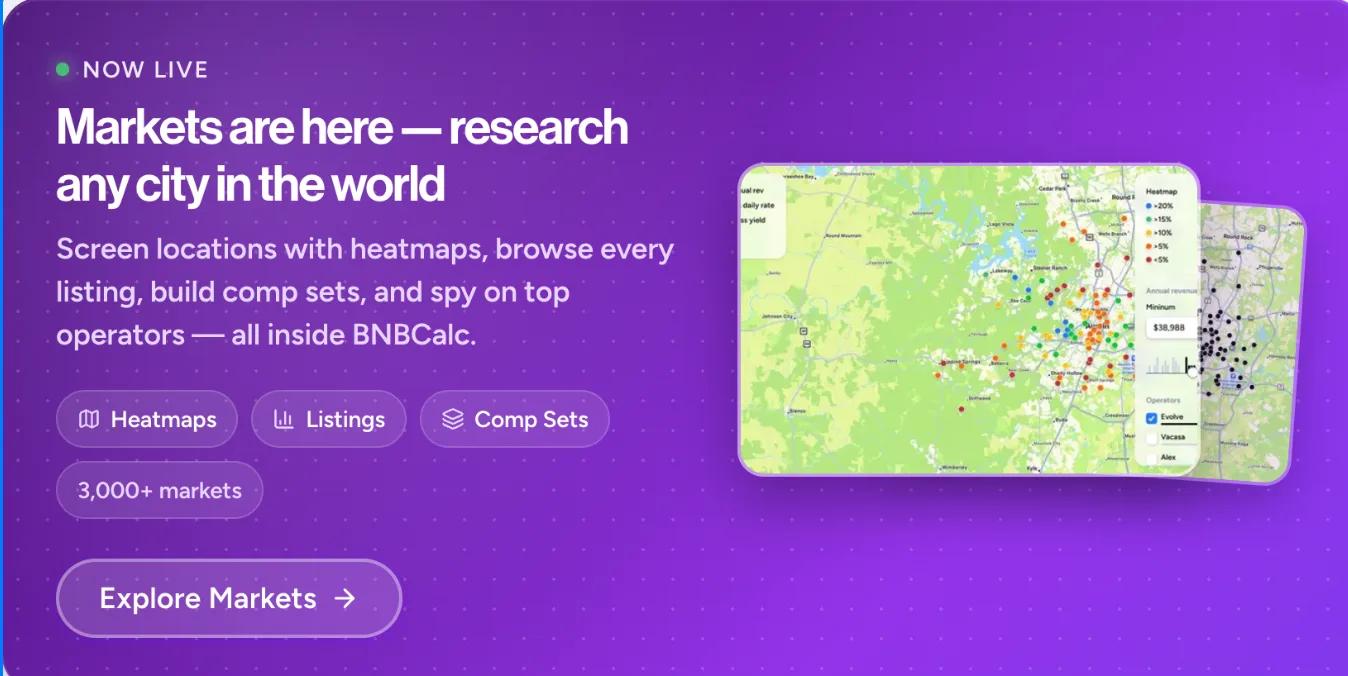
Merritt: With BNBCalc.
Jeremy: This show is brought to you by BNBCalc, the number one tool for branded financial analysis.
Merritt: All right, hand over my money. Yeah, I actually, no, I'm a big fan of BNBCalc, actually. I got my affiliates going, baby.
So yeah, that's a great tool. Something like that, right? Where you show them, you forecast what kind of money they can make. You show them similar properties to what they're looking at, et cetera.
But yeah, so I'm really taking a shift away. What's great is my first two clients are actually both investors, right? These homes weren't near and dear to them, like they're babies, right? So we're about to launch a property in Fort Lauderdale. It's gonna be epic. It's incredible design.
Jeremy: Looks awesome.
Merritt: Yeah, and the design, it has a pool, has a hot tub. The yard is gonna be the highlight, high point. And we're going, I might be saying this word incorrectly, but like Mirkesh design. It's kind of like Arabic style design, which is really cool. Really cool patterns, like leopard. It's gonna be really bold and unique. So I'm really, really pumped to see that property come into fruition.
And yeah, so I managed, that was actually my, I think, second property I ever took on as property management, his property up in New York. And it kind of blew the numbers out of the water that we were forecasting. I think we forecasted like 30K or so. And interesting, he first approached me to arbitrage it from him and to rent it. And I declined. And then he really wanted to do the work together. And I said, listen, if you do a full proper design, I'll take this property on. But that's my only stance, you have to do a full proper design. So we renovated the kitchen, which I oversaw. It was really fun. We did kind of these dark green cabinets with gold accents. It was really cool. We did green accent walls. We did a lot of fun things in that home.
But anyways, the projection was around 30K and we did like 52, I believe, last year. And he was super pumped with the numbers. He was super pumped with how well it did compared to the projections. So he's got into this Fort Lauderdale property and we'll be launching that pretty soon here. And I'm excited to see kind of how it does.
Jeremy: It looks like a cool property. So are you excited and nervous? Because you're predominantly in the Syracuse city market and you have properties on the outskirts, more rural areas, but now you're going to a different state. Excited, nervous?
Merritt: I'm excited for sure. I've been wanting to get into a more predominant vacation market, which is part of the reason I got into the Poconos, for that same reason. I want to have a heavy presence in a market that has a surplus of short-term rentals. I think Syracuse maybe has like 300 active listings, right? So it's not a huge.
Jeremy: Which means you're 5% of them in your.
Merritt: Yeah, exactly. It's not a huge market. Obviously I'd love to dominate those 300, but the best ones, right? But I want to really heavily get into a second market that has 2,000 listings, way more listings to pick from, because from a property management perspective, that volume is really good.
Jeremy: Scale, because it's just a higher volume of properties to scale into.
Merritt: Yeah, so I'm very excited. I think Florida, New York is like an obvious exchange. Most New Yorkers.
Jeremy: Have you connected with Matt and Lori, because I know they have properties there?
Merritt: Yeah, we're hoping to do a call. We haven't done one yet, but they have like two or three there.
Jeremy: They've been on the podcast. Yeah, they arbitraged two. Now they manage two, and they picked up, I believe, a third recently. And then they manage this crazy compound in Canada as well.
Merritt: Oh yeah, the camp, the little cabins.
Jeremy: Yeah, the cabins slash like a castle-looking house.
Merritt: That's awesome.
Jeremy: Yeah, so we need to have them back on.
Merritt: Yeah, and I'm hoping to pick brains in terms of vendors and all that.
Jeremy: I would tell you Florida has an abundance. So that is one of the great things. I, yeah, as listed on the pod, I like to rip Florida every episode. I'm just, not every episode. I call them like Florida-specific things that you don't have, I don't have in my other markets.
Merritt: Yeah. Good and bad. Like what kind of things?
Jeremy: Well, the Florida man phenomena is definitely a real thing. Like Florida man eats other man's face. I haven't had that. I definitely have not had that. But when you rent to a local, you're in Florida and you rent to a Floridian, I'm always like a little.
Merritt: You can tell.
Jeremy: A little worried. And I've just had permitting issues with tiki huts. I'm like, what, a Native American needs to build your tiki hut? That's a thing that I learned.
Merritt: I don't even know what a tiki hut is.
Jeremy: I didn't. There's tiki huts and there's tiki hut. I know way too much about this. I know the federal law, I know the state law. So it's a certain permitting process to get a tiki hut. So essentially I built a tiki hut and we had to tear it down and build a tiki hut with Native Americans.
Merritt: Because it was on like the territory.
Jeremy: Native Americans, it's like their indigenous home structure. So they're allowed to build one without a permit. Because think about it, that's not going to pass the building code. These things don't have walls.
Merritt: But the style of build has to match their style of build.
Jeremy: Yeah, it has to. And then you have to have a certificate that they built it. Because I'm not allowed to build one.
Merritt: You're not allowed to build one.
Jeremy: It has to be them.
Merritt: That's funny that whoever built your first one didn't tell you, I can't build this.
Jeremy: I mean, if they did, they were a good price, the first one. So I guess.
Merritt: I'm sure you pay a premium. How did they even notice that? How'd they even catch that? Neighbor called it in or something?
Jeremy: I think the neighbor called in something else and then they saw, they looked and, you know, you can use your eyes. Excuse me, where's your certificate?
Merritt: It's massive.
Jeremy: Yeah, exactly. Well, first, they don't even say where's your certificate. They, oh, they did unpermitted work. And then you go, what, we built a tiki hut. And then it was a long process. They didn't even like the process of even getting the tiki hut. They didn't even know what to do. It was like a 25 email, seven phone call situation to find it. Because they're like, well, you don't need a permit, but you have to fill out this permit form. And I'm like, well, I can't fill out the form because it said you need a license number from the contractor. I'm like, they don't have license numbers. They're Native American.
I digress, but Florida's a new place. So, well, but it's a city, it's an urban market. You have a very nice property, so you're going to attract really high end clientele. And there's a lot of cleaners, electricians, plumbers. You have an issue?
Merritt: Yeah.
Jeremy: Someone will be there. Someone will be there within an hour.
Merritt: That's great.
Jeremy: Doesn't really matter whenever it is. But okay, so let's keep moving from here. So you're moving to a new market with an investor, so you're going deep. And I think this ties into the point that I say, and I continue to say, that in this game, property management, but in many games in life, it's about your network, engaging with the right people. It's about being knowledgeable on the topic. So being a pro, we talked about how you are learning how to improve properties and how that's something that you've gotten better at. You're learning better pricing. We didn't touch on, yeah, I'm curious. What are the specific things with pricing you do now that you didn't do before?
Merritt: Yeah, so I've always used a pricing optimization tool, so that wasn't necessarily new, but I think there's a couple of things. A, I'm learning my market better. So I'm actually learning the nuances of my market, right, like when I actually need to override the PriceLabs baseline prices, right? There are times where PriceLabs picks up algorithms, but doesn't know the actual local knowledge, right?
And so one example of that is, you mentioned Syracuse Orange, SU. One example of that is any of the Syracuse kind of major events, you can get a significant premium on your nightly rate if you're patient, right? If you know how to not try to get your place booked up way far in advance, you know how to put certain parameters in place, and then you can add a 20% premium on top of what PriceLabs already is peak, what PriceLabs is already boosting it for the drive, you can add a 20% premium on top of that. So that's kind of what I'm doing, right?
Jeremy: You need to do that for the whole, because you were in the line of path for the solar eclipse.
Merritt: Yeah, yeah, we did like a 30, I think a 30% boost on all those, and we're 100% occupied.
Jeremy: You got a bit more?
Merritt: Probably, yeah.
Jeremy: But you knew to boost it.
Merritt: Actually, no, well, I mean, maybe, but the Airbnbs along the eclipse path were like at 100% occupancy across the country.
Jeremy: Which is crazy.
Merritt: Which is nuts.
Jeremy: Which means a lot of people probably couldn't. I don't get how people spend so much money to see it for like.
Merritt: Two minutes.
Jeremy: I mean, I went on the rooftop here, and it's kind of cool.
Merritt: Yeah, we live in Syracuse, where it's cloudy, so it was like, we saw all of one glimpse through a cloud, and we're like, all right, better go back to work.
Jeremy: Is that worth $2,000?
Merritt: I know, right? I don't know, but people pay a premium for experience. And knowing your market, right? Some people might not even be paying attention to something like that is gonna bring more tourists to the area, right?
So knowing my market's the big one, and then some strategies that we talked about in our mastermind. One of the ones I implemented was longer stays.
Jeremy: Custom length of stay discount?
Merritt: No, no, no, longer stays for far out bookings, right? So to prevent those weekends from getting cannibalized. So essentially, right now, what are we, in June? Someone wants to book for September, they can't just book Friday to Sunday. They have to book a four day, five day.
Jeremy: Yeah, exactly.
Merritt: So far out. And then the other strategy we talked about is using some advanced discounting strategies, right? Of boosting the price and then kind of discounting it within the separate OTAs. So I implemented a bunch of those as well, and I think that helped quite a bit.
And it's the knowledge, but it's also the implementation. I'm in PriceLabs every day. You know what I mean? I'm always tweaking. I'm always doing little changes here or there in the advanced settings, right? And so when I first started, I used PriceLabs pretty much on default.
Jeremy: I was the same way.
Merritt: Yeah, I had it on there and it definitely helped, because like I said, we still beat the market significantly, but now it's getting to more advanced, like pro level stuff that people aren't aware of.
And I think also just honing in my general knowledge as a business too, right? I see a lot of people making posts, oh, I have 90% occupancy, bragging about that, right? I don't care about occupancy. If my occupancy, obviously my occupancy is like 20%, I'm gonna be worried. But if I'm hitting average occupancies, but record revenue, that's when I'm happy.
And again, that depicts my shift in focus from vacation homeowners to investors, right? I'm revenue focused. That's what I tell people I talk with. And if they align with that, then we'll be a good team. If they're very much like, I kind of just need someone to make sure things don't break, I don't really care too much about revenue, we might not have alignment. Because basically I want to make you money.
Jeremy: And you're incentivized, because you take a percentage of revenue.
Merritt: Exactly. So it's a win for both of us. It's kind of how I say it. The more I make you, the more I make.
So yeah, that's kind of the ways I've honed in my strategies there, is to really just kind of improve my systems, improve the approaches, but also hyper-focus in on what's important. What really moves the needle. So that's been really valuable the past six months.
Jeremy: So what do we have to look? So we had you on, so we met in April, probably had you on at some point in the fall. We're gonna have you back. What can we look forward to? I mean, you've grown. In the meantime, you've gotten better at things. What are you looking to do moving from here?
Merritt: Yep, absolutely. So yeah, my goal is really just right now to hyper-focus in on the management side of things, right? For a long time, I was focusing on buying more properties.
Jeremy: You did a lot. You're also doing social media management for other people, or editing videos.
Merritt: Yeah, so I'm not currently doing any of that, but at one point I was editing other people's real estate videos, reels, and some social media management stuff as well. I've scaled away from that, so the real goal right now is just to grow the management company, right? And I'm trying to be as laser-focused as possible, right? Because I feel like every little distraction is pulling me away from the one item that is the best focus for my business, right?
Jeremy: And the best going to provide you that time.
Merritt: Yes.
Jeremy: For your family.
Merritt: Exactly. So that's the goal, really, is just to continue to grow that. And then there's, as we already mentioned, there's a niche where I'm trying to grow into, working with investors who have properties, right? They have.
Jeremy: Properties.
Merritt: Properties. Rather than just one property, or also rather than just your one-off kind of suburban home, right? I want to work with more high-end, luxury properties. So that's really the focus, is kind of pivot more to the upper-scale, nicer properties, and continue to laser-focus on bringing on those property management clients for now. And there might be an acquisition here or there, but it's not gonna be the primary focus.
Jeremy: Got it. And do you have a particular, if we're gonna say, like, two years, or a year from now, I think it's been almost a year since we've had you on last. If we're gonna have you on a year from now, do you have goals that you're gonna.
Merritt: Yeah, I mean, my goal was to 3X my business. So that was my goal at the beginning of 2024, was, by 2025, I want to look back and see 3X.
Jeremy: Got it, okay. So, 3X.
Merritt: So that doesn't necessarily, I'm not necessarily more clients, but better properties, right? Doesn't have to be as many properties, just better properties, higher revenue properties, and 3X by the year.
Jeremy: And do you have any, I just want to ask everybody, what's your pro tip for those, maybe not those who are where you're at, but those getting started?
Merritt: Yeah, those getting started, my pro tip would be just take action, right? There's analysis paralysis. I use like four or five different software solutions, right? And then that's among a whole slew of options to choose from. That could be overwhelming, right? For someone to say, what's best? There's like 10 different PMSs I could look at, 10 different pricing softwares.
So I would say, just take action. Don't overanalyze stuff too much, because I think the number one thing that stops people from changing their lives is by just thinking stuff is too complicated. So basically just saying, hey, I want to accomplish this, and start doing the steps it takes to do it, instead of saying, I have to do it perfectly, right? Basically, imperfect action is always gonna be better than overanalyzing, having all the answers, being the pro at something before you even start.
So I would say, for those starting out, just go ahead, if you have a goal to start co-hosting, for example, start making calls, start telling people you're gonna help them manage their listing, so that they can be more hands-off. And once you get that first property, it becomes a lot easier from then on. So that first property's gonna be tough, but yeah, just really taking action is the main pro tip. It's not just waiting for some moment when the rainbow appears, and suddenly you're ready.
Jeremy: And Merritt took action today. He flew in, same day trip. We were just at Dumbo House for lunch. It was awesome. How was that? I guess, how was your experience today? And I want to parlay this into folk who, we're gonna have a mastermind seminar here, July 20th. It'll be mostly folk in our program. We're gonna have a few slots for those who aren't. But yeah, did we have fun today?
Merritt: Yeah, it was great. I love being here. It'd been a couple of years since I've been here. I mean, I only live a little bit upstate, so it's not the longest trip, but it had been a few years, and I'd never seen Dumbo. I'd never seen this kind of part of Brooklyn, and the view of the bridges from the restaurant, it was just so cool to experience it all, take it all in. I love the hustle and bustle of the city, too. I'm very much a city person myself, so yeah, it was definitely awesome to come down and visit. Thanks for having me, I appreciate it.
Jeremy: Yeah, no problem. If you're listening, take action. Just send me a DM on Instagram, and say, hey, I wanna be there July 20th. Again, I don't know how many people we can physically, we might be at near capacity, but we're not there yet, so would love to have you. Merritt and I are gonna be there. Other amazing folk are gonna be there. It's gonna be a lot of fun.
Where can folk stay in tune with your journey?
Merritt: Yep, absolutely. My handle is @MerrittBadgeMGMT on all the platforms.
Jeremy: Got it, Merritt Badge. MerrittBadgeMGMT. Okay, well, you guys check Merritt out.
And also, beyond fun, productivity is of the utmost importance. So we had a great time today, but we got sh*t done, too.
Merritt: Awesome, thanks for having me.
Jeremy: Yeah, so Merritt, man, again, thank you so much for flying in. Love having you here, excited to have you back. And everybody, stay tuned to the next episode of the Short-Term Rental Pros Podcast.
Airbnb Tax Deduction Calculator
Paying too much in taxes? We have the perfect solution. Simulate an Airbnb home purchase below.
Purchase Price
$450K
Structure Value
70%
Apply Trump's Tax Cut (Bonus Depreciation)
Depreciation
$117,695
Interest
$21,600
Tax
$6,750
Year 1 Deduction
$146,045
Want to claim this deduction? Get a free cost segregation benefit analysis from CSA Partners — no obligation.
Get Full Analysis