Free instant analysis
Reveal Airbnb revenue for any address or city
Quick Summary
Wil's story starts with a promise nobody kept. His hotel's ownership group said they'd build him into a super GM, then handed him fluff instead, so he started a podcast to teach himself. He quit in 2019, built a management company with his first podcast guest, and stepped back once the network took off.
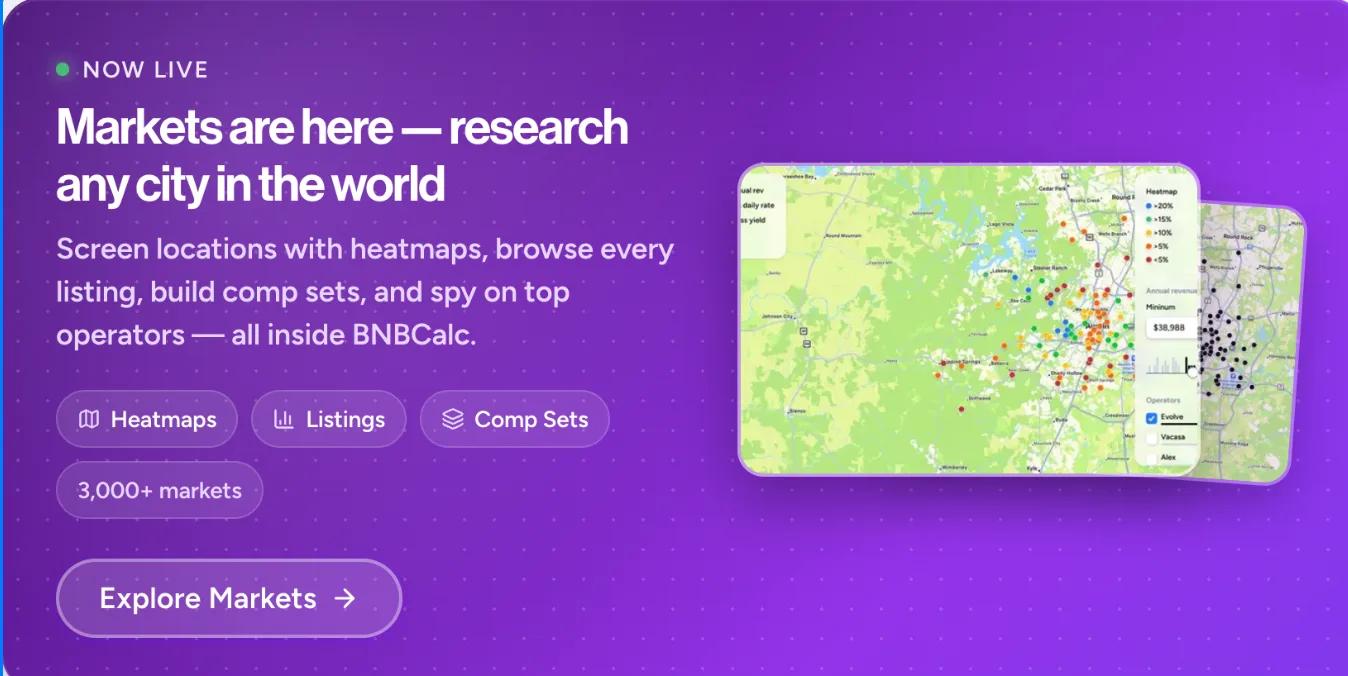
That's the founder half. The industry half came out of the Skift summit, where Wil's takeaway was that bans push tourism revenue into the surrounding cities rather than killing it, and Jeremy says he already buys just outside regulated markets for that reason. Checking that spillover market by market is what BNBCalc Markets is for.
Key Points
- Wil was managing a boutique property in Seaside, Oregon in 2018 when the ownership group promised to build him into a super GM and then never delivered the training. He launched Slick Talk that year after watching a Gary Vee video, quit in 2019 right before COVID, and started the network in 2021, going from four shows to 37.
- The management company started with his first ever podcast guest, a hotel guy who got furloughed during COVID and heard Wil comparing Airbnbs to hotels. They were at 10 units by 2021, at which point Wil sold half his shares and kept about 25 percent equity so he could run the network, then came back in a product role once the portfolio hit 70 homes and two hotels.
- Wil says Marriott Homes and Villas went from 115,000 listings the year before to 160,000, and that about 95 percent of its bookings came from Bonvoy members, a program he put at over 100 million members at the time. He also says Marriott screens hard, thinking the portfolio minimum has come down to around 10 properties while it still rejects individual homes that don't fit.
- Airbnb has no equivalent to that. Wil says Brian Chesky hates points and is thinking more along the lines of an Amazon Prime style membership, while Jeremy's gripe is that Airbnb keeps a 3 percent host fee and hands him a $100 Superhost coupon he'd happily take as points instead.
- Jeremy lives in New York and says the city went from roughly 20,000 active listings to 4,000 almost overnight, which he dates to September 2023. He adds that he read hotel ADRs were up about 14 percent year over year. Wil's read is that surrounding cities absorb the tourism spend, and he points to Mint House as an operator still going in New York because it holds a hotel license.
- Wil brought back a regulation panel claim that complaint volume mostly has nothing to do with short-term rentals. Out of all the complaints a city fields, he says one or two are actually about an STR, with the rest being uncollected trash or a car parked on the sidewalk too long.
- His prediction is that Airbnb turns into a social platform. He reads Icons and the profile, group chat and sharing updates as the tell, and describes the GamePlanner AI deal as a $200 million acqui-hire with no product behind it. He'd still like the group chat gone, since his team and even his parents, who co-host one listing, are getting buried in reservation messages.
Full Transcript
Listen to the full episode on Apple Podcasts, Spotify, or YouTube.
Jeremy: We are live with the Short-Term Rental Pros Podcast. I apologize for my voice. I've been a little bit sick, just got back from London, had a red eye last night. Or what do you call a red eye if you come from London? It's the opposite direction.
Wil: It's a red eye. They're all red eyes.
Jeremy: Either way, we're still here and we're bringing the energy, because Wil, my good friend and also a legend in the hospitality podcast space, as well as an incredible emcee, just a very talented person who has a lot of knowledge on short-term rentals, is here with me today. I'm super excited. He just was attending the Skift conference.
Wil: Yeah, the Skift Short-Term Rental Summit. It was pretty cool. It was a lot of industry leaders and operators, tech companies, obviously, but really good content, really good show.
Jeremy: He's going to be armed with all relevant current events and all the big pressing things they were talking about while you were there. I was here getting ready for this podcast. Actually, my friend, we hosted a seminar yesterday, a lot of people came in, which was pretty cool.
Wil, you got a property management business. You've got a hospitality podcast network. Tell us your story, man.
Wil: I'll take you back to 2018. I was a hotel manager. I was working for a boutique property out in Seaside, Oregon. The ownership group was like, hey, we're going to give you all this training and education, and we're going to build you up to become this super GM and all this stuff. Well, it was all fluff. It actually didn't take any action. It was all promises. I wasn't happy, but I took that opportunity.
Big fan of Gary Vee.
Jeremy: As we are here in New York. Gary, if you're listening.
Wil: Yeah. Gary Vee, he was doing an episode thing with Tony Robbins talking about doing a podcast and how you can use it to educate yourself. Whether you get one listener or zero listeners or a thousand listeners, you can just do it as a way to be educated and to grow. I was like, all right, I'm going to do that.
I started a podcast, quit my job 2019, right before COVID. It's a great opportunity to shake things up a little bit, but I also started a property management business when I got into the Airbnb short-term rental world. Then from there, 2021, we launched our podcast network. We went from four shows to now 37 under the whole umbrella. It's been quite the journey, my friend.
Jeremy: I am part of the hospitality.
Wil: STR Pros is an amazing podcast in our network. Obviously, keep listening.
Jeremy: Absolutely. All right. In 2017, that was when you went to the Gary Vee, Tony Robbins event.
Wil: Well, I didn't go to an event. I was just watching a YouTube video. I was just like, all right, I'm doing it. 2018 is when I launched my show, shortly after that.
Jeremy: Was that show related to short-term rentals?
Wil: No. It's still the same podcast I run today. It's Slick Talk: The Hospitality Podcast, because I was talking about all things hotels, and I was even a restaurant manager at a time, going in that encompassing ecosystem of hospitality.
Then in my hometown, there was this 22,000 square foot castle on five acres. I saw it on Instagram. She was listing it on Airbnb and VRBO and all these things. That's when I got exposed to the Airbnb world, with my parents on top of it being like, hey, take our apartment and put it on Airbnb for us and run it like a hotel. I was like, hell yeah, I'm doing it. That was my soiree into short-term rentals, shortly after the podcast stuff.
Jeremy: Got it. You were interested in hospitality as a whole. Then you carved your niche in short-term rentals, built out the property management business, and then your podcast started taking off.
I'm assuming someone went to you and was like, yo, you've got a great podcast, I'm looking to start a podcast. From an entrepreneurial standpoint, I'm curious, how did you get from doing your own podcast to managing and creating a network with 34 shows?
Wil: Yeah. Well, when I started in 2018, I also launched a show on COVID called Good Morning Hospitality. It was during this weird period where everyone was like, what do we do? We're in lockdown and it's two weeks to flatten the curve and all this crap that was happening. And we were just like, all right, fine, there's a lot of industry stuff happening. Where do people go for their news? Short-term rentals was a very, I would say, podcast sector-wise, it was very light. There wasn't a lot of STR vacation rental podcasts. So R2 became really popular.
Then at VRMA in San Antonio in 2021, I had a line of sponsors saying, hey, I want to get on your shows, but we were full. Then I also had a line of podcasters saying, how do I do what you've done? How do I get monetized? How do I quit my day job? How do I grow an audience on audio and video and all this stuff?
And so that's kind of where I was like, well, if I can't take the sponsors and I can't help everyone, I can't edit 20 podcasts or seven podcasts that were in line myself, but I'm making money now, I can probably just marry the two. And that's where the idea of a podcast network came into play.
Jeremy: Married the two.
Wil: Yeah.
Jeremy: Well, my fiancée walks in.
Wil: He's walking in.
Jeremy: Yeah. Yo, Kate, you like the setup? If you guys are watching this, if you guys are listening to this, you got to check this out on video. This is the first time we've had a tri-camera slash professional lighting setup. We just brought in Mikey.
Wil: Yeah, I want to say a shout out to the producer, Mikey, over here.
Jeremy: Yeah. Mikey, who's Kate's, Kate just smiled to the camera.
Wil, I listen to some of his LinkedIn posts. Or sorry, I don't listen to my LinkedIn. He talks about initially being audio first and really audio being the emphasis of the podcast network. And then you've recently put an extra emphasis on video.
We're going to get into additional Wil background. He's got a crazy story. He's a very modest guy. He was, you were military before, and he's got family, different family stuff going on. That's his inner why, which I want to get into later. But yeah, break me into that. What, video first? I've been reading, I'm curious, pick your mind. What does that, the audio, video, and how do those flow together for podcasts?
Wil: Yeah. Originally in the beginning, I only was doing audio. I was self-editing early days before COVID. And then obviously it was like, okay, well, how do I promote the show better? Apple and Spotify don't have algorithms like YouTube or Instagram or any of these social media platforms. And so I was like, okay, we got to start using video. And I was using Skype to record with everybody and we'd be like camera off. And it was a horrible experience, and figuring out like, okay, the video is obviously going to be better.
So using the clips, that's the realm of listening to Mr. Beast's manager read. And he was saying, when Joe Rogan was only on Spotify, yes, he was on video and audio for Spotify, but with the amount of clips going out of his show on YouTube and all the social media platforms, a lot of people felt like they were listening to his show, even though they weren't really listening or qualifying as a download or a listen.
And so for us, I was kind of early into that of like, okay, we need to get people to think like they're a part of the show without even listening to an hour long episode, and pulling the clips to get new audience and showing them. It's not just like, tell me about your story. We actually want to create valuable content. So that was kind of the idea.
We're still audio first. We say Hospitality FM is the audio destination for hospitality professionals. So we're still going to be focusing on audio. We truly do believe we're an audio first company. But from video socials, and then of course building out things behind the actual content pieces, or retreats, events, all the other stuff, that's kind of where we see things going.
Jeremy: On seminars. You want to host a seminar? New York City, New York, fly back in, we'll do some, I don't know what we do on, but yeah, we do. We can talk about that later.
Wil: Yeah.
Jeremy: Okay, cool. So military, let's touch on that. My brother's in the army, is currently in Iraq. Tell us about your experience.
Wil: Yeah, so kind of a long story short situation. I made a lot of bad decisions in high school and barely graduated and was a pretty horrible human being, I would say. And I got into some situations where I end up homeless and then just really went through a lot of rough times. But this family took me in, kind of helped me get on my feet.
And then I was like, okay, well, I want to get out of my small town. And I don't really know where to go get a job. And I don't have any skills or nothing. So the military was just like, sht. I remember a recruiter coming to my high school and talking to me about the National Guard or this and that. And so I enlisted, and my dad was pretty pssed, because he just gets a call from me like two hours before I swore in. I'm in Seattle, and we live, or my parents live, probably like an hour and a half away from Seattle. And so two hours before I'm swearing in, I'm calling like, hey, can you come to my swearing ceremony? I'm going to enlist and I go out to basic training in January.
And yeah, so I joined the Army National Guard. I did a six year contract, never got deployed overseas, but got activated for wildfires and mudslides and COVID. I was doing COVID testing for about seven months throughout the whole state of Washington, which was fun, but also weird at the same time. You're in a hazmat suit all day.
But yeah, that was kind of my military experience. I needed it. I needed something to create discipline and confidence and get into physical shape. But also learn the skills of attention to detail and all the other things that they teach you through basic and all the stuff there. So it was very much needed. If I didn't do that, we would not be here today.
Jeremy: Well, it's very, as he wears a T-shirt that said good morning [inaudible], as a PG network. We tell everyone that you're allowed to say whatever you want. Good morning, [inaudible]. And he came in, and he had a fun night last night.
Wil: Yeah.
Jeremy: But discipline, nevertheless. We shared a room in Nashville and bunkmates, literally bunkmates.
Wil: That was a good time.
Jeremy: Okay, so from military to property. So you actually started the podcast before, which is really interesting, before starting the operations. But tell us about your current property management business. What's that look like?
Wil: Yeah. So I was a hotel manager, so I come from that traditional operational kind of sense, right? I was from like a W2 standpoint.
Jeremy: Yeah. So that's from entrepreneurial. What's the current, like, entrepreneurial property management?
Wil: Yeah. So after quitting during COVID and doing all the stuff, my original business with partners I had for short-term rentals was just not going to work out. It was not a good partnership. But right after, broke the agreement, we got out of the partnership, my first podcast guest ever, his name's Adam Knight, he reached out to me. He's like, hey, dude. He was a hotel guy originally and got furloughed during COVID. And he's like, hey, you're talking a lot about Airbnbs and short-term rentals, and I listened to your episodes about how it's kind of like a hotel. Tell me more about that. I was like, oh, let's have a call.
So we have a call and he's like, you want to start a property management company with me? I want to do this. I think this is the new, this is it. I think we can make this big as two hotel guys, bring in some standardization and all the things that people love about a hotel, but into a home.
And so we started Recreation Vacation Rentals. We had one of my parents' properties and then basically just grinded for a long time. We had 10 units by 2021. And then I stepped away from the company, actually. So I sold half my shares, still only have about 25 percent equity in the company. But it was like, hey, I'm going to do this podcast network thing, because it was taking off. I was hiring employees and we were growing and I was living in Mexico. And I was like, look, I can't be on a recording and in a meeting and then having housekeepers blowing me up and guests and all that stuff. So I was like, got to step out.
But I came back in recently. We're at 70 homes with two hotels, and my business partner was like, look, I've gotten us to this point. Let's actually make this a real business. And I need you to know if you're in or out. And so we had that honest conversation and I told him, look, I can't do day to day, but I would love to be, I'm a big product guy, I would love to build product. And for me, looking at the homes, that's our product, right? Our hospitality, our service, the tech that we use, that's our product.
So coming in, not on a day to day sense, but working on projects, working with our teams, making sure we're staying profitable, that the homes that we bring on are actually making a good income, not just for us, but for our owners, and eventually get us to a point where we start acquiring our own. So it was a fun decision to go through, but we're back.
Jeremy: Quite a journey. Wow. Jeez Louise. And I love that you kind of, seems like you rolled with the punches. That's what entrepreneurship is. You're standing there at a conference and you've got a list of people walking up to you saying, hey, we'd love to give you money to sponsor your show. And then you got a line of people saying, yo, what the heck, you have people who want to give you money for a show, how do we do that? And then you're putting the two together and saying, oh, I can create a business around this.
Wil: It's kind of funny because I tried to do it a year before. I had a bunch of podcast friends. I think one guy was Australia, one guy in the UK, one in Washington, and one's in California. And we're like, we should start a podcast network. All of our shows are growing. Two are in food and beverage, two are in hotels, I was short-term rentals. So we're like, let's create this thing called like Hospitality FM, buy the domain. And then we all try to make it work. Five partners is a really hard situation to do.
Jeremy: It's a lot. It's a lot. That's a lot of partners.
Wil: So it's too many. It's too many, almost, in my opinion. But we're just like, okay, it's not going to work. So we just let it go. And we kept doing our own things, but kept collaborating with each other and still stay friends. But I just was sitting on this domain, Hospitality FM, and I was like, I'll do something with it one day. It's a good domain. And oddly enough, that was the moment. And it wasn't even like, it's always the website.
Jeremy: Yeah. It's like, that's it. It wasn't going to work this way, it's going to work this way. Okay. And you just, you saw the brand.
Wil: Yeah. I was just like, this is it. Here we go. So that's when I hired Claire and Michael on the team, and everybody, as we've grown to now we have four editors and producers. And yeah, so now we're just cranking out.
Jeremy: Yeah. And tell me, so you've been through this game a long time. There's been a lot, and really, honestly, a relatively short period of time, a lot has happened. Obviously COVID was a crazy phenomena that really, I think, kind of poured fuel on residential real estate and interest in residential real estate, people who are getting into it.
But tell us where things are now. And obviously I can look at my properties and say, oh, these types of properties are doing better in these markets, these locations. I don't want to get into that. I want to get into just the intrigue and the interest and the opinions of the space, because I feel like you'd have a unique perspective on that from an industry as a whole. There's, you got a couple of different camps, right?
Wil: Yeah. The traditional vacation rental managers have been doing it for 25, 30 plus years. Not really a big fan of Airbnb. They're not big fans of all these new things that are happening. But then you have kind of the STR crew, that I call them, which is, I would consider you in like STR wealth people. Anyone that shows that my show against Bill Face and Ali Palmers, you know.
So you have these different camps within this big industry of hospitality and vacation rentals. And then you have the residences and the places that aren't super friendly to short-term rentals, are not happy with the idea of guests in their neighborhood. I heard a great acronym at Skift's conference when they were doing a regulation panel, and they call them cave people. It's citizens against virtually everything. And it's basically like they just aren't fans of new or cool things happening inside their communities.
And so you have a lot of different stuff happening, right? But I think overall, now that we've gone through COVID, there's definitely, I would say, less hype in the sense of like, buy a property today, like all the stuff. I think people, property can set you.
Jeremy: Yeah. Ten percent down.
Wil: Exactly. And set you financially free.
Jeremy: Yeah, exactly.
Wil: I think those kind of days and messages are gone behind us. I think it's like, hey, whether you're an owner, an operator, a vendor that supplies and supports these operation companies or whatever, it's hard work. And at the end of the day, it's not just like set and forget it, as much as we want it to be. Guests are really savvy to how things are being ran, where things are being ran, in the sense of what OTA, from Airbnb to VRBO to direct bookings.
So I think it's definitely a different landscape. But I'm also really excited, because when the bottom falls out, the rest rise to the top, that stay and continue to provide good. So I think we're in a really well positioned, like Jamie Lane from AirDNA was talking about, hotel occupancy actually hasn't increased much. Even with bans, like guests, their ADRs are high because they have the opportunity to charge a sh*t ton. But there's still no crazy amount of demand for hotels.
Jeremy: Vacation rentals are still preferred. They're a differentiated product.
Wil: Yeah, 100 percent. Especially if you're creative, whether you own or operate eight or 70 or a hundred and fifty or a thousand, you have an opportunity to really provide something really cool.
And the other day, like, I hate to be the cheesy hospitality guy, but you're creating moments. You're opening up a vertical that allows people to get together for great opportunities and celebrations, or sad things that do still bring people together, like whether it's a funeral or another family event. You're still allowing that to be happening in your space. And so I think it's really important that we continue to understand that's what our product delivers.
Jeremy: Definitely. So you went to Skift. So what were the current events and what were the different speakers, for someone who was 15, 20 minutes away but wasn't actually there? What'd I miss?
Wil: You missed a good line of speakers, from the sense of quality versus quantity. There was mostly panels, but these were panels of professionals who have truly been in 10, 15, 20 years. CEO of Mint House, you had co-founder and CEO of Boutique Arena, who is a freaking legend. You had the vice president of Marriott Homes and Villas. You had a lot of really big players and names that are truly driving, at a bigger scale, the industry forward, in my opinion.
And so it wasn't, I wouldn't say news and events wise, but it was great to see that these sessions were 20, 15 minutes and they were back to back. And then you'd have a break and then you'd have lunch and then you do it again. And it was just content, value, data driven. It wasn't like, let me tell you about my business and why we're so great. You don't have a lot of the self-promotion. It was just like, we're here to give some good nuggets. And I think that's what you missed. You missed all the good nuggets.
Jeremy: Yeah. So give me a couple of the good nuggets.
Wil: Okay. Marriott Homes and Villas was an interesting talk. And I really liked, from their perspective, last year they had 115,000 listings on the program on Marriott Homes and Villas. This year there are 160,000. So they've grown pretty significantly.
Jeremy: Wow. 30, 40, 50 percent.
Wil: Yeah.
Jeremy: I was going to say, yeah, really good growth.
Wil: And it's interesting because Marriott doesn't accept, like, if you come to them with 35 properties, 20 at least, I think it's 10 now, but they are very selective out of that 10. So if you have a minimum of 10 properties, but you're going through it with them, they're going to say, nope, this property doesn't work, this property doesn't work, this one works, this one doesn't. And that is the availability of your unit types that they can put on the platform. So I really love that they're curating.
Jeremy: I'm assuming they like, yeah, the bigger houses.
Wil: Yeah, bigger houses.
Jeremy: They're not doing like apartments.
Wil: No. And kind of like upscale to luxury is kind of where they really do well. And so the data that Jennifer provided was really cool, not just on their listing growth, but from outside their listing growth, it was actually really interesting. 95 percent of their bookings on Marriott Homes and Villas are Bonvoy members. So loyalty is a big thing.
Jeremy: And that's what I actually thought was super interesting with Marriott Homes and Villas relative. I'm like, why has Airbnb never done a loyalty program?
Wil: They're in talks now. Brian Chesky has made a couple of statements, but he hates points. He hates the point system, is what he said. So he's thinking more of like an Amazon Prime membership site.
Jeremy: Because I get a hundred dollar coupon or something every time I'm Superhost, but I'm like, what if, all right, they have the 3 percent fee they take away from the host. What if they broke down their fee structure, that pretty much you can make, you'll make slightly less money, however you'll actually get points to stay in properties, that'll be a little bit, you know, not a one to one ratio, like a 1.3 to one ratio. For me, that would add up to tens of thousands, like tens of thousands of dollars, which I would love to. I mean, I just booked a $7,000 Airbnb for Kate's birthday, in the Hamptons. And yeah, I was like, I did a hundred dollar coupon. But just an idea. Brian Chesky, if you're listening.
Yeah, I don't see why. I feel like it'd be the natural. And now that Marriott's doing it, and it seems like they're having success with their points.
Wil: Definitely having success, from the 95. I think when you add the loyalty and distribution and then the collection, so they're getting really aggressive in curations. So they have a family curation, which is like, they showed a house with a slide in the middle of the living room, like a big, not just like a little cheesy slide, like a.
Jeremy: Oh, big slide.
Wil: And then they had like their Zen collection and this.
Wil: And so I think their combination of loyalty, distribution and curation is really, really setting them apart. And then their new AI searchability is actually really cool. It's not just like ChatGPT. It's like, she referenced a search that was plugged into their search with the AI, and the person was just like, don't really care where, don't really care, like, dates, I'm really flexible, but I want to go to a place where we're by the water, I can have my dog, because sometimes I love my dog more than I love my family. And she read this whole thing and then it curated this whole collection of homes for them to book. And he ended up booking and their ADR was over a thousand dollars a night. So it was pretty impressive to see that.
Jeremy: If someone is a corporate traveler, they like, my dad, when I was growing up, he was gone probably about 250 days of the year, and always Marriott, every night would stay. And obviously it sucked that he was gone so much, but the benefit was like when you went with them.
Wil: Yeah.
Jeremy: Like, oh, we're going to so-and-so and we can get four hotel rooms and all pretty much have our own. I mean, we would stay at sh*tty hotels, I'm not going to lie, but we would get more rooms. That was like the thing that I thought was cool about, was like, oh dad, I want my own bed. Like, all right, whatever, I'll get another, I'll get the points Springfield suites room.
But he had those points, and if he could use those to book houses, that'd be epic. Which it seemed that, I think that's probably what a lot of it is, is like corporate travelers are then getting the benefit to then book family vacations. That to me, it seems like that'd be the first like step of why Marriott Bonvoy, why lodges and villas versus Airbnb.
Wil: Yeah. Well, and see, like Marriott's Bonvoy loyalty program is the biggest loyalty program out of all hotels. So they just hit over a hundred million members on the reward side. And like you use your credit card, you get rewards.
Jeremy: Yeah, I have it connected to my Uber account. So every time I Uber, I get points. Like, I'm kind of a point whore with Marriott, but it's a great thing.
Wil: So like having this ability, like they've mastered loyalty. And I think that's the reason why it's interesting. A lot of conversations with operators on the stage at the Skift conference, some people were like, hey, are you going to create a loyalty program? Especially as you're scaling, like you're in multiple markets. Don't you think it would be great for your guests that love to come year after year, multiple times a year?
And I think we're starting to see like, is there going to be a Marriott of short-term rentals? Are we going to have that brand become something that's actually a name brand?
Jeremy: A name brand. All right. So Marriott, what else? Give us, drop the value bombs.
Wil: So I was telling you this before when we walked in, the, I think it was South Carolina, not North Carolina. It was a mayor. I forgot the, I think it's not Charlotte, is Char, Charles, Charleston.
Jeremy: Yes, the mayor of Charleston.
Wil: And another guy named Matt Curtis, who's really big into being an advocate, so more of a lobbyist for short-term rentals. And they were talking about why, we're going into regulation stuff, it's never really that sexy, it's kind of the same stuff all the time, right? New York went through a ban, what's the place on San Francisco, but it's, Palm Springs went through a ban, all these cities. Like bad regulation. Like we have data on it, on the bans now.
Jeremy: Yeah, which I think is cool, that like during COVID, yeah, regulation, regulation, parties, neighbors, blah, blah, blah was the talk. And then things actually happened. And now we're a couple of years into it and we're like seeing the results.
Wil: Yeah, a hundred percent. And so I was kind of hesitant on this talk, but it was like, okay, what's this mayor going to say? Let's band together and get the community. But no, he was actually like, no, if people are telling you that short-term rentals are the cause for the housing crisis right now, they're wrong. And here's why.
And him and Matt Curtis were going back and forth around the data. So like not just data on the landlord situation, but how cities in the last 60 years have not changed the way that they continue to build out their blueprint. They don't change anything. Like they haven't gone through any real shakeup or innovation. So as the world is changing and they're staying the same, hence why long-term housing and building vertically versus horizontally is causing a lot of issues.
And then also on the side of, not actually like you have, again, this is where the acronym came in, that the CAVE people, citizens against virtually everything.
Jeremy: You said CAVE at first. It sounds like an aggressive term.
Wil: No, that's what they called it, and I loved it. But there's very few people out of that whole community, whether it's a big city or a small town, that are actually against it. And their voice is gone off of emotion, not off of data. And so when you have emotion backed allegations on why something isn't good for the community, or, there's also another acronym, no, I don't remember the full acronym, but it's basically not in my backyard is what they always say.
And so there's very few people that actually do it. And so if you go through the complaints, out of all the complaints to the city, you have one or two they're actually about a short term rental, versus the rest being like, hey, our trash didn't get picked up, hey, this car has been parked on the sidewalk for too long or whatever. Like there's just other things in these complaints that are getting thrown into this kind of STR bubble of complaints that aren't really STR complaints. So of all the ordinance issues, it's really one or two.
And so going through all of that and seeing like how cities and states are copying bad regulation from Texas and California and New York and trying to implement it, when you can't really do that, it's not a copy and paste model. And so there was just a lot of really good stuff from that whole conversation where I walked away like, I feel like if I were to come across somebody who was like, well, you're ruining, you're taking away housing from people in the city, I'm like, actually you'd be wrong. So yeah, it was really good.
Jeremy: Yeah, I think the [inaudible], this is very relevant to me. I live in New York City, and it has the harshest short-term rentals. Literally overnight went from 20,000 active listings to 4,000. 16,000 just went off the platform. Which, places have regulations, but very rarely do they have enforceable regulations that literally delist your internet presence. That's what happened here.
And now it's almost a year into it. I think it was September of 2023, we're in June of 2024. And what we have found is that rent in the country, actually in the nation, rents have actually started going down. Like they built a lot of multifamily units in different places. There was a lot of demand, interest rates were low, rents were going up. So they built out a lot of, you know, four floor, like cookie cutter apartments. So in a lot of places rents are going down. In New York, that's not the case. They didn't build Jack here.
Wil: You don't build Jack in New York.
Jeremy: So that was, rents have gone up. Also, like the amount of overnight accommodations obviously have went down drastically. You got rid of 20,000. But in addition, compounding on that, you have like 20,000 immigrants who crossed the Southern border and how, I don't know, they've gotten in New York somehow, and literally on buses, and they've converted hotels.
Wil: Yeah, they've literally converted hotels to be migrants housing.
Jeremy: Yeah. And these, apparently from what I've seen, is like the way they convert them, it's actually really hard. It's like they're milking it right now, they're making a lot of money from the city. And a lot of them are saying they're not going to open up again once they went through the program. Like they're like, our hotels are trashed. Like there's no coming, like, once you go into that type of housing, like you can never go back. And it's like, I just see the Tiger King statement in my head. It's like, how am I ever financially going to recover from this? And they're not. So it's just like, they're going to be, but they're making a lot of money right now.
Wil: Yeah, short term win. But long term, you're just going to have empty properties in New York now just sitting vacant, probably getting used without any electricity and all this other stuff with homeless and other people.
Jeremy: Yeah, like it's not going to be a good situation.
Wil: Sure.
Jeremy: And like you could say, oh, we didn't like foresee that coming, perhaps. But they did. This was, again, September of last year. Like this was a thing that was becoming more of a thing. Convenient. A convenient truth, I guess.
Wil: But so what has happened to these like 16,000 houses?
Jeremy: Well, most of them, they're not put onto the, because usually it's people who own, you know, New York, it wasn't like big investors, because there was already regulations and it was coming. So there wasn't like people have three, 500, a thousand apartments. It was literally individual owners who relied on that income. And a lot of it was folk who their families stays in the apartment, stays in the house for three, four or five months of the year, and the other seven months.
Wil: Sure. Why not rent it out?
Jeremy: Exactly. So what has really happened is you screwed over those people, so they can't make money from their own property. And on the flip side, hotels are just, I mean, you're telling me. How much did you pay?
Wil: It was like 500 bucks a night at the New Yorker Wyndham property with like a closet. And I even laid in bed, like the bed was clean, thankfully, but I was like, do I take my socks off? This carpet kind of like, it just gave you a vibe. You're like, I don't know if this is actually clean. And they don't even care. Like, you're sorry. You don't, you know. [inaudible] desk staff was horrible to check in with. Like it was brutal, didn't even look me in the eye when I walked in. Just, yep, credit card, ID, cool, all right.
Jeremy: Come on, New Yorkers. We're better than that.
Wil: It was a bad experience.
Jeremy: But I think I read that like the ADRs on hotels are up like 14% year over year and they're just making record profits.
Wil: Yeah.
Jeremy: So obviously it turned out great for their favorite, but not for the people that owned and depended on that income.
Wil: So the black market is still there. Like we all know that people are still renting out illegally. You got Craigslist, you got Facebook groups, you got all these things, right? People are still doing it off record, off Airbnb, off platform.
But Jamie Lane, AirDNA, showed that also New Jersey guy, huge spike. Like, so anytime a ban is put in place into a city, the surrounding cities benefit highly from that tourism activity and that revenue. But guess what? They're still spending the money in the city that's banned for food and restaurants and all these things, right? So the other surrounding cities do really well, but it's kind of like, look, the demand's there, you're missing out on this revenue and this opportunity to collect tax, and you're going to pay for it. And just by seeing how much your surrounding cities are happy for you putting that ban in place. So it's just no win situation.
Jeremy: Yeah. And I would say on the flip side, as an investor, regulations are actually in many ways kind of cheat codes to find opportunities, because like you just said, it limits supply. I mean, I have specific properties that are right outside.
Wil: Yeah.
Jeremy: Specific cities that have regulations.
Wil: And so, well, if you're in multifamily, if you're in apartments, or kind of a longer term type building and living situation, the CEO of Mint House was talking.
Jeremy: What is Mint House?
Wil: Mint House is a big operator. They're from New York to all over Florida and Miami. And then they've got places in Washington and Seattle. They're big. They basically occupy 20 to 50 to 200 units in a multifamily building situation. And it's a big arbitrage operator. Not arbitrage though. That's all, arbitrage in my opinion is dead, don't do it. But I would say arbitrage rev share of cookie cutter apartments.
Jeremy: Yeah.
Wil: Well, yeah, some places, non-regulated places.
Jeremy: Non-regulated.
Wil: In, if they're regular, like Seattle. Seattle's actually not free. If you're a vacation rental owner, you can't have more than two listings on Airbnb. And there's a whole licensing process for it.
But Mint House, his name is Christian Lee, and what he was talking about is actually when New York did expand, because they have a lot of properties here, they're fine because they have a licensed as a hotel. So they still run it like a hotel, but there's no front desk, there's none of that stuff. And that's their workaround. Romy out in Miami, they do buildings that are zoned as hotels.
Jeremy: Oh.
Wil: They do buildings that are licensed as like a long term apartment, but they get a hotel license. So they're able to occupy from residents.
Jeremy: Yeah.
Wil: So they're actually able to do under 30 days and all this stuff. So they're a hospitality company, that's the way they position it. There's a lot more that goes into it, so everyone listening, just FYI, I'm not the expert that runs their operations and knows how they set this up, but they do it legally.
Jeremy: I didn't know that.
Wil: So they do have permits for hotel occupancy. And Romy on Miami and New Orleans is the same thing. As Miami is also growing 8,500 new properties and units, that's going to oversupply the market. But that's another conversation for probably another day.
Jeremy: Yeah. I guess let's talk about moving forward. So what do you see, I guess, what are your like predictions for the industry moving forward, and like what excites you or what scares you?
Wil: I don't really have a lot that's scaring me. I think we are seeing a lot of new faces and new names kind of pop up in the socials side. So I think the more validation I think it gives the industry, as long as they're good, actual good apples, they're not just a bunch of people trying to sell a coaching program or do a mastermind every five days for, you know, 25 grand to just get 30 minutes with this person. As long as that doesn't happen and we continue to move forward and actually bring value, I think we're going to see a lot of cool stuff.
My prediction for probably not like the next year or two, but with the latest Airbnb update, my kind of prediction, and as I've studied Airbnb and Brian Chesky and all them from long time ago, like we've been building a documentary on it, not supposed to talk about it, but doing a documentary on time.
Jeremy: Yeah, so much you just unpacked.
Wil: I know. But I will say, Brian Chesky, he thinks in decades. He doesn't think in years, months. He thinks decades. And Icons was not a PR stunt, it was not this thing. It was a strategic move to become a social media platform. And we can probably go into another day, but they're going to become the next Instagram, the next Facebook, the next this, and it's not just going to be travel there.
All their update features were about your profile, communication, being able to share with your friends. So that's another social aspect. They made it so it's like a group chat.
Jeremy: Yep.
Wil: And so the trip now.
Jeremy: Yeah, and the itinerary plan, which hosts are in, which sucks.
Wil: Yeah, dude, it does suck. Our PMS is like freaking out. I'm so confused.
Jeremy: Yeah, I guess I've stopped. I don't actively.
Wil: Yeah, you probably don't actively do the messaging now, but my team does. And they're like, I saw like even my parents are a co-host on one of their listings, and my dad's like, why am I getting so many messages on Airbnb? I'm like, oh, it's just a group on one reservation talking about their dinner plans.
Jeremy: Yeah, seriously.
Wil: And it's just like, I got to get away.
Jeremy: Yeah, it's annoying.
Wil: But every time, when you saw like the Icons announcement and this new features and all these things, every time Brian and the team were promoting is go to the app, go to the app. Social media platforms, how do they make their money? With not just obviously making a booking fee from your trip, but they make their money by the amount of time you spend on their app every day. So the more eyes and attention that you're giving them, the more opportunity they're going to becoming a social media platform. And they're going to pick a recommendation engine.
Jeremy: Yep. You're in Nashville for the weekend.
Wil: And they tried that with the experiences earlier, but I think they maybe forced it a little bit.
Jeremy: Yeah.
Wil: Whereas here, they're like, all right, let's get people on first and then let's figure out how to.
The PR side, it did generate a ton of clicks, a ton of views, but everything was pointing down to the app, and all the updates go around social, building out a profile, communication, all the stuff we just said. So I think that's going to be the next move for them. And I'm excited for it, because it's going to shake a lot of sh*t up. Not the group chat feature, please get rid of it, but everything else. Going to become a social media platform.
And they acquired GamePlanner AI back in last year for $200 million. There was no product, there was no AI. GamePlanner AI was literally an acqui-hire is what I call it, and it was just to get the team. And I'm convinced that Brian is going to make Airbnb the best social media slash matchmaking platform, that your feed and my feed will never look the same. It's going to be pretty different.
Jeremy: Got it. So Airbnb and the updates they're making, you think are big. What recommendations do you have for me? I'm more on the podcast side of things. I didn't bring Wil here to get some consulting, but how could I make this better for, and ultimately for our group or our community who's listening?
Wil: Yeah. I think what you're doing right now, you have the multiple cameras set up, you have the good microphone, so you're doing the right things, right? Like what the equipment, I think back in 2018, I've told you this, it was easy to get away with a sh*tty mic or no mic at all. Now you have to put in a little bit of money to have that quality. The quality is there. People do care if it sounds like they're listening to a Zoom call, or if they're listening to actually a professional mixed sound. So keep doing that.
Keep involving like the, I think the in-person side. It's very easy to do virtual recordings, you can do 20 of them in a week and be good for months of content. But the in-person side, I think you're going to crush with having this office and being able to bring people in and make the experience, like I got to experience today, walking in and grabbing a water and shooting the sh*t and do all the things.
And then I just think, how many episodes are you in right now?
Jeremy: I guess we met in March of last year, right? In Nashville.
Wil: Yeah.
Jeremy: Then we probably started what, a month or two later.
Wil: Yeah. So like you've been going for a year. So probably episodes in.
Jeremy: I was consistent until a couple of weeks ago, because we've just bought all this equipment and I was like, I don't want to do a sh*tty Zoom. Like I'd rather wait until. And I'm filming tomorrow on Merritt, one of my friends who I work with in our mastermind. He's got like 20 or so properties, he's coming in. So I want to lean into the in-person, and I just like it. It's more fun, way more fun.
Wil: I think the experience is great. So I think, you know, always like, oh, I shouldn't ask this question and do this, but...
Jeremy: I'm off the cuff. I didn't say.
Wil: You're very off the cuff, so it's like my hat's off to you on that, because I just couldn't do that that way. But yeah, outside of that, just keep going and consistently.
Like, audience, this is my advice to you guys to make a show better: tell him what you want to hear. Like communicate, connect on other platforms like Instagram or LinkedIn. I see you getting very active on LinkedIn, so make your voice heard. This is a one way road, that we, you can hear us but we can't hear you. And I think that's where the opportunity for you to get better is, from taking actual like snippets or comments from your listeners that tune in, that connect with you off of the audio.
Jeremy: Awesome. Cool. Well, I took mental notes for what you just said. And yeah guys, we're always looking, I want to make this better, more valuable for you guys who's listening. And actually with this space, you know, I love short-term rentals, like don't get me wrong, big short-term rental guy. [inaudible] the UPS. Can you tell the UPS guy what's up?
But I also like talking people, learning about different things, you know, BNBCalc, software, business. I have different interests. My fiancée went full-time on her business, where part of it is she engages with celebrities and stuff and makes content. So I want to get into, you know, talk about stuff that's more funsies sometimes.
Wil: Yeah.
Jeremy: But that being said, I still love this space. And Wil has been so helpful to make this possible. And I don't know, probably a lot of people listening probably somehow came through Wil's web.
Wil: Hopefully. That's our goal, right?
Jeremy: Yeah. So how can folk who are listening...
Wil: Yeah.
Jeremy: How can they, I mean, they're listening this on the Hospitality FM podcast network, but I guess how can they hear about more about you, your story, and stay tuned with everything going on?
Wil: Yeah, I'm very active on LinkedIn. So Wil with one L, Slickers is my last name, you find me there. Connect, reach out. My email, wil with one L, at hospitality.fm, and happy to obviously connect. But we have tons of podcasts, we got 37 of them. I got two of that I host outside of you. So keep listening STR Pros, but if you're interested in hearing more, I would love to have any listeners come over to my show as well.
Jeremy: Awesome. Thanks for the...
Wil: Thanks for having me.
Jeremy: Yeah. Well, what a great opportunity and great experience. Well, I think you got a flight coming up here.
Wil: Yeah, yeah, I do. Got to get to the airport. But I'm going to have lunch with a friend and then off to the airport I go. Back to Denver.
Jeremy: Back to Denver. Awesome. Well, this has been fun, and thank you for coming. And everybody, stay tuned to the next episode of the Short-Term Rental Pros Podcast.
Airbnb Tax Deduction Calculator
Paying too much in taxes? We have the perfect solution. Simulate an Airbnb home purchase below.
Purchase Price
$450K
Structure Value
70%
Apply Trump's Tax Cut (Bonus Depreciation)
Depreciation
$117,695
Interest
$21,600
Tax
$6,750
Year 1 Deduction
$146,045
Want to claim this deduction? Get a free cost segregation benefit analysis from CSA Partners — no obligation.
Get Full Analysis