Free instant analysis
Reveal Airbnb revenue for any address or city
Quick Summary
Jeremy Werden walks Ryan back through the pivot from buying a US property to running other people's instead. Ryan had never managed a rental when he started dialing, so he said exactly that on the calls. Having no portfolio meant their house would come first.
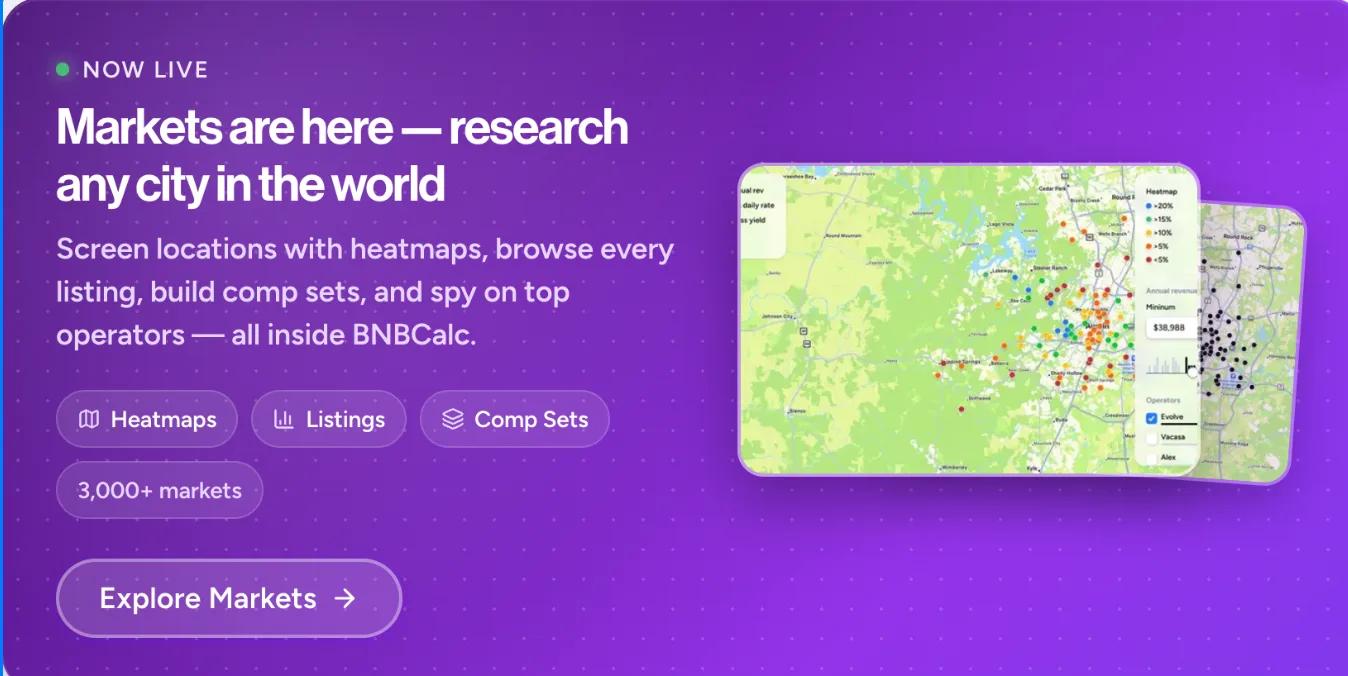
After that it's mechanics. He picked Florida because he could surf there, pulled a list of a hundred Vacasa owners in one area, and he's still working that same list. If you're deciding where to point a list of your own, start with the market data.
Key Points
- At the time of this conversation Ryan ran eight or nine properties across Florida and North Carolina, against a first-year goal of 15, and he'd sourced them from one list of a hundred Vacasa owners he was still calling.
- Roughly 30 connects per 100 calls is the metric he carried over from software sales, and he counts a flat no as a win because it confirms the phone number and the owner.
- The follow-up runs a call and a text on day one, the same pair on day three, then day five, day seven and day 11, and it stops only when the owner says yes or no.
- He quit his job on the math of a single client. One owner doing $100,000 in revenue, at a 10 to 20% cut, covered his rent in Montreal.
- His first client closed in April, about three weeks into calling, once he stopped trying to sound bigger than he was and pitched having zero properties as the reason theirs would get all his attention.
- A new property takes about 90 days to throw off revenue, since owners owe notice to their old manager, and Ryan treats that gap as cold calling time instead of getting buried in onboarding.
- He flies to every home and sleeps in it before it goes live. One house had Netflix missing from the Roku, and he caught it before a guest did.
Full Transcript
Listen to the full episode on Apple Podcasts, Spotify, or YouTube.
Jeremy: All righty, we are live with the Short-Term Rental Pros podcast today. I've got a special guest who came in from Montreal, Canada. He may or may not have gotten a speeding ticket along the way. I'll let him confirm or deny this story, but super excited to get into Ryan, his background. He's got a lot of momentum going right now, has done a lot in a relatively short period of time. We'll let him share more about that himself, but Ryan, thank you so much for coming and tell me about your background and how you got into short-term rentals.
Ryan: Yeah, for sure. Well, thanks for having me, first of all, and I can confirm we did get a ticket on the way. He lowered the speeding ticket, so at least it was pretty good, not too expensive.
But getting into the short-term rentals, I've been doing this for about three years, but really started, I would say, about four or five months ago, thanks to joining your group. Luckily, my dad, we purchased a property near a cottage up in Canada near Mont-Tremblant, if anybody knows.
Jeremy: Mont-Tremblant.
Ryan: There you go. It's a really nice ski town. He was using some lady who was charging like 20% just to get him clients and wasn't doing anything else. And I thought it was absolutely ridiculous they weren't utilizing Airbnb at all.
So then kind of jumped in, learned the ropes from there, and then was looking to purchase, and then kind of learned a bit more about co-hosting, something I never really thought about doing. But then you kind of led the way, introduced me a bit more to it, how to kind of get clients. And then from my background in sales, just kind of went all in. Within about five months, I'm up to about nine properties.
Jeremy: Very cool. So Ryan, tell me, first of all, how old are you?
Ryan: I am 26, almost 27.
Jeremy: Almost.
Ryan: 27 in October.
Jeremy: So I'm your elder statesman over here.
Ryan: That's it. You're the mentor, the elder, the guru, just trying to pass you.
Jeremy: So walk me back. Where are you from? Where'd you go to school? What'd you study? And what'd you do work-wise prior to the STR game?
Ryan: For sure. So I was born and raised in Montreal, grew up there in the West Island, and then did the classic school routes, went to JMSB Concordia, majored in marketing and finance. And then from there, jumped right into sales once I quit school. Sorry, graduated actually. So made it through, almost dropped out, and then found my passion. My family always told me sales, sales, going to sales.
So worked for a tech company called Lightspeed, was an SDR, BDR account executive, senior account executive. Really learned how to do cold outreach. So everything I did there was full cycle, outbound, cold calling. So what that means is that I'd find my own clients, basically just call them, they'd have no idea who I was, book a meeting with them, and then close them on the product.
I knew I never really wanted to be in the corporate world, but I knew I wanted to learn what that corporate structure looked like to really understand processes. And then just ran with it from there. As soon as you showed me how to build the process of a short-term rental, I knew all I needed was a list and I could get my first client.
Jeremy: So we'll get back to short-term rental stuff in a second, but Ryan doesn't humor my French as much as the other Quebecois in the group. We got Pascal, Seb. Oh my God. For whatever reason, a lot of Montreal in the house. But yeah, I love practicing. Practiquez mon Francais. But Ryan...
Ryan: I don't want to embarrass myself because I'm from Montreal and then I'll speak French. And I've been made fun of for my English accent, speaking French my whole life. That has completely traumatized me from speaking French.
Jeremy: Okay. So Ryan's here for a few days, but I guess I promise that I'll try to keep... Kate always jokes with me because if I'm ever with someone who speaks French, that's my only way to keep the skill and not lose it or get better is to just try and sure, make myself sound a little English or that is what's silly in the word in French. I don't know if you know that word, maybe.
Ryan: Yeah, you got to practice it. So we'll practice together.
Jeremy: I got to practice too. But what Ryan does love practicing is the sales.
Ryan: I do love the sales.
Jeremy: Ryan is a sales machine. He's been amazing because he's also been helping out other folk we work with refining their pitch, their why, how to connect, how to do objection handling. So tell me, you went to school, studied sales, which I don't really know how you study that in school.
Ryan: Didn't study it at all.
Jeremy: Didn't study.
Ryan: Studied marketing. I took one personal selling class just by luck. I took a high level class my first year because I didn't understand how college worked. And that kind of propelled me. Most of the sales skills I learned was being a waiter through university and something we call CEGEP in Montreal as well too. It's like that little gap in between high school and university. So that's really where I got a lot of my skills from.
Jeremy: So working.
Ryan: Yeah.
Jeremy: And talking to people.
Ryan: And talking to people. And then just jumped into sales from there. I finessed my way into a director of marketing job for a startup. And after like a month and a half, I was like, I have no idea what I'm doing here. This is not really for me. And I just felt bad. And then that kind of propelled me to go towards the sales route.
Jeremy: Got it. So tell me about the job you had and what was the point where... Because I think, and correct me if I'm wrong, but we started talking, you're working, you had a sales job. And initially, your goal was you had some money saved. It was to deploy that capital and deploy it in the US. So that was your initial goal.
Then I think you mentioned to me at some point, you're like, yeah, I've had an experience at work or the company culture and the product we're selling is just something that I can't really get behind. So I need another route. And then co-hosting and a property management, vacation rental management business was to me the route that I think is the route for someone with that specific situation. And you went balls for the wall.
And I say this because I feel like I asked people like, what's their why? And I feel like I can tell when someone's going to be successful at something, when there's just something burning in them for whatever reason, to make it happen. And when we talked and I was like, all right, Ryan's got that. He's got it. He's got the fuel. So tell me, I'm curious. I don't want to go into too much detail, but what was that moment when you made that switch of like, all right, this is what I'm going to do and I'm going to make it happen?
Ryan: Yeah. Like you said, I was never happy being in the corporate structure. I always knew I'm from a family of entrepreneurs. Like I said, in my head, when I joined the corporate world, it was not about the money. It was literally just to learn skills. Thankfully, because I had that mindset, the money did come naturally to it. And as soon as I knew that I retained the skills I was looking to retain, it was time for me to exit. I didn't feel like I could always learn more where I was, but I felt like I learned enough.
And then I just started doing the math of like, okay, if I just get one co-hosting client. And just going back to the co-hosting versus purchasing, co-hosting to me was like, this is a cashflow business. Everybody wants to get into real estate where you see zero downs, no money, you don't need to do it. But 90% of people that are doing real estate have a business that cash flows and then invest that cash flowing money into assets.
So I was like, how do I quit my job the fastest possible and be able to at least just survive was co-hosting, and then doing the math with you. What's one client that generates $100,000 in revenue and you take even 10% of that or 20%, you're like, okay, one client there.
Jeremy: That's apparently your rent in Montreal.
Ryan: That's it. Yeah. I was like, what can cover my rent? And I was like, okay, well, if I get one client that could potentially cover my rent, then why not just go after that?
So I knew from the corporate side that it's like, if you get a list of 100 people and you call every single one of them, odds are one of those people, you could probably get to sit down with you and hopefully close. So I knew that framework off of just repetition. And that's really what gave me the motivation and the knowledge that I knew I could do it, as well as just you guys' backing that I knew that I had a team behind me that would not let me fail as long as I put in the work.
Jeremy: So tell me, what were you selling beforehand? I guess, what were the similarities and differences? Because I'm assuming you were selling like a product for a company.
Ryan: Yeah. Kind of SaaS product style. So it was restaurant point of sale systems to restaurant owners, which are the hardest people to sell anything to because they're very cheap and you can't blame them because they're on small margins for everything. But yeah, that's what I was selling.
Jeremy: And then transferring that to selling your services, which in many ways are selling co-hosting services, which in many ways, you're selling yourself. So what was the difference in going from one to the other? Did you have to change your high level approach? What are some takeaways you had? I'm curious, given your sales or software sales background and then transferring that into selling co-hosting.
Ryan: Yeah. I mean, at the end of the day, sales are sales. As long as you believe in what you believe in, which that was the biggest transition afterwards, it was even easier to sell myself as soon as I got in the mindset, I believed in myself.
The similarities behind it all is just what I was doing at that company most of the time was selling to somebody that already had the product from a competitor. When I came into this industry, I was like, okay, there's different people that take the routes of convincing somebody to do co-hosting or convincing somebody to even do an Airbnb with their property. I was like, I'm used to selling to people that already have a product. I just have to convince them that I'll do a better job. So I took those similarities and the same framework of how I called and just deployed it straight into this business.
Jeremy: Got it. So when you say they had an existing product, a lot of times, tell us about your outreach strategy. Do you go after people with existing properties?
Ryan: Yes. Most of the time, not to fully call out the full method, but I go after... Right now there's some corporate companies that aren't doing too well. So Vacasa is the example that we see a lot of times. And the big transition right now with co-hosting is people want boutique white glove service co-hosting businesses. So a lot of these companies that went huge during COVID and 2021 and just exploded, which that was the exact way to go during that time. But the competitiveness in this market is just insane now that people need to have that difference, that touch. So that's what I was pushing towards people.
Jeremy: This is something I say, I know for y'all listening who listen to the podcast regularly, I'm a big proponent of being a boutique vacation rental manager. You have a massive advantage, I say like 25, 25 or less than 25. You're going to just be more on top of stuff. And if you have 40,000, cough, cough, Vacasa, if you have, I think 12,000 of all.
Ryan: Something like that.
Jeremy: Yeah. Pretty big numbers. There's just no way. And frankly, just the person who's doing your day-to-day management of your property, they're getting paid 60,000 a year with some benefits and minimal upside. Do they really care about making your property crush? Probably not. Do they really care about responding to the client, the underlying owner in 24 hours or less or having them text them? Probably not.
So when you talk about white glove service, how do you... Benefactor, first of all, tell us the timeline of when you said, all right, I'm going to do co-hosting. How long did it take to get that first client? And then walk us through how you've scaled since then.
Ryan: For sure. So started in April and got my first client in April. It took about three weeks of, like I said, I got that list of people I picked. Honestly, for those of you who are listening as well too that are struggling with analysis paralysis, it took us four months of talking that I was going to purchase something until I was finally like, okay, let's go into co-hosting.
Jeremy: That was a pivot. That was a big pivot.
Ryan: It was a big pivot, big analysis paralysis moment. And then I just got into that mindset of just pick something you like. So I love surfing. I can't do it in Canada. Found a spot in Florida that I can do surfing. So I was like, cool, if I have to go down there, which I do everything pretty much remotely as well too. I just made a list of a hundred Vacasa leads in that area and just started ripping dials until somebody gave me an opportunity.
Biggest things like we were talking about there where somebody is getting paid. I explained to people like, I only get paid if you guys get paid. So it's beneficial. It's a two-way partnership over here. So that's why people started understanding and believing that it's like you're having somebody that's managing your property that is getting paid and didn't go to what I call school. Our coaching program is the closest thing that I explained to people that you can go to school as a short-term rental pro.
So utilizing those skills, teaching people, explaining to them our process of how we built with different discounting structures and all that stuff, and just going into heavy details. People started to understand what we were really trying to push, really trying to make a difference. And then with that last push of you get paid when I get paid, I get paid when you get paid. I'm in this with you guys. Really makes people trust you more.
Jeremy: Yeah. And I think with sales, I think you had a good approach where you said, all right, if I'm going to call a hundred people, I know I can convince one that our software is the right software for them. Or in this case, I'm the guy to manage your property. And I think people who don't have sales backgrounds, like let's say they make 10 calls and maybe they get one person who picks up who just says like, sorry, I'm not interested. And they take that as like a huge loss.
Ryan: Yeah. It's tough. There are some that suck, but yeah.
Jeremy: But I think the way you have to do it is you have to just take the wins. The smallest wins are wins. So a win is someone even picking up the phone, right? And getting someone on the line. A win is getting them from that first call to a Zoom, a sit-down Zoom. I think a lot of people want to sell themselves entirely on that first call. But really that first call, you're just trying to listen to them, right?
Ryan: A hundred percent.
Jeremy: You're just trying to understand what their pain points are. And yeah, I guess, walk me through, what is your... Give us your approach. I mean, obviously you've had a lot of success with it.
Ryan: Yeah.
Jeremy: What is your approach?
Ryan: Yeah. Great question there. So like you said, the biggest thing when you first do in sales is have some sort of metrics. So it keeps you sane because you might think you're doing a lot, but then you go see somebody else or you speak to me and I'm like, yeah, I just made a hundred dollars today and you made 10 and you're discouraged. It's like, okay, no, it's not about being discouraged. It's about understanding the amount of input that you need to actually have.
So that was kind of the first thing I did was try to use the same framework from my sales job, which was if I make a hundred calls, hopefully 30 connects. And like you said, I'm just happy if somebody answers the phone. To me, somebody answers the phone, give me an answer is just one less person I have to call. It's like, cool, we're done. We got that person. I just want some sort of answer and I won't stop until I get an answer from you.
So my outreach approach is call and text right away. I get people's phone numbers, make a list, and then I'll do first call. I don't even leave a voicemail, you can, but then I just shoot them a text is exactly what I would have as my intro sentence to them. And then it's just follow up from there. So let's just say you'll do day one as a call, day one as a text. So you break it up into days. Day three is call two, day three is text two, and then day five, day seven, day 11. And you try to just keep up with that until you finally get an answer, which is a yes or a no, but just an answer. It's all you want.
Jeremy: You got to take a no as a win.
Ryan: Yeah. A no is a great win because that's just like one less person I need to call 50 times. It's like, no, I'm not interested. Cool. No problem. I'll follow up with you in three months. Now I know I have your phone number. Now I know you're the owner. So now I actually know that my data is correct.
Jeremy: So you're like, hey, I got one person at least that I know is real.
Ryan: You get an answer. It's way more discouraging to have nobody answer than it is to have somebody tell you.
Jeremy: It's like you're blind, you're flying blind.
Ryan: Yeah. It just sucks. You put in so much work, you call 50 people and you don't even get information, because even those people that are giving you a no, the goal is to just get information. Like you said, whether it's a yes or a no, always try to walk out of any call with just some kind of win. Take your notes. Like they say, hey, I just started with this service. I'm going to give them a shot. But yeah, this is a no, but it might just be a no for today.
Jeremy: And the KPI, I mean, I probably at this point kind of like a broken record, but two things is like consistent action over extended periods of time. You keep at it, you keep at it, it's going to work. When it works, oftentimes it rains, it pours. People in America, maybe Canada too, a lot of these folks don't just own one house. They own two, they're buying a third. Their grandma has three that they might inherit in two years, stuff like that happens.
Second, you want to just be having conversations with the right people. And even if it's a no, you're talking to the right person. I even say like if you have like nice properties, and I think Thomas is like, give him a shout out of like, he just like talks to his guests like on the phone. And next thing he knows, he's managing nine properties for his guests. He's like, well, if someone's renting a $5,000 a night house, they probably own a $5,000 a night. I'm like, yeah, I guess that makes sense. I did used to manage a $5,000 a night house and I probably should have, I did talk to them, but I should have, hey, do you happen to own a vacation house? Oh, where is it? Portugal? Oh, yeah. Let's do it. I've got a management arm in Portugal. Of course I do.
So a couple of things, first of all, I think it's hilarious that Canadians love Florida. I love Florida. I don't know why you, Pascal, Matt and Lori, what is it about Florida?
Ryan: It's a snowbird central. Honestly, you'll probably find 50% of Montreal in Florida, just like Northern US, like everybody's walking down to Florida now.
Jeremy: Yeah. Maine, New York.
Ryan: I mean, my whole grandparents go there every single winter for, I don't know, 10, 20 years. They spend six months in Florida. Everybody just knows Florida.
Jeremy: Yeah, and I guess it makes sense that you picked a place that you could surf. Because I always recommend, if anyone wants to do Florida, to me, the best place to do a management business is Kissimmee, outside of Orlando. There's just so many vacation rentals.
Ryan: There's so many.
Jeremy: It's near Orlando. There's a lot of electricians, handymen. You're not going to have an issue with vendors. B, you have a lot of international investors. So it's like people are like, oh, well, how am I supposed to manage and start this business remotely? Well, Ryan over here is not even out of state. He's...
Ryan: Out of country.
Jeremy: Out of country. But a lot of times, it's easier to be out of country or out of state when your buyer's in China or your owner's in China. But now I think, okay, it makes sense that you wanted to surf. So tell me, when you get a property, do you physically go there? Do you do a walkthrough on Zoom? Tell me about your process of onboarding clients.
Ryan: Yeah. So once I finally lock it down, I go to every single property. That was the main part of why I also started this business and why I had the fire of it as well too. And the why is travel, financial freedom, two main things. I'm sure you hear it from everybody anyways. But yeah, so I was like, okay, well, let's go pick a place I'd actually want to go down to.
So I fly to every single home. I do the full walkthrough. I stay in the house because I started to learn that you don't know everything about a house until you sleep in it at least one night. A good example is one of the houses I stayed at, I went to go watch Netflix at night because that's what most people do. Netflix wasn't downloaded on the Roku app. And I was like, oh my God, somebody would freak out about that. And thank God I caught that beforehand.
Ryan: So experience is better. So that way I take videos of everything. If I want to hire a virtual assistant, then that way they have all the stuff that's needed and all the knowledge about every single stove, every single utility appliance that you have in that house. Because if somebody calls you with an issue, thank God we're online now, you could take a photo and put it on Google and it gives you the exact make and model. And then you could just report it, figure it out what the issue is, call your cleaners, call your handyman, you have everything solved.
Jeremy: And you've done also, you've built relationships with the local vendors.
Ryan: Big time. That was like one of the biggest things that propelled me to where I'm at today. Every time I go down, I try to schedule five or six different meetings while I'm there, try to meet with different people. And that's what's helped bridge that gap from being fully...
Jeremy: Kiss some babies, shake some hands.
Ryan: Exactly. Which I did. So one of the properties that I have, whole family was there. Their daughter just showed up, gave me a hug. And I was like, that's that edge that you're taking, even with local competitors in the area. I'd still take the extra mile while not being there. But if you got to go fly out to go get an awesome property that could do $200,000, let's just go do it.
Jeremy: Do what you got to do.
Ryan: Exactly.
Jeremy: And yeah, Matt and Lori, I know that's their pitch. And even though they're in Canada, they're like, we will stay at your house. We will stage it for you. And that's something I've seen you do also is you've helped stage the properties. You're there when the photographers are there and really emphasizing the marketing.
Ryan: Big time. One of the biggest shout outs I could say to anybody in the photography industry that wants to do this is make a staging business with it. Charge more, I don't care. But it's so hard to find a photographer that will stage and set it up. Most of the time, they just come and do their photos. They do a great job at it. But right now, I've had such a difficulty finding photographers that will bring the wine, bring the fruits, do all the stuff that we want to do for staging that really makes it stand out.
Jeremy: Gotcha. So got that first one in Cocoa Beach in April. So you really started doing this in April, started calling?
Ryan: I'm up in Palm Coast. I did start in Cocoa Beach calling, but it just led me down to Palm Coast, Flagler Beach.
Jeremy: Okay. Got it. Yeah. Okay. Flagler. So that first one, I mean, that first one's the hardest.
Ryan: Yeah.
Jeremy: You have no track record, no portfolio. How are you able to sell someone when you haven't even technically done this yourself?
Ryan: Yeah. Lots of conversations, drop my prices, did the undercut route, tried to do some guarantees, any way that I could set it up just for somebody to give me a shot at the house.
Jeremy: Oh, you also do creatively show experience.
Ryan: Yeah, exactly. So coming in, showing exactly what you guys taught us of what I would do to do differently, just talk about the issues coming to the house.
Jeremy: Also, you can say, give examples of properties that you've helped out with that are in Florida.
Ryan: Exactly.
Jeremy: I know you didn't close that guy, but yeah, we were on, whatever happened to that guy? We worked hard for that guy.
Ryan: Well, there was one guy with like five properties or something, but he was selling them off because regulations...
Jeremy: I guess we had two calls, yeah.
Ryan: And then another guy too, that he did go with a competitor that was local. It's going to happen. I spent four months with this guy and I'll still text him every month asking him how he's doing.
Jeremy: Exactly, playing the long game.
Ryan: Yeah. So that was something I learned along the way of just like how to sell yourself better. So again, every single conversation, every single situation, like you always said, put yourself in the room with people, have conversations with people you want to have conversations with. And that guy taught me how to sell myself to the next person, not try to be bigger than I actually was. Go into the, I have no property, so your property is going to be like the biggest priority to me.
Jeremy: Oh, I didn't know you actually... Because what I generally recommend to folks is it's helpful to have some experience and have some properties to show. You can be creative with it. They don't necessarily have to be your own. Don't lie. Don't encourage anyone to lie, but say like, I work with so-and-so. I'm launching the Cocoa Beach or the Flagler Beach arm of this. But you're saying that you actually found most effective to just say, I literally have zero properties. And because of that, I'm going to be on it.
Ryan: Yeah. That was my big transition. I was just trying to be a little bit bigger than I actually was. So not lying, but kind of figuring out a way of how to pitch it. So that was the first time pitching it being like the wing. But instead, I pitched it more like I am in a school for short-term rentals. So look at the properties that we did work on that I did go through them with you, understanding what makes them stand out, how that stuff goes.
So kind of went that route a little bit more, which then sounded a lot better than trying to be like, we're doing a division of it, this and that. It was more like, this is the school. These are the people who are backing me up and they're not going to let me fail. And you can see they're on top of their sh*t. And I know the same stuff that they know I'm doing the same pricing strategies, same marketing techniques.
Jeremy: Okay, cool. Well, that's great.
Ryan: That being said, you guys hopping on and still showing the stuff and all those things that helped me propel to where I'm at today, it helped a lot. It was just that little bit of a switch of just how we were pitching like who you guys were.
Jeremy: Yeah. No, I think it was just sales and finding that comfort zone. And then ultimately, you're connecting with somebody.
Ryan: Exactly.
Jeremy: So figuring out how you can most effectively form an emotional connection with them. And I think, yeah, saying, hey, I'm going to be on this sh*t. I will be giving your property the most care that you've ever seen. And people buy. They buy into people. People do business with people. They know, like, and trust.
Ryan: Exactly. That's just a fact.
Jeremy: Okay, cool. So you got that first one, got it up and running. How did you scale from there?
Ryan: Yeah. Honestly, I'm still cold calling the same list that I built from day one. I haven't really had to expand too much. So just kept following up with people, kept following up with people. My second client came from accidentally texting her ex-husband and then him passing on my number to her. And then I got two of her properties because she wasn't happy with how the service was going.
Had that first one underway. Then really believed in the team that I built. Again, just speaking to people, got introduced to who my cleaning team is now, who my handyman are. And that was all just from talking to people who already had the houses up and running. So I didn't really have to go that far in meeting new people and just really trusted that other people built good relationships and just built up on those relationships. So once I started cold calling from there and I knew I had a team I could trust, then you just sounded even more confident and even more of an expert in the area. And it just kind of grew from there.
Jeremy: The Tar Heel State, man. How'd you get in? So you started in Florida. What you doing in North Carolina, man? That's my territory.
Ryan: Hey, listen, first of all, you gave me a little bit of a push thing I could enter.
Jeremy: Oh, no, totally cool.
Ryan: Yeah. And then, like you said, most people own more than one home. Most people don't want to work with more than one person. So thankfully, one of my clients that were in Flagler Beach just started their property in North Carolina around Asheville. And naturally, a lot of people are like, where do I go? What do I do? It's like, just let your business take you whichever way it's going to go. So now I'm in North Carolina.
Jeremy: Well, you focus on the relationships and showing people that you're good at what you do and people expand. And I think it's awesome that you've been building in public.
Ryan: Yeah, thank you.
Jeremy: Because I know you're going to manage this one that's under construction, like a beachfront property in Florida.
Ryan: I hope so. Knock on wood.
Jeremy: Well, you've been there.
Ryan: I don't know. I've been there doing the personal relationship stuff, connected them with somebody in our group as well. Shout out to Ali and them that they do murals. So just trying to be somebody of resources as much as you can. Obviously, there's that underlying like you want to manage their property, but trying to just do it in a way that you're being helpful.
Jeremy: Add value, have conversations with the right people. Good things come from it.
Ryan: Relentlessly follow up.
Jeremy: Relentlessly. And good things come from it.
Ryan: People ask me that all the time. I send people in our group screenshots of me, like 15 messages every two weeks, every sometime. Just, hey, how's this going? But just not being like, the one thing I always say, if you're following up and being annoying about your messages, just be annoying with providing value. Don't just be like, hey, following up. Hey, just wondering how you're doing. Anytime I'm messaging something, it's an update about my business. It's a, hey, just saw something cool in this area. Hey, I think this would be really cool for your property. Never just like a, hi, how's it going? Been a while since we last spoke.
Jeremy: So what's it been like? So you've been sharing your journey. You started posting on LinkedIn, TikTok. So how has that process been and has that done anything for you?
Ryan: Don't know yet. Honestly, we'll find out. A lot of it is just connecting with other people in the short-term rental industry itself. So I don't really expect, maybe I'll get a client or two from it. But honestly, it's just fun to connect with other people that are passionate. I've had a lot of people reach out that want to start a co-hosting business from it. And I love sharing and helping people as much as we can. And it's also just fun. It's just fun to do it. So I don't know where it's going to go. But like you said, just putting yourself in the room with the right people and reaching out, something might come out of it.
Jeremy: So I saw you even like shouting out your clients, tagging them on LinkedIn. It might not be something that someone reaches out to you, but they look you up.
Ryan: Yeah, exactly.
Jeremy: So you don't even know. Maybe they do. Maybe they don't.
Ryan: They probably do.
Jeremy: So it becomes like your own CV just being online like that.
Ryan: And then I would love to take that different route than these corporate companies are doing, which is just like we have a website. So that's how we go. If there's a way I can utilize social media to help promote my clients and just expand from that way, then that'd be awesome as well too. Just a different avenue.
Jeremy: Yeah. And something I say and I like because I like when I say things and then you do them. But I wish I built in public earlier. I really do wish if I went back to 2020, I'd be standing there on a pontoon boat, broken down in the middle of the lake. And I wish I would have just taken my phone out and made a video. I'd be like, you know what? I'm out here in the middle of the lake. My boat's not working. I'm waiting to get towed in. But I'm going for it. Stay tuned. I'm going to look back at this. But I was just literally so focused on it.
Ryan: Yeah, I know.
Jeremy: But you always do have time to just document your journey. And since when I started documenting my journey, just threw fuel on the fire. And so many opportunities came from it. I think like you said, you don't even know exactly what those opportunities are going to be, whether it be opportunities in the industry, whether it be opportunities on the specific businesses, people coming to you, offering, hey, manage my property. I know I showed you one of those that I got the other week that was in closer to your market. So I let you know about it. But keep doing that is what I say. And good things, maybe we'll have you on later. And we'll see good things come from it.
Ryan: I hope so.
Jeremy: But be consistent with it.
Ryan: Yeah, it's hard to be consistent with it. You do a great job from that. It is hard to just pull your phone out and do this stuff. So if anybody has tips on how to do that, that's my hardest thing is the consistency of posting and videographing yourself. But it pays off. It's awesome.
Jeremy: Yeah, exactly. No, it's tough. And being consistent with a podcast, making sure I get one of these out a week and being consistent with putting videos on Instagram. But consistency, it's just about being consistent over extended periods of time. You don't have to have it all figured out. But if you just do it, and you keep doing it, and you have high level metrics for success that aren't like a million dollars in two days. It's like, no, I know if I have conversations with the right people, I'm in the right room over an extended period of time. It's gonna work out.
Ryan: It's gonna work out.
Jeremy: So kudos, kudos for you. But yeah, tell us, I know you posted in the group, but you started in April. You had a good month in August. Where are you at now? And where are we trying to get out in the next year?
Ryan: Yeah. I mean, my goal from when we started the co-hosting business and I went all in was 15 properties in the first year. We're at eight, almost nine. So hopefully we'll get to that number before the end of the year. Right now, it's a bit of a transition because a lot of the properties that I'm bringing on, it takes about 90 days until we start seeing the revenue. So hopefully in the first year, we have a quarter mil year in revenue for the clients. And I'm hoping to hit about that 2025 mark now is getting closer to the number that I could see myself getting to.
Jeremy: Got it. Yeah. Because there's a ramp up period. A lot of times you get a listing.
Ryan: Which is great though for growing because once you get it all set up, then you have that time period of just kind of relaxation. So every single time I have a new client, then there's like three months until your first client actually shows up at your doorstep. That gives you so much time to now cold call and get more clients and kind of continue that process. So it actually ends up kind of making it a really nice step by step by step instead of just being heavily overwhelmed with onboarding and then going live and then solving all the issues and going from there.
Jeremy: To clarify, it's three months because they have to give notice to their old manager a lot of times. So it's three months until a booking comes that's like your client, right?
Ryan: Exactly.
Jeremy: And the revenue comes in and comes to you as well.
Ryan: Exactly. So we're able to do all the order sheets, get the stuff set up on how I wanted to get it set up. But there's like a 90 day period of kind of taking our time to get that instead of just like, we want to be live tomorrow. Okay, we got to order all this stuff, get it all set up and just kind of run through everything. It makes it a bit more relaxed. It's still a lot of work onboarding somebody, but it allows me to spend my time out to keep on growing.
Jeremy: So somebody, go back to where we were earlier, you were looking to buy.
Ryan: Yeah.
Jeremy: Someone, let's say someone's in your shoes, they're a young professional, say they're your age, 26, they work a sales job, decent job or decent good pay, benefits. Should they buy? Do you think they should create their own business? Like what would you recommend? I mean, if they're listening to this, they're probably more of a hustler.
Ryan: Yeah.
Jeremy: So what would you say to them?
Ryan: I'd say depending on your goals, always. If you're happy and you want to keep your job, maybe purchasing is a good way to go. But if you want something that's going to supplement your job as fast as you can, I would say co-hosting is definitely the way to go.
I would also say co-hosting is the way to go because you'll see all the finances and how much it actually costs to run a short-term rental, have the strategies, understand what's working. So then when you want to actually buy something, you've got a business that's going to be complementing that and constantly growing. And then you'll actually have a stronger understanding of how much money it actually takes and how much cost each month it takes to run a short-term rental.
Jeremy: So you'd say it's training wheels on someone else's bike.
Ryan: Yeah. Yeah. That's a very nice way of putting it.
Jeremy: Yeah. I wrote that down. I thought that was good.
Ryan: You got to coin that.
Jeremy: Yeah. I'm going to use that, Sawyer. Write that one down. Thank you. Thank you, Sawyer.
All right. So this is your first time being here since we had...
Ryan: The conference.
Jeremy: The conference. So I haven't had the chance to decompress with you or get your feedback. What did you think about that day? What was it like meeting everybody in person?
Ryan: It was the coolest thing ever. It was like being in the room of a bunch of like-minded people. It was my first time actually going to a conference too. So it was a huge shout out. I don't know if a conference is the right word.
Jeremy: Group meeting? More intimate.
Ryan: Yeah. It was a seminar maybe or mastermind.
Jeremy: Big mastermind, we'll call it.
Ryan: But it really brought in that kind of understanding of why conferences and why these masterminds are as awesome as they are. One, just being around people that are doing the same things as you is a big, big sanity check when you're especially doing something remotely and you're going out finally on your own to go do something. Like you are on a moat. You're on that island. And having the group around and just the people all working together, it gives you that confidence.
Jeremy: Who was your favorite speaker? You don't have to say me. It's okay. You weren't going to, but you don't have to.
Ryan: I loved John Bianchi again. Just that route. There's a part of me that would love to start the co-hosting business from working with somebody who wants to invest and finding investors. So just having that mindset again of really learning how to analyze, even for people that you're trying to pitch to, just really solidify the understanding. Helping them improve their properties too. And really how to go into that data again and really, really find where your property stands. Yeah, it was really cool.
Jeremy: Yeah. That's why I was recommending it. Because there's folk in the program and I, myself, I've bought, I've raised money to buy, scaled through co-hosting. But it's good to usually tell folk like, all right, focus on one at a time, but it's good to learn about the other because it just gives you a more holistic understanding. And ultimately, it lets you put your feet in the investor's shoe. And if you're able to think like an investor, then you're able...
What can we do better next time?
Ryan: Go bigger.
Jeremy: Go bigger.
Ryan: Get more people. Get a bigger office.
Jeremy: Get a bigger office.
Ryan: I think it was great. The whole thing was awesome. I wouldn't have changed anything for it.
Jeremy: I do like the intimacy aspect.
Ryan: Yeah. More days.
Jeremy: More days.
Ryan: If I could do it for two days, I would have had a blast as well too.
Jeremy: All right. Well, yeah, I need to put in the group. Yeah. We're going to get something on the calendar. Maybe come do it in Canada, actually.
Ryan: Canada.
Jeremy: Maybe, maybe at some point. Very cool. So yeah, Ryan, what is your biggest pro tip to crush it, short-term rentals in 2024?
Ryan: Biggest pro tip is be different in the marketing for sure. What I'm seeing a lot with co-hosting, what allows me to pitch my product better than anybody else is showing how I stage and pitch my products. So trying to get those influencers in, really working on the staging, showing your listings of experiences, not just real estate photography shots. And that's what's allowed me to really differentiate myself from the rest. So be different.
Jeremy: Yeah. You heard it here first. Be different. Awesome. So folk who are interested in you, your journey, they want to see how you're building in public, how can they follow you?
Ryan: Instagram, TikTok, LinkedIn. I try to post a lot. I've been posting a lot on LinkedIn, but Ryan's Chronicles. So document my journey, travel, try to, like you said, just build in public, but also show a bit of lifestyle as well, too.
Jeremy: Awesome. Well, Ryan, thank you so much for physically coming. I'm sorry that sounds like you got a little bit of a speeding ticket.
Ryan: I might have to pass it on to you for the expense.
Jeremy: Yeah. Maybe don't tell your clients about that one.
Ryan: Yeah. Well, we'll talk.
Jeremy: Yeah. We'll have fun the next couple of days. We'll show you a good time. You got your girlfriend in the back of the room.
Ryan: Yeah.
Jeremy: You want to give her a shout out?
Ryan: Yeah. Shout out to Chanel for coming down, too. I drag her around everywhere.
Jeremy: How does she help? You were telling me, actually, she said she's the brain.
Ryan: Oh, man. She makes me sit down. I'm like ADHD brain and she helps me focus and write out processes and set stuff up. She's really great with all that and is a tech whiz as well, too.
Jeremy: Beautiful. Well, thank you, Chanel, for coming, for accompanying him. Thank you to everybody listening.
Ryan: Thank you, guys.
Jeremy: Stay tuned to the next episode of the Short-Term Rental Pros Podcast.
Airbnb Tax Deduction Calculator
Paying too much in taxes? We have the perfect solution. Simulate an Airbnb home purchase below.
Purchase Price
$450K
Structure Value
70%
Apply Trump's Tax Cut (Bonus Depreciation)
Depreciation
$117,695
Interest
$21,600
Tax
$6,750
Year 1 Deduction
$146,045
Want to claim this deduction? Get a free cost segregation benefit analysis from CSA Partners — no obligation.
Get Full Analysis