
Free instant analysis
Reveal Airbnb revenue for any address or city
Quick Summary
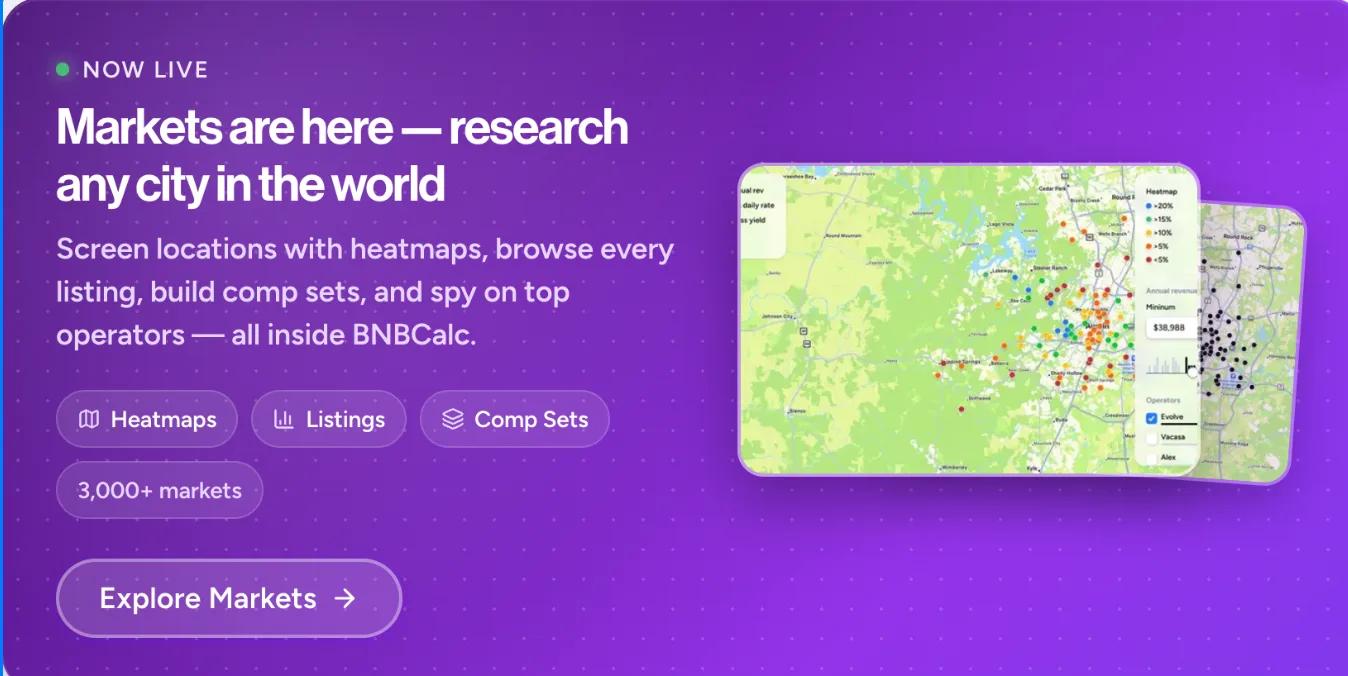
Arbitrage here means they lease the house and re-rent it, so nothing on this property is owned. That was the workaround, not the plan. Flipping in Ontario had stopped working for them, and buying in Florida as foreign nationals meant 65% loan to value plus a tax and insurance bill that wouldn't pencil, so they took a lease instead and treated the first house as a live test of the market. If you're weighing the same move, check what a market actually supports before you commit a down payment in BNBCalc Markets.
Key Points
- They wanted to buy in South Florida, not lease. As foreign nationals they were quoted 65% loan to value and higher interest rates, and on the strip between the ocean and the Intracoastal they were looking at property taxes of about $25,000 a year and flood insurance of about $20,000 a year. Added up as a purchase, they say it wasn't going to cash flow, so arbitrage became the workaround rather than the plan.
- The push out of Ontario was regulatory, by their account. They say the landlord and tenant board carries a 10 to 12 month wait for a hearing, so a tenant who stops paying can sit for close to a year, and that rent increases were capped at two and a half percent in back to back years after a year when landlords weren't allowed to raise rent at all. Flipping had stopped working there too.
- The first Florida property went live in April and has run close to 80% occupied across roughly four months, which they point out covers the slow season rather than the busy one. They fly back every other month to walk the property, and that habit is how they turned up an ant problem on one trip.
- Their first trip down was booked for a week and turned into three. The realtor had posted old photos, the furniture that came with the house was water damaged, and Matt describes hauling it to the garage and refurnishing the place out of pocket, with Lori shopping and him assembling. They also arrived to find the landlord hadn't moved out, so they spent the first two nights in the house with him, which is where the relationship got built.
- Lori lays out the split herself: Matt does a lot of the marketing, she does a lot of the analyzing, the design and the bookkeeping for now. Matt says her scan of the competition turned up one nearby listing offering a yacht rental, on a house that was otherwise nothing special, and it was doing well. So they lined up a boat company with a large fleet, negotiated a guest discount, and plan to hand it over as a scan code that differs by property.
- They get in front of the neighbors before the complaints start, passing out their phone number and walking through what is installed, including a noise sensor and cameras at specific points. The sensor has gone off maybe twice, one of those on the 4th of July, and only slightly over a local ordinance that runs 10 PM to 8 AM.
- The case they make for arbitrage is that it buys a real read on a market for far less than a down payment, which matters because the longer plan is to bring investor money in and purchase. On the cross-border side they describe working with a cross-border accountant and running a general partner and limited partner structure, and they say to take entity and tax questions to your own accountant.
Full Transcript
Listen to the full episode on Apple Podcasts, Spotify, or YouTube.
Jeremy: We are live with the Short Term Rental Pros podcast. I'm super excited to be here today with Matt and Lori, a couple out of Canada, who has a really awesome background in multiple strategies in real estate. They're actually joining us from one of their short-term rental properties in South Florida.
Matt and Lori, thanks guys so much for joining today.
Matt: Yeah, thanks for having us.
Jeremy: So tell me, how did you guys get into Airbnb and real estate in general?
Matt: You go for it.
Lori: I guess we were both working full-time jobs and we're unhappy with them, of course. And so we started looking into real estate back in 2018 and we joined quite a large network up in Canada. And they basically teach you the BRRRR method and how to get started there. So that's how we basically started our journey.
We bought a house, we made it a duplex, and we've been renting out ever since and kind of got a taste for flipping. And in 2020, when the pandemic hit, it was time to pivot a little bit, because flipping was good and we made quite a bit of money during that time and we really enjoyed it. And I was able to make it my full-time gig and it really made a big difference in our lives.
And then, of course, now after the pandemic, things slowed down, especially in Canada. It's very difficult to flip now. So we had to pivot again. We looked into Airbnb and just kind of took off from there.
Matt: Yeah, we were interested in short-term rentals. We bought a cottage. It's a big old A-frame on a lake up north and we've been trying to renovate it. It's really difficult to get trades up in cottage country in Canada. It's a slow way of life and people are pretty busy, as it is. There's more jobs than people.
So that was supposed to be our first foray into Airbnb, but it was just taking too long. So we decided we should check out Florida, some other areas. We've checked out a bunch of states, but this is where we felt we wanted to be. And we went to a mastermind in last August, so it's been about a year.
We were going to flip, but now we're transitioning to STR just because we love the arbitrage strategy and the minimal risk. There's still risk, but we like really everything about it. So that's it.
Jeremy: Deanne, I think when we had our initial call, and then for some context, I've been working with Matt and Lori probably since January, maybe?
Lori: Yeah. I think we first talked in December.
Jeremy: Yeah. And then really kicked things off in January. And then I think you got the first property up in...
Lori: April.
Jeremy: April. Yeah, April. So I guess it's been about seven months now.
But I thought it was just so cool, because the thing with real estate, there's all these different strategies, and different strategies might be right for a person at a particular time. For home flipping, a lot of it's predicated on home prices going up and getting that one windfall. You sell the house for a profit, it goes in your pocket, you locate and do the next deal.
Whereas arbitrage is predictable monthly cash flow. Obviously, seasonality is a big part of it, so it's not every month is the same. But really, that's what it is. You have your variable monthly costs, and then you have your rental potential, and the net is cash flow. Obviously, there's big bookings, but it's not like, we just sold it, we made our money, now on to the next thing. It's really more of an operational play.
So is that kind of the reason, I think when we talked, that was really shifting from swinging for home runs to something more of a business that you could grow over time?
Lori: Yeah. So like we mentioned, flipping wasn't really viable anymore in Ontario. And I would say the government is our biggest threat to our business up there right now, because they can dictate how much we can charge for rent, they can dictate how we rent our property, and then how much we can raise rent every year. So it just wasn't conducive for us anymore.
So that's when we started looking into purchasing in Florida. But even here, as foreign nationals, it's much more expensive for us to purchase. We maybe only get 65% loan to value, our interest rates are higher. And the areas that we're looking in Florida right now, we're between the ocean and the intercoastal. So property taxes are like $25,000 a year. Flood insurance is like $20,000 a year. So when we added it all up as a purchase, we weren't going to cash flow.
So that's when we started looking at arbitrage, because we can see the numbers in this area are very strong. So it actually made more sense for us to rent in this particular scenario until maybe rates get better and things like that. And we'll start buying properties then.
But right now, the arbitrage model just fits our risk tolerance, for one, because we're new to the area. So we would like to get to know it well before we really jump in and bring investors down, because that's ultimately what our strategy is, that we have investors that bring the money and then we do the managing. So I wanted to make sure that we could test this market and know that it's strong before we start bringing other people's money down to purchase properties.
Jeremy: Got it. And that's, I guess, something I like to do. My most recent purchase is an example of this, where I did arbitrage in a new area that I wasn't familiar with prior to buying a house.
A, obviously you want to stress test: are people coming down here? What are they paying? Et cetera, et cetera. But it's also, who are the clients that you're having? You don't want to get into a situation where, for whatever reason, the client demographic coming to your area is something that's outside of your avatar.
So I really like, and I love that you guys are doing this kind of like the arbitrage, testing the water. Also, you're building your network in the area. I know you guys, before we got on, they laughed because the pool guy came by and apparently he's a looker. From what I've heard.
Matt: He just walked by again.
Jeremy: Lori was struggling there for a second. I could feel it.
Yeah, guys, they're literally at their first. So, yeah, let's set the scene. So you guys set up your first one in May, so it's kind of like towards the end of the busy season in Florida. And now you guys are down. Tell me about what has this last week been like and kind of what's this next step for you guys in growing the portfolio?
Matt: So, again, we started back in April in this house that we're in right now. And that was a bit of an eye opener. There's just some things that you have to watch for with the landlords and whatnot. So we set this up. It's been running really well.
And then we did get another one just across the intercoastal waterway from here. And it's a great place that's right on Lake Cypress, has direct access to the ocean. We get to do charters and all that stuff.
Jeremy: I love, because I personally started with boat rentals plus lake houses. And that's still a big part of my portfolio. So I love when you guys are asking that question. I'm like, what do we got going on here?
Matt: Yeah, it's a huge thing. Lori's really good at analyzing, so she was really checking out our competition in the area. And there's really only one that we found that offered a yacht rental. And it's capped in and everything. But we could see the house itself was nothing great. I don't even think it had a pool. But it offered this yacht for rent, and it was killing it.
So in all the reviews and everything, that was everyone's number one comment. They love being able to go out fishing or just out on the ocean for the day. So we obviously saw the opportunity. And we reached out to a few boat companies in the area, and we found one that has a very large fleet with a lot of boats that can come into Lake Cypress. And they're excited about it. They're going to come for picture day, and there'll be a boat on site.
Lori: Yeah, so we're excited about that. It's already an awesome house. The house is smart home. It's brand new, state of the art. It's got an awesome pool right on the lake. You can fish right off the dock. And then we'll have this boat come in. That's just icing on the cake. I think we're going to absolutely kill it and stand out. Definitely a couple kayaks.
Jeremy: Disclaimer, alligators may be present in the water.
Lori: That's right.
Jeremy: For any and all water-related activities.
Lori: That's right, yeah. There is a kayak. But yeah, we'll have to have all sorts of disclaimers. Just make sure everyone's safe and not thinking they can just swim in the lake. It is a saltwater lake, so I don't know how many crocs are in there. But there's a lot of other things.
Jeremy: So that's something that I have personally found, is that having boats, like a convenient and easy boat option at the lake houses. A lot of the times, and this is predominantly for me in the summer. North Carolina is probably eight months out of the year you can go boating. But really, it's most enjoyable in the summer. It gets chilly. Florida is year-round. This time of year might be even more attractive from a boating perspective than the winter is. But really, most people reach out for the summer.
We have our automated messages. We ask them, what brings you to the area? Why are you interested in this particular house? What activities do you look forward to? I'm sure you guys know the message at this point. It's predominantly, like, boat, boat. Come on, boat. Please get a boat. People see it, they're just like, boat. Book. Book, book, book.
And they'll pay kind of an irrational, I don't want to say an irrational price, but they'll pay a premium for an easy and convenient boat option. And obviously, this is pretty much a perfect apples to apples comparison. But in other places, it can be something else. Like someone who's on a ski resort, maybe it's ski in, ski out. And if they don't show ski in, ski out, how is someone going to know? If they don't show it early in their photos, no one's going to know. So really just by conveying, and I think that's so great.
Are you guys having Chris come take photos?
Matt: We haven't scheduled it yet because it got pushed for another month. But yeah, and then we're going to offer the boat rental service from here too. So this place that we're at now isn't on a waterway, but we'll at least have that service, that they can go to the marina and it's all set up for them. So make sure we have that as an amenity.
Jeremy: Did you negotiate like a slight discount or something for them?
Matt: Yes, we did. So they offer a discount. There will be a QR code that they can scan. Then it'll take them right to their website. It's already built in with our discount, and it's going to be a separate one for each property. And then once they get there, they can browse through and choose the type of boat they're looking for, whether it's a bow rider, center console, or a pontoon boat, or whatever, even a luxury yacht. And then they just communicate with the captain themselves.
Jeremy: Beautiful, beautiful. My question I always get asked is liability. You're dealing with boats. And that's why I think it's honestly great to have a third-party company you're working with, because really you guys just got them a discount. So you guys are essentially doing your guests a favor. They're going to be thankful for it.
And that's like the way I do things with my boats. The boat business, while technically I own it, it's a third-party entity. And I want to make it appear as a third-party entity, because then, let's say the boat breaks down or something, it's not, oh, Matt and Lori's boat broke down, and Matt and Lori graciously connected us and got us a discount, and unfortunately it didn't work out. And that's why I think it's awesome, this partnership you guys have. And I'm super excited.
So you guys are in Florida now. You're waiting on the property to be renovated and ready for you guys. And then when do you think you'll have this second one up and running?
Matt: Probably the last week of August.
Jeremy: Got it. Last week of August. Okay.
Lori: We want to hit Labor Day.
Jeremy: Yeah, yeah. Okay. Second week of August. And then December. I mean, I'm sure December to like May is going to be absolutely...
Lori: We're excited for that. Because as you said, we started like at the tail end of the hot market. And at the same time, we were bummed about that. We were sort of wanting to get in there and be done for, at least catch mark, because that's like number one month of the year here. We just missed it. So we were a little bit worried about that.
But what we're starting to discover too is a good way of finding properties for cheaper is to pick them up in the off season, because now people are getting desperate with the rents. They're lowering them thousands of dollars. And then we pick them up. And then when they renew, it's going to be a year from now in the slow season. So we're actually setting ourselves up to get the properties at a lower rate, as well as we get a bit of time to build up some reviews, iron out any hiccups in the property, get them ready for the hot season, and we're ready to roll. And we've already got a little bit of momentum. And I think that's going to really translate well.
Jeremy: Got it. So I want to go on two things. First of all, you guys are picking up in particular luxury. You guys are going after luxury properties. You're not going after little dinky apartments. You're very much going after nice houses, bigger houses that you can put your own. I mean, if you guys are watching on YouTube, they have wallpaper behind them. They put their own touch on the property.
Matt: Custom wallpaper. Lori designed it.
Jeremy: Wow. Custom wallpaper. Yeah.
So how has, A, the search? Like how are you, I've been searching for properties. And then B, the pitch process. So you guys are completely, you're not even at state, you're not even in country. You are foreign nationals. So how has it been getting deal flow and not just being entirely in a different country?
Lori: So we have two business partners back in Canada. One raises the money and the other one does all the sales calls and the pitching. He's a wholesaler himself, so he's very good on the phone. He knows what people want to hear. He's refined the process to pretty much every time we call, we'll get a yes. And then we'll go take a look at the property and then we decide whether we want to keep it or not.
So Matt and I are mostly focused, Matt does a lot of the marketing, I'll do a lot of the analyzing, I'll do the design, I do bookkeeping for now. We all kind of have our roles, but it works well because it's hard to do it all if it were just two of us.
Jeremy: Got it. So Nemo is the money guy?
Lori: Yep. And Chance is our wholesaler who does the sales, so he does all the calls.
Jeremy: And I talked to him, I believe I talked to him in probably February, right? We hopped on a call. It is kind of cool, because talking to him, heard his pitch, he only needed to refine, I would say, two or three things in his pitch. He knows the drill.
But really, I feel like it went from you guys kind of like, all right, it's hard to get a deal flow, it's a little difficult right now. He had so much deal flow that it was like, how do we pick which property to choose from? And then it was like, all right, do we go with the one that's more expensive that's like five blocks from the beach? Or do we go with the one that's less expensive but it's farther? So it went from, how do we get deal flow, to, all right, we have a lot of it, now it's like, how do we decide which one? What is the type of property we really want to go after?
So it was cool. It's awesome that he's keeping it going, and you guys are continuing to get additional property.
Matt: He's refined it even more since then. I mean, just the new landlord that we just met with, he had nothing but great things to say about their pitch and things like that, and their relationship.
Jeremy: Yeah. And that's what to focus on, is that relationship standpoint. People, I think, underestimate how important it is just to have a good rapport and like each other. I know you guys sent the photo the other day of literally your landlord was cooking you dinner. Tell me about that.
Matt: He also took us for dinner the night before.
Lori: Yeah. So that was a bit of an interesting one. I think there was a bit of a miscommunication. Our intention was to come down here, meet them, sign the lease. And I had already pre-ordered everything to arrive in time, because we had a week here and I was going to make the most of it.
And when we arrived here, we kind of found out that he's not moved out yet. He's not ready for us yet. He just wanted to meet us to sign the lease. He's the type of person that wants that in-person contact and gets to know you. And he takes his house very personally. It's not a business transaction for him. He wants to make sure he's giving it to the right people. The relationship is important and the trust is important.
Matt: Yeah, it was so important to him, especially. And so we didn't even know he was staying at the property. And that was our intention, was to stay at the property. So we actually stayed at the same property with our landlord the first two nights. Just kind of funny, but at the same time, it really gave us an opportunity to get to know them better. And they were very hospitable towards us, always cooking for us, making sure we felt comfortable in their home.
So we were trying to think, what do we get them as a little thank you? Just to show our appreciation to a guy that has everything, right? He has everything. So we're like, what do we get this person? And he is quite religious and...
Lori: Buddhist, right?
Matt: And he actually, along, I guess his congregation, or that's what you would call it, is actually in New York. And it's called the Blue Cliff Monastery. And it's a...
Lori: Sorry, I didn't mean to cut you off. It was kind of cool to see how passionate he was about that. He goes for months of the year to China, Vietnam, and all over. And he helps build schools and stuff through this. So we knew he was passionate about it.
So as a thank you, we made a donation to that church, just to show we're committed, we're professionals. We really want to build a strong relationship with him. And he has a lot of connections here. He has a lot of other properties. He's got a lot of family with properties in Airbnb areas. So we definitely wanted to maintain a great relationship with him.
Jeremy: Yeah, I think that's a good call. I think it's also funny. Dylan, for example, in the program, he was also launching a second property, and same situation where he stayed overnight with the landlord in the same property. I don't think the landlord cooked him dinner. He didn't share that detail. I think you guys won up on the relationship building side of things.
But that's all thanks to this guy. He has more properties. So you guys build a good rapport with him. Obviously, you show that you're keeping the properties in great shape. I'm sure you guys sent him the photos of your first property, the one you're in now, during the pitch process to let him know. And he probably saw that you guys had incredible five-star reviews, and all the guests had said how much they love you guys and how much you care and all that. So you guys were able to show him that you care. And now, if you're further able to show it, the next time he has a property that goes for rent, you guys might be on speed dial.
Speaker: Yeah. Yeah. Hopefully it will be top of mind.
Jeremy: I think that's the biggest thing. If you can, the way to scale things quickly is to get people who see your value, and then you can build by them offering you their other properties. Because a lot of these people down here in Florida, there's a lot of wealth, and most of them own not just one or two properties, but like 10 or 15, 20, 25, 100 doors. So, or if they don't, they know people who do.
Speaker: So it's all about building that relationship, getting the trust, and then just executing on our end.
Jeremy: Exactly. Exactly. And like I say, it's a lot easier to scale a business, but you have 20 different landlords for 20 properties. There's going to be a lot of headaches that just come with that. Each landlord probably has their own process or their own vendors for maintenance issues that happen. There's plumbing issues. It's all part of it. But one landlord, you just kind of start to understand their systems and you get a good rapport with them and they prioritize you more, whereas working with 20 is just more difficult.
So I think it's awesome that also you guys have identified landlords who have multiple properties, because setting yourself up in the future, just scaling is going to be so much easier that way.
So what I want to get into: you guys started in real estate, you started with flipping. What experiences from flipping have translated to building this hospitality, this luxury hospitality business?
Matt: Yeah, it goes far for us. I think especially with this first one. So when we showed up, things weren't quite as they appeared in the listing and stuff. So not necessarily the landlord's issue. It was actually something with the realtor that we discovered, that they posted old pictures on the new listing. And when we got here, none of the supposed to be furnished, none of it looked the way it was supposed to. A lot of it was water damage and things like that.
So we got here like, oh no, this won't do. So we moved all this stuff to the garage, kindly asked them to put it in storage, and we ended up having to refurnish the entire house ourselves, which we weren't expecting, so that was out of pocket.
But with our flipping experience, we were able to come in and not panic or freak out at the situation. We just said, all right, well, this one week trip just turned into three, but here we go. We touched up all the paint. I was outside power washing everything, fixing up, patching walls, doors are hanging off, fixing those. Lori's out shopping, she's coming back and she's bringing them in, I'm building them. We're placing, it was a whole system that we had.
But I think if we didn't have that experience as flippers, we would have really struggled or panicked, or we would have been on the phone with Jeremy like every day. But we just handled it, right? It was less than what we've experienced in flipping. In flipping there's big problems with plumbing. We're jackhammer...
Lori: Yeah, we're doing all sorts of things, structural issues with the house roll.
And then we also incorporated how we bring in the investors. So we have several systems that we want to do with this platform, this STR business. So we want to obviously purchase homes eventually. Right now we're sort of waiting it out, but we want to bring in our JV partners to help. We'll purchase a house with them. Maybe it's something that has some value add, so we buy something, we'll flip it to ourselves and to our partner, and then now we have a 50-50 stake in the property as well. So that's just icing on top of the profit and the cash flow.
Jeremy: Yeah, something you guys should maybe look at, given you guys have that flipping experience. Something that I've seen definitely more of late, but a lot of people flipping, creating the short-term rental experience, putting in the furniture, putting in the accent walls, and then selling it as a turnkey short-term rental, and they're fetching a premium. They do fetch a premium. I don't have exact numbers to say how much of a premium, but you can post online and kind of probably circumvent having to go through a broker.
But just something to think about, obviously, given your guys' unique skill set of obviously flipping in addition to design. I think that could be an avenue you pursue.
But I want to break down back. So you guys want to raise money to buy, build out this portfolio. Do you think that being able to show that you guys are able to manage these properties, that you have the operational expertise, that's going to make it a much easier sell for Nemo to raise the capital?
Lori: Absolutely. Yeah, I think another thing with our second house too was he said that he really liked our website. He said it was extremely professional. And I think that's what kicked it up a notch, just aside from having our listings, to show that we're a serious business and we treat it seriously. So we have a whole bunch of owner packages with slide decks and pro formas and all that stuff that we give them that a lot of, he said, like no other company gives.
Jeremy: Got it. And was that for the landlord or for the investors?
Lori: For both. So we have one for the landlord that we always have, like a pitch deck for them, just to show them.
Jeremy: Like the one from the Knowledge Hub where you guys added the unique branding and a couple pages to it?
Lori: Yes.
Jeremy: Okay. Yeah. Cool. Cool.
Lori: Yeah. So that's another thing too. I think when we are picking up properties, we really make sure that we tell them that we treat it like a serious business. We're not just going to set it and forget it. We're back here every other month. We're always checking on the property. Thank God we came here this time, because we found an ant problem and there are some issues happening here. So I'm glad we came back here and touched on those.
But going back to that, like how we treat it like a serious business, we're very serious about maintaining relationships even with the neighbors around the property. So I like to send Matt out front for a couple of hours when we first get the property. And if you just stand out there long enough, all the neighbors pass by, and then he'll start talking to them and he makes friends with all of them. And Matt's out there power washing.
Speaker: Yeah, I've got your shirt off.
Jeremy: Not just the pool boy, but you're also bringing the sidewalls.
Matt: I'm a landscaper. I do whatever it needs to get done.
Lori: Yeah. So neighbors don't like hearing that there's going to be an Airbnb next to them and they get their backs up. So we're usually the first one out there. We're passing out our phone number. We're saying please call us if you have anything. We explain everything that we do right in the house that most arbitrages or STR company should do, with like a minute to read the decibels and understand if there's a party happening. We've got the Ring doorbells and cameras in specific areas. We have the end code so people can't just break in, or whatever, you can program the code. And it just shows them that we're serious.
We're concerned about keeping the peace with them. We want them to enjoy their life. They're here first. They're here all the time. Our guests are coming and going. So we had like a couple neighbors in this area at this Airbnb that weren't happy that we're doing it. So we made sure to get in front of them right away, tell them who we are, tell them what we do.
And we actually ran into one of them this morning and like, how's everything going? Are there any issues? He's like, actually, he's like, it's been great. He's like, I actually like that it's an Airbnb, because it's not always people there. And he's like, if I hear any noise, it's just kids in the pool and I like that. So that was really good to hear, because I was a little bit nervous that they'd be always trying to report us or something like that just because they don't like the idea of it, but that hasn't been the case at all.
Jeremy: Yeah, giving a face to people. Because sometimes, and I definitely try to get in front of the neighbors, just let them know, hey, if you have any issues, here's my phone number, call me first. I want to make sure that. And also, hey, if you guys have family coming to the area and you need a place to stay, would be happy to extend you guys a discount or try to be helpful if it makes sense for our property.
Because a lot of times that then gives the neighbors an opportunity to say, hey, cousins who live in California, hey, actually come on down. And you can see, it kind of gives them, we've had that happen multiple times for our Florida properties in particular, where our neighbors have just, they stayed with us. Yeah, we've had some other neighbors who in Florida.
I mean, you guys, I'd say, are like in really nice, really nice areas, like Beach or a lot of real. Pompano area where I'm in, like more up-and-coming areas. Sometimes that's good, right?
Lori: Yeah, exactly.
Jeremy: But you know, there's an advantage to that, and owning real estate, being in an up-and-coming area. So you don't want to buy in that where it's expensive already, right?
Lori: We're the same. We're starting to look at the north end of Pompano Beach where it's up-and-coming. If we're going to bring in JVs and we're going to purchase something, we want to buy it when it still has a lot of value.
Jeremy: Exactly. These homes, like they've gone up almost like a million in three years.
Lori: Yeah, very inflated. It makes me a little bit nervous that it's a bit of a bubble in this area. But we don't own it.
Jeremy: Yeah, it's not your problem.
Lori: Not my problem. I sleep well at night knowing that I don't have to worry about that. And I have an insurance background, and being between the ocean and the intercoastal, I'm like, oh, we're surrounded by water, and I'm so nervous all the time about it. But I'm like, well, we rent, and worst case scenario, we can pick up our stuff and move on, right? Like if the area ever got devastated, it could take a year or two to come back, like Fort Myers area, for example.
Yeah, I mean, chances are easy for us to be like, okay, well, I was just going to set up somewhere else, right? So I sleep better at night knowing that. And like I said, it's hard to cash flow in this area for a device.
Jeremy: Yeah, but also you'll see, I mean, you'll learn. All right, what does hurricane season, because I guess is your guys first hurricane season, which last year was my first hurricane season, which likes me. I'm like, whoa, like gutters. Like what are those? Like, how do you put up shutters?
Well, like, yeah, it's like people there, they're used to it. Let me talk to the neighbors about it. They're just like, it's just like a part of life. Yeah, you have a party.
Lori: I did ask them, because our neighbor across the street has lived here for 27 years. I'm like, okay, so have you had any damage? He's like, no, nothing really. And I'm like, never had a fight between the two major waterways and nothing's happened, because the intercoastal is literally two doors down, two doors away from us.
Lori: So it does make the oceans of five-minute walk. So we're dead set on this thin strip of land, right?
Jeremy: So yeah, but I mean, a lot of times, and this is what I'm... because you guys are in between the ocean and the intercoastal, whereas we have a property that's on the intercoastal, like on the intercoastal side, and then one that's on the east side of a lake. And a lot of times if storms come, they kind of push water in. So the intercoastal side gets the water, gets like pushed that way, whereas the beach, the people on the beach, they get beach water. But I don't know, this is something I was so worried about to myself. I'm like, how does this, does the lake?
Matt: The beauty of arbitrage, right?
Lori: Yeah, as long as you're insured for your contents. And we actually have, it's actually called STR insurance. Arbitrage insurance. We actually found a company that does that, and all our contents, all the furniture that we put in the property will be covered. So if it's damaged we get replacement cost. If it's not, we take our stuff and we go, if the house itself is like condemned or whatever.
They have lots of income too. So if you need some time to get back on your feet, there's coverage for that too. So again, I just sleep so much better at night not having to worry about it from a purchase perspective.
Jeremy: Definitely. So good thing we covered the doom and gloom situations here, but definitely good to have. And that's the thing with arbitrage. It's like dating. You're not marrying the property, you're dating it. And what's the worst that can happen? Like, I mean, I don't know, like it blows up.
Matt: In this case, it's not even that. Yeah, even that, it's okay. That's a setback, but we keep moving.
Jeremy: Yeah, exactly. Okay. So you're dating the properties, and before you buy, the area.
Matt: Not exclusive.
Jeremy: Beautiful. So, okay. So I'm trying to think. Sorry. So you guys, your background in flipping, and I guess, yeah, you mentioned you guys joined when you started real estate, you initially joined kind of like a real estate mastermind. I guess, what has been your experiences with different masterminds and learning from different folk who have experience, and how has that shaped where you guys are today?
Lori: Yeah. So we joined a company in Canada called Keyspire. I don't know if you know him. He's a very famous face in Canada on HGTV. His name is Scott McGillivray. And he essentially started this when he was in college. And then now there's probably like 4,000 members, and now they're just...
Jeremy: Oh, wow.
Lori: Use their own space knowing York and Jersey and stuff, and so like in-person stuff, like a lot of that. Reduce summits two or three times a year, and then these are all investors all over Canada.
And what we love about this investor network is it's a wide variety of ages. So then you have a lot of people who are maybe in their 50s or 60s, but they all have money and they just don't want to flip, they don't want to do anything. So there's lots of money partners available in there, if you can pitch your deal the right way, if you network the right way. So that's been a huge plus for us.
We also expanded out to different coaching groups such as yourself, because we needed help in the States and they're primarily in Canada. So we just wanted to make sure that we had the right coverage. So going into different network groups has really helped.
And then we had these Canadians move down to Cape Coral last year and they put on a mastermind for Canadians on how to invest in the US and how you can get your visa here. And they just give you all the connections, accountants, everything else, and then kind of get you on your feet and you can go from there.
Jeremy: And I actually get asked a lot. I get asked a lot of that, because there's definitely a lot of Canadians who want to invest in the US, probably largely for some of the reasons you mentioned about Canada. They hate like the government. Like you talked about California in the US, but Canada might even be on like a league of its own. But a lot of Canadians, there's not a lot of investment, it's hard to make money in Canada right now. So they want to invest in the US.
So how would a Canadian, let's just say specifically for arbitrage, how do they set up their American business?
Lori: So we have a cross-border accountant and they basically tell us the best way to set up our entities, right, based on our situation. But usually to avoid double taxation you get into the GP LP piece. So limited partner, general partner. So basically you just have a general partner that owns 1% of the business, and that's what people can see. So it really limits our liability. If it's litigious down here, it's not so much of up in Canada, but down here it is. So it just protects us that way. And then from there it goes into the LP and funnels up to Canada.
Jeremy: You have a C Corp, right?
Lori: Yeah. So there's a C Corp which is the GP, and then our LP is, we have a parent company in Canada that owns that. What that does is we get taxed here and then we get fully taxed in Canada too when the money comes, but then it refunds, or we get a credit for what we paid in Florida. So it doesn't double tax.
Jeremy: Got it. So you do that for taxation. So would that be the way, let's just say a Canadian wanted to start an arbitrage business. I know in like the UK they have limited, LTDs. In Canada, can you just start an American LLC and operate it as a Canadian, or do you need, I know you guys do the GP LP situation, could a Canadian just do a...
Lori: If you do the LLC you can. You'll get double taxed, but if you bring the money back. As long as it stays here the LLC is fine.
Jeremy: So keep it at a Chase Bank business bank account with your EIN and you just keep it in America and just continue to invest in the US with that money then. But you couldn't, like, could you not spend it in Canada, or you would just have to do business expenses and spend it in Canada? You couldn't do like a personal expense in Canada with that money.
Lori: Yeah, like I would refer to your accountant.
Jeremy: Yeah, yeah, always, always.
Lori: But I think, from our understanding, is as long as it crosses the border and it's not in that GP LP, that's what we've been told, is you would then double tax you.
Jeremy: Got it. Okay. Okay. So that's really interesting. So essentially, if you're just going to do a standard LLC, the complication arises when you take the profit back to Canada. If you want to circumvent that, then you need to have a Canadian, and again, not a lawyer, not an accountant, disclaimer, disclaimer, but if you have the GP LP structure with one entity in Canada and one entity in the States, you can minimize tax obligations.
Lori: Yes, correct.
Jeremy: Got it. Okay. And then next time I get asked, because I have gotten asked that question a few times, I'm going to talk about...
Speaker: I'm blowing up your inbox.
Jeremy: That's, you know, you've been killing it in Canada. All of a sudden there's like...
Speaker: After, I don't know if we were the first or not, but I know that there's been five or six since. Yeah, I mean, it's obvious that there's all Alberta, even our friends Kevin and Heather doing so.
Jeremy: Yeah, exactly. I just had our war map I think two days ago. But yeah, there's definitely, it's very obvious that in Canada you just, like, frankly can't really. I mean, you can make money with arbitrage.
And apparently, because apparently I was talking to the, because I was like, could you do your tenants, or I don't want to say do, could you, when the tenants leave, like their lease ends, could you, have you thought about converting some of your long-term rentals to short-term rentals, or maybe we should at least see what the opportunity is there? And they're like, yeah, the renters don't really leave. I'm like, what do you mean? Like they can't leave, they're in there and they just like stay in there forever. And I'm like, what happens if they don't pay rent? They're like, it's tough. I'm like, what?
Lori: Yeah, you actually would have to take them to the landlord tenant board. And right now it's like a 10 to 12 month wait for a hearing. So that person will continue to not pay rent for a whole year before it goes to court. So it really hurts.
Jeremy: Get evicted.
Lori: Yeah, there's no, like, you'll never get the money back from them. And then the government again, like this year we're told we can only raise rent by two and a half percent. Well, you know how much inflation was this year, but we only get to raise it by two and a half percent. And the same was last year, and the year before we weren't allowed to raise it at all. So it's been very slow. And then the market rents are going up like crazy. You'd love to re-rent the property at a market rent, but all these renters are like, where am I going to go? So then everybody just sits, right?
So we have a duplex in St. Catharines in Ontario right now where they're brothers and they live upstairs and downstairs from each other. And we know that they're going to live there forever. They love it there. That's their place. And so to get around that, we want to divest in Ontario. We actually approached them to see if they'd be interested in doing a rent to own, and we'll just end up selling it to them in three years. And that way, because it will be difficult to sell a property when you have under market rents and you've got tenants in it, right? And so it is complicated to sell it.
So we're like, why don't we just rent to own it to them and know what we're going to sell it for in three years to them? And then that way we can sell it that way without having to worry about making market rent all the time. Like our property cash flows right now, but I'm a little bit worried what's going to happen when rates renew, I think next July, right? So I don't know what the rates will be at and if we're still going to cash flow. So we kind of want to just have an exit plan.
Jeremy: Yeah. Right. I mean, but also if inflation is 6% and you can only raise rents 2% a year, at some point those lines are going to converge.
Lori: Well, that's what's happening now, is nobody wants to make long-term rental properties anymore because you risk squatters essentially, and you can't raise your rent and it's hard to make money. So there's less and less people willing to build units now in Canada. So it's creating a major issue, because I think we had a million people immigrate here last year and they're on target to do half a million every year for the next couple of years. So 200,000 homes. And most of them settle in the GTA in Ontario.
So there's going to be a severe housing crunch and nobody wants to provide housing because it's not worth it for them. There's too much risk. There's too much development charges. It's just not worth it.
Jeremy: Yeah. And that's where obviously people, I mean, I'm on social media. You make yourself a target from people when you say, you know, oh, like we provide, I provide housing. It just happens to be furnished housing that people come for shorter periods of time. But really I think there's just such big fundamental issues that are so much bigger than taking a house that's a vacation house that sits empty for 12 months or 10 months, 11 months of the year.
And people, the big issue, the fundamental issue, and you guys kind of touched on it, is people aren't building houses. Like local areas, they say, oh, they might try to scapegoat things. But then when a developer comes and says, hey, I'm interested in building a 200 unit affordable housing development in your town, they're like, to the public they're like, we love affordable housing. Like we love it. We love it. And then they go, ah, yeah, we're not going to give you the permits for that. Like it's going to get overcrowded here, like we already have too much housing, like too much, it's overdeveloped.
So there's a huge irony in like Canada is supposed to have good, they're supposed to have, oh, we can't, landlords can't raise rates or can't raise rents on people, we're for the people. But then it's like, all right, well, landlords aren't going to build anything then. Like your core issue, why do you have this issue? Well, because there's more people here than there's housing. That's the issue. So you're trying to just say for the people already here who are already locked into housing, they can just stay where they are forever. That doesn't fix the issue that there's more people coming than housing is being developed. How about instead we work with people like Matt and Lori who provide safe, sanitary housing.
Lori: I know, it's really unfortunate. Like they're saying they're going to get better with development fees. And I think the landlord tenant board was patting themselves on the back last week because they were reducing their like court times to five months instead of a year. So it's just like, it's kind of a joke, to be quite honest. And it just really left a sour taste in our mouth.
And then they're always coming after us for capital gains, or even talking about people's primary residence, that they were going to put a capital gain on that. That's a lot of people's retirement ticket. And even as my parents nervous and they're ready to sell, because they bought that house 25 years ago and it's 200,000, now it's worth 1.5. Could you imagine paying a capital gain on that?
I mean, they're just always looking for new ways to tax you. We have carbon taxes and we're only 40 million people in the country. And I don't think you guys even have carbon taxes. They're just taxing us to death and it's always something new and we're just so fed up with it. We're like, forget this. Let's go where we're wanted. Florida's like, come on, come invest here. I think DeSantis said that, like he was thanking our premier because he's sending all these people our way, his way, because people are fed up.
Jeremy: Right. And then that's probably why you're seeing more Canadian. Yeah, that's definitely just like, yeah, there's really no ways, it's like an uncertain environment. So even if there's a potential opportunity where today it pencils out, if you don't know what the future looks like, you're going to be scared. And a good investor knows what the future, knows what the horizon looks like. So you guys, you want it.
So yeah, that's why I'm definitely talking to a lot of Canadian folks and helping them invest in the US. I mean, that's really not, that I thought, like a year ago, or I guess when I started working with other folk, I guess nine, 10 months ago, I wasn't like, I'm going to help foreign nationals take advantage of the beautiful American economy. But I guess that's how it goes.
Matt: Yeah. That's how it goes. I mean, even just building, like you said, there's a huge discrepancy with how many people are coming in and how much homes are available. We're in a massive housing shortage and it's still taking years just to get the paperwork done for developments.
Jeremy: Yeah. And it's easy to get all that. Yeah. Like building code and it needs this, the general appearance of the neighborhood or whatever. Let them build it.
And then it's like the IRA, or honestly, the thing I think is sad is that then folk, maybe like yourself, your mom and pop landlord who took, I mean, I know you guys showed me the one that you have near Niagara Falls, took a, for lack of better words, like a shthole property, an uninhabitable shthole, and turned it into a hoarder, like an actual livable place, like a nice place. And people are going to move in and live there. But any friction you put in that process is terrible. You should be encouraging that process of taking, either building new housing or taking terrible uninhabitable housing and making it livable, not like, oh, you guys are the problem somehow.
Lori: Like, you guys, even this year, they're actually starting to gather evidence for people who are leaving their homes vacant, because people are afraid to even rent them out now because they would rather just hang on to them, let them appreciate. And now the government's like, hey, wait a second, we noticed there's some vacant houses here. So we actually had to submit something to the CRA to say like how many houses we have, how many, like if it's vacant, because they're going to start charging a vacancy tax on us if we don't rent it out.
So we're just being so controlled. I hate that feeling. I just don't like it anymore. And I was just like, you know what? I've had enough. Let's get out of here. And even if we, we really like Airbnb and hospitality, the seasonality is just too much of a swing in Ontario. Like in cottage country, you get three good months, maybe. We have snowmobile trails where our cottage is currently, but it's here you just have much more consistent seasonality and it just feels better. But they're not wild swings, because if something happened to you in the summer at the cottage, your whole year is gone, right? So you're really depending on those three months. And I don't like that. I like having more of a consistent seasonality.
Matt: And let's be honest, it's a lot of work, but it's fun as hell to do this. Like to come down here, be in Florida, be in my flip-flops and I'm out in the back putting together furniture, jumping in the pool when it's cold back home. Not now, but like in the winter. And it's just sexy.
Like we started looking in other states, but as soon as you say Florida, you get people's attention. Like they want to come here. They want to have the option of saying, I have a house in Florida, easy enough for me to book it off and just head down.
Lori: Well, we were very intentional about where we picked. Like we love it here. So we're like, let's invest where we love to invest. I was telling Matt, when I was setting up an Airbnb in Hamilton, it's just like, it's boring. Like it's not fun to be there. And then they changed the rules halfway through so we can't Airbnb it.
Yeah, but like here we're putting in like this really cool wallpaper and making it a fun vacation experience for someone. That's so much more fun than just doing some STR next to a hospital or something, right? Like it's just a different vibe and we actually enjoy what we do. Everything's vibrant colors. Like you just feel like you're on vacation, even when you're the ones putting it in and doing the work.
Jeremy: And your guys' avatar has been families on vacation.
Lori: Families.
Jeremy: Easy. Your success is them having a good time.
Lori: Yeah, exactly.
Jeremy: You're getting people at their best time of the year. Like this is what they work for, is to be able to come down here and have a great time. And you're providing them something that they're thankful for. If you screw that up, that's on you. Like there's always going to be the one, two people who really complain or something, but they were going to anyway. They were showing up. They were showing up with their microscope out. For the most part, they're here to have a great time and that's their mentality coming in. So if you ruin that, then you're not doing your job.
Lori: So it's a different mentality with a long-term renter too, right? Like you're renting to someone who, whatever, it's not as exciting. But people are on vacation. They're excited. They're happy. They want to be here. So it's just a different vibe in general. And we've been very fortunate. We vet our guests really well. We make sure that we're letting in the right people and it's been very positive so far.
Yeah, just like that neighbor who had concerns, he said, we were saying, he was saying to his wife, like, I'm actually really happy they made that into an Airbnb because the only noise they ever hear are kids playing in the pool. He's like, they're retirees, right? They're like, we actually love to hear kids in the pool. It makes us feel better.
Jeremy: And you guys have given them the face where it's like, in the case where I'm sure at some point there'll be loud music at 2 AM or something at some point, that's going to keep them up, they'll just call you, and you just call the guests and they turn it off.
Lori: We'll know before them because of that minute.
Jeremy: Right. Or I know you guys know, yeah, true. You guys will know before they know. All right. Perfect. Dude.
Lori: Yeah. It's only ever gone off like maybe twice. And one of them was, you know, 4th of July, and it was only minor above the city ordinance. And really on that day nobody's complaining because everyone's got fireworks going, everyone's having a backyard party, family over. So it's not even a concern. Like even the police or whoever, they say the noise ordinances from 10 PM to 8 AM, that kind of goes out the window on those things. Like they don't care. They're not going to respond, you know?
Well, and then everybody has these like hurricane windows too. So apparently they're like sound proof, right? So that helps.
Jeremy: Yeah. Yeah. Impact windows. That's my, yeah. I've been learning about impact window financing because one of our properties does not have impact windows.
Lori: They're expensive.
Jeremy: Yeah. They're, I'm like, I got to start a window company. Apparently, maybe not.
Matt: You don't have to have the shutters, like accordion on the outside, or the ones that like just drop down and cover your window or whatever, right? Like it's, you don't worry about it.
Jeremy: Florida specific variables. What I say about Florida, like Florida is like its own country in America.
Lori: It's harsh. That's one thing I would warn people of, is we would think like being in Canada with the winter, it would take a toll on your stuff, your furniture and everything. But Florida is actually quite harsh on your stuff. There's a lot of stuff that we're already replacing, especially outdoor.
Matt: Because everything rusts in like a few months. If there's galvanized or stainless steel, it's going to rust. You prolong it, but it is going to rust.
Jeremy: Yeah. And that's like, for instance, we just replaced our cornhole sets and we're like, dang, we have to replace our cornhole sets every six months. Whereas even in North Carolina, I think we replace them like once every two years.
Matt: Or it's just, well, it's just things outside.
Jeremy: Yeah. Things outside. You just have to like bake into your model that you're going to have to replace them twice a year, pretty much.
Matt: You try to find as much plastic as possible. So we originally had cornhole and we still do. We've found some new ones that are either, I think they were aluminum. We'll try them. It's supposed to never rust, but we'll see how that goes. But there are plastic options that are hard plastic and they'll never rust. We bought the life size Connect Four and things like that. And it just all pool amenities, wagons to go to the beach. Like you supply those things and people are more than happy. They didn't have to bring anything here, but they're close.
Jeremy: And you stand out. If you show in your first five photos that you provide all the, hey, you're providing a boat now, or going to be providing a boat, that's, I'm excited to see that listing. But also yeah, the games out back, you have, yeah, they don't have to, they're flying in from Maine or they're flying from Canada.
But we're about to hit the hour mark here. So what I'd like to do is just like, what is the biggest tangible tip you can share with anyone listening that's helped you guys so far?
Matt: I think it's just like, it can be scary at first, especially getting your first one. But once you get it and you are successful at it, it's easy to get the next one. And then once you've got two, now you can show people what you've done and it's easier to get it going and scale it, with such a small entry point for money and the funds you need to arbitrage.
Lori: I think that's a huge thing too, because I mean, you can do an arbitrage for under $30,000, even if you have to furnish it. So it's a huge difference than asking people for 250, 500,000 for down payments and all this stuff, right? So that's a huge thing. It's something we want to get to where we can purchase, but I think arbitrage is a great way, especially in this economic climate, to minimize risk and continue to build.
Because other things, like you're taking huge risks with flips, buy and holds, multifamily. You're just, you're asking a lot from your investors as far as money upfront, but you're also putting yourself at risk, because there's the potential that people are not going to be able to afford the rent six months into their lease and now you're trying to get them out and to protect yourself, but you're super at risk. Your investors are at risk. It's a lot.
And right now doing this sort of thing minimizes risk, minimizes the amount of money you need to put into the deal. And it's strong cash flow. Like you can't get that in multifamily. That's long-term plays. Right now with the way the economy is, we feel that you need to look at short-term money, like fast money. That's flips, that's wholesaling, that's doing short-term rentals. And I think the short-term rental is the best way to do it. At least for us, we love hospitality. We love to deal with the guests. Like it's fun for the most part. Like you get the odd complaint or just ask, but overall they're like really excited. It's just providing them info.
And I guess the other part I would add too, is because there is a saturation of Airbnbs in the areas now. So you really have to stand out and it's important that you do. So we really study our competition. We find out what are they offering as amenities and we make sure we offer all of those and then some. And we make sure that our places are impeccably clean and we'll do cool designs or offer something that's going to put us above the rest.
So if you want to be successful, you have to treat it like a business. It can't just be your house that you rent out. You have to think of it from a vacationer's standpoint. So I think that's what's made us stand out here. We've been pretty full, like since we've started, like I would say we're close to 80% occupied and we've only been operational for four months.
Matt: In the slowest time.
Lori: In the slowest season, right? And we're still getting these bookings. When you look online, you see everybody saying like, oh, it's so slow out there right now, how's everyone handling it? And I think the people that are surviving are the ones that are really treating it like a business and going above and beyond to make sure that you do get booked.
Jeremy: Yeah, exactly. And then you got, I know you guys mentioned, you got like the Christmas booking, so you're getting the very positive bookings into the future, whereas like, well, yeah.
And I think, yeah, again, a lot of people hear online the echo chambers of oversaturation. But you know, it was two years ago, frankly, it was a game that pretty much anyone could get in. And if you had a pulse and you at least maybe knew how to click a couple of things on a website, you'd probably be fine. Now you've got to be a pro. Like now you've got to be a pro. You've got to design well, you've got to manage well, you got to actually care. About the input here is like creating a good experience for people. If you don't actually care about that, you're probably not going to be the best at it. So like you want to get into the game and you want to perform extremely well, you should probably get into a game that you're willing to care about what you need to do in order to get that output you so much desire.
So I think that's really helpful advice. And it was also just a Short Term Rental Pros podcast. So definitely love seeing, I mean, it's been so awesome for me, seeing your guys grow, seeing you guys becoming pros. I'm super stoked for this next property. And then I'm sure the future holds some really great things for you guys. So I'm really happy that I've been able to see it so far.
Matt: Awesome. Yeah. I mean, we've learned a lot from you as well, and it's been great to have a sounding board too, with you and Blake, whenever we've had a problem or a question in the past. It's awesome to have somebody who's been there before, and, or maybe hasn't, but has an opinion.
Jeremy: Yeah, I'm gonna write down the plastic cornhole. This is all I learned from you guys. I didn't even think about, I've just been buying cornhole sets every six months. I didn't realize.
Matt: You got it. Everybody learns something, then they're doing it and it's easy to transfer, right, if you have these conversations. So having a coach like yourself that you can call when you're in a pinch or need advice, it's really worth the investment.
Lori: Yeah, we love that we're able to reach you and it's not just like, join my coaching program and then you get somebody else. We love that we're going with you guys. We love that we can message you and you respond to us, like, pretty fast. And we're really happy with that. Like we needed that with coaching, because we find a lot of coaching, you'll get to talk to the main person, but then you get asked to somebody else. So yeah, that's really what we were looking for. So we were really happy with you guys.
Jeremy: And that is what I try to do. Like I do try to, I'm not trying to blow things to the point where there's 500 people on like a Zoom call where people can type in questions. Like that's never been my objective. And that kind of makes me sick to my stomach. Like, I don't want to say this now and five years from now you're moving towards it. But yeah, I don't have kids. So the way I do it is like, no, you guys are awesome. But the way I see it is like, I'm giving my time and attention to people. Whereas I definitely see some other folk, they're not doing that. And I enjoy that. And it really makes me feel good to see folk like yourself execute, use what we've, you know, use our learnings and the stuff we've done, and not only execute, but also throw your own unique flavor on things. It's really beautiful to see.
So I thank you guys for allowing me to be part of y'all's journey. And I hopefully can have you guys back on here to update everyone and then see even the new things that you guys are up to.
Matt: And that's good. Yeah. Looking forward to it.
Jeremy: Awesome. All right, guys. Well, thank y'all so much. And for those listening, this is the Short Term Rental Pros podcast. Tune in next week. We'll be back, and yeah, enjoy the rest of y'all's day.
Airbnb Tax Deduction Calculator
Paying too much in taxes? We have the perfect solution. Simulate an Airbnb home purchase below.
Purchase Price
$450K
Structure Value
70%
Apply Trump's Tax Cut (Bonus Depreciation)
Depreciation
$117,695
Interest
$21,600
Tax
$6,750
Year 1 Deduction
$146,045
Want to claim this deduction? Get a free cost segregation benefit analysis from CSA Partners — no obligation.
Get Full Analysis