Analisi istantanea gratuita
Scopri i ricavi Airbnb per qualsiasi indirizzo o città
Do you own a place in Capri and you're weighing whether to put it on Airbnb or Vrbo? Well, the good news is that nobody here is going to tell you no. Short-term letting is an ordinary, legal use of a home in the Comune di Capri, which shares the island with the Comune di Anacapri inside the Metropolitan City of Naples, down in the Campania region of Italy. There's no cap on the number of listings, no lottery to enter, and no residential zone where the practice is banned outright.
The catch is that Italy spent the last two years turning a loose habit into a paper trail, and Capri sits underneath every layer of it. Before a guest ever arrives you need three separate things: a filing with the comune's SUAP, a regional CUSR code that the comune generates on your behalf, and a national CIN that has to hang outside the building and appear in every advert you publish. Then 2026 moved the tax goalposts, because the budget law cut the number of apartments you can keep inside the friendly short-let regime from four down to two.
So let's walk through what it actually takes to do this properly: which filing applies to you, the documents Campania started demanding in February 2026, the safety kit the law now expects inside the flat, what you'll owe and who collects it, how hard any of it gets checked on an island policed by a single municipal corps, and who to call when something stalls. Every figure below comes from the Comune di Capri, Regione Campania, the Agenzia delle Entrate or the Ministry of Tourism, checked in July 2026. Assuming you're still comparing Capri against somewhere else to put the money, run both through BNBCalc before you commit to any of this paperwork.
Starting a Short-Term Rental Business in Capri
That permission is broader than most people expect, and the comune states its scope plainly. Its guidance on tourist and short lets covers every residential unit let under a short-let contract as defined by Decreto Legge 50/2017 or under a tourism-purpose lease, "gestite in qualunque forma", which means both hobby lettings and full businesses. Stays over 30 days count as tourist lets too, so the 30-day line that matters so much in New York or Barcelona doesn't get you out of anything here. It only changes which tax rules apply.
What decides your obligations instead is how many units you run. Let two dwellings or fewer in the same tax year and you're non-entrepreneurial, which is the light-touch route. Go past two and the law presumes you're running a business, and the comune's page cites article 1 comma 595 of Legge 178/2020 for exactly that threshold. Nothing about that transition is gradual, either. Crossing the line means a VAT number, registration at the Chamber of Commerce, and a different filing for every unit you already had, including the ones that were fine yesterday.
Then there's the island itself, which imposes limits no ordinance in a mainland town ever would. Under Presidential Decree n. 22 of 25 March 2026, cars, motorbikes and mopeds belonging to anyone who isn't a stable resident of Capri or Anacapri are barred from the island from 30 March to 2 November 2026, and again from 28 December 2026 to 3 January 2027. Hire cars and foreign plates can't even board the ferry during those windows, and the fine runs from €430.00 to €1,731.00.
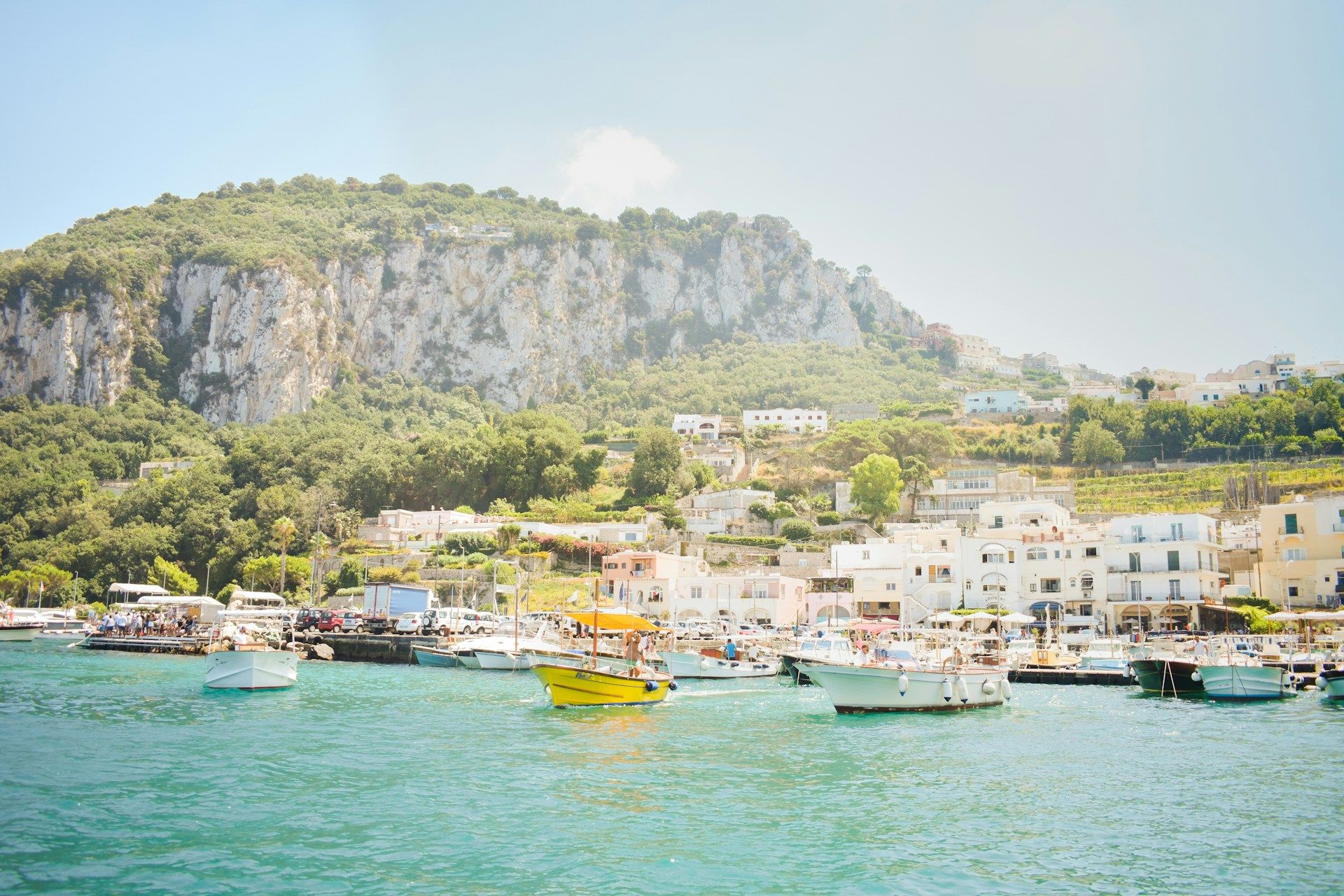
So your guests will arrive by sea with luggage and then walk, or pay for a taxi. Make sure your listing says how far the door is from Marina Grande and how many steps are involved, because that detail decides more reviews here than the kitchen does. As the owner of a home on the island you can apply for a pass for one vehicle per household, provided you're on the comune's waste-tax rolls.
Short-Term Rental Licensing Requirement in Capri
Whichever side of that two-apartment line you land on, the paperwork goes to the same counter, and neither route is a licence in the American sense. Nobody grants you anything. You notify, and you're live.
Below the threshold you file a comunicazione di inizio attività. The comune's own service page for the non-entrepreneurial route says the filing carries no payment and that the procedure "conclusione del procedimento è immediata", so there's no waiting period and no approval to chase. Above the threshold you file a SCIA instead, and the entrepreneurial route allows the administration up to 60 days to complete its checks. Either way you'll need SPID, a CIE electronic ID card or a CNS to sign in, and the whole thing goes by PEC to [email protected].
Filing is only the first of three codes, though, and the other two are what actually appear in public. Once the comune has your comunicazione it enters the data into Regione Campania's "Turismo web" system, which generates your CUSR, the regional accommodation code created by article 13 of Regional Law 16 of 7 August 2019 and extended to short lets in 2023. Campania is explicit that you don't apply for it separately: you file with the comune and wait for the code to come back to the address you gave.
With the CUSR in hand you then request the CIN, the national identification code that article 13-ter of Decreto Legge 145/2023 made compulsory through the Ministry of Tourism's BDSR database. The ministry's notice put the rules into force on 2 November 2024, with a deadline of 1 January 2025 to hold a code. A Capri flat that has been letting since 2023 without one is already late.
The CIN isn't a filing-cabinet number, either. It has to be displayed on the outside of the building and repeated in every advert, listing and piece of promotional material, which is what makes the whole system checkable from the street and from a phone. The penalties in the ministry's BDSR FAQ are heavy enough to matter on a small island:
- No CIN at all: €800 to €8,000.
- Holding one but not displaying or quoting it: €500 to €5,000 per property, plus immediate removal of the offending advert.
- Breaching the safety requirements: €600 to €6,000.
- Running the activity in business form without a SCIA: €2,000 to €10,000.
- Missing or misleading CUSR: €500 to €1,000 for every activity promoted, marketed or communicated, and that one is levied by the comune itself.
Notice who imposes that last fine. Campania handed enforcement of the regional code to the town hall, so the office that receives your comunicazione is also the office that can penalise you for advertising without the code it issued.
Required Documents for Capri Short-Term Rentals
Since the sanctions attach to the codes, the filing that produces them is still where you want to be careful, and Capri tightened it only recently. In an avviso dated 3 February 2026, the SUAP announced that Regione Campania had issued new models and that from that date only those models, or documents with equivalent declarations, would be accepted. Two changes came with them: the owner now has to declare that the property complies with planning, building, hygiene and safety rules for ordinary dwellings, and a scaled floor plan of at least 1:50 has to be attached.
Working from the comunicazione form itself, here's what you're assembling:
- A copy of a valid ID, unless you sign digitally, in which case you can skip it.
- The scaled plan, minimum 1:50, quoted with dimensions.
- Cadastral identifiers: section, sheet, parcel, sub and the catastal category. Capri's ISTAT code is 063014, the province 063 and the region 15, and the form pre-fills all three.
- The physical detail of the let: total usable floor area, room-by-room square metres, number of bedrooms, bathrooms and total beds, plus the period of the year the place is available.
- A trading name that doesn't mislead. The form bars you from calling the place a "Casa Vacanza", a "B&B" or a "Residence", because those are regulated accommodation categories and you aren't one.
- A declaration of every other short let you already run, listing each CUSR and CIN, so the comune can see whether you've crossed the two-apartment line.
- A power of attorney if an agent or property manager files for you.
The SCIA version adds the business layer on top: prevailing and secondary ATECO codes, the anti-mafia declarations under D.Lgs 159/2011, and a different ISTAT taxonomy, B405 rather than C204.
Then there's the kit that has to be physically present in the flat, which trips up owners who assume a furnished apartment is a furnished apartment. Article 13-ter of DL 145/2023 requires working combustible-gas and carbon-monoxide detectors, and portable extinguishers to legal standard placed where they're visible and reachable, near the entrances and near the higher-risk areas.
The ratio is one extinguisher per 200 square metres of floor or part thereof, with a minimum of one per floor, following point 4.4 of Annex I to the Interior Ministry decree of 3 September 2021. Do check the certification dates on anything already hanging in the property, because an expired extinguisher counts the same as no extinguisher when an inspector looks at it.
Capri Short-Term Rental Taxes
Assuming the plan and the extinguishers are sorted and you're able to start taking bookings, there's still tax to deal with, though Capri hands you one pleasant surprise on this front. There is no imposta di soggiorno here. No tourist tax to quote guests, no monthly declaration, no per-night collection.
That gap isn't an oversight. The island runs a landing fee instead, and the two councils wrote the trade-off into the rule itself: the regolamento sul contributo di sbarco, approved by Capri's council as delibera n. 99 of 30 November 2016 and in force since 1 January 2017, is adopted "in alternativa all'imposta di soggiorno".
Everyone landing on the island pays it, the ferry and air carriers collect it inside the ticket price, and it goes to Capri as the lead comune, with residents, workers and commuting students exempt. The regolamento sets €2.50 a head, dropping to €1.50 from November to February, and the two councils have to move together to change it. I couldn't open a current resolution confirming what the carriers charge in 2026, so treat €2.50 as the regulation's figure rather than today's ticket line.
As a host you have no role in any of that, which is worth knowing before you copy a tourist-tax clause out of a Rome or Florence listing template.
| Charge | Rate | Who handles it |
|---|---|---|
| Cedolare secca on rental income | 26%, cut to 21% on one property you elect each year | You, in your Italian return |
| Withholding on platform payouts | 21% on account of the gross | The platform or agent that collects the money |
| Tourist tax (imposta di soggiorno) | None in the Comune di Capri | Nobody |
| Contributo di sbarco | €2.50 per landing passenger under the 2016 regolamento | The ferry or air carrier, inside the ticket |
| IMU and TARI on the property | Set locally by the comune | You, to the Comune di Capri |
The income side is where 2026 bites. The Agenzia delle Entrate's April 2026 guide to short lets confirms the substitute tax sits at 26%, reduced to 21% only for the single unit you nominate in your tax return, and that the rate applies to the whole gross with none of the 5% abatement ordinary leases enjoy.
More importantly, article 1 comma 17 of Legge 199/2025, the 2026 budget law, cut the regime's ceiling from four apartments to two per tax year. Cross it and your letting is presumed to be a business, whoever you are. Anyone who was running three or four Capri flats under cedolare secca through 2025 lost that arrangement on 1 January 2026.
Whoever collects your money also has duties. Any intermediary that handles the payment, which covers the booking platforms, must withhold 21% as an advance on the gross rent at the moment they pay you, then certify what they took.
They also file six things with the Agenzia delle Entrate by 30 June of the following year: your name, your tax code, the contract length, the address, the CIN and the gross amount. A late, incomplete or untrue return costs them €250 to €2,000, halved if they correct it within 15 days. So your CIN and your rental income reach the tax authority together, from a third party, whether or not you file anything yourself.
Two local taxes round it off. IMU falls on property that isn't your main home, and TARI covers waste, both administered by the comune's Ufficio Tributi. Remember that the waste-tax roll doubles as your proof of entitlement to a vehicle pass under the circulation decree, so it's worth keeping current for reasons that have nothing to do with rubbish.
Does Capri Strictly Enforce STR Rules?
All of those obligations only bite if somebody checks them, so how does checking work on an island this size? Nothing like the platform-level blocking used in New York, and much more like a small town where the officers already know the buildings. The Comune di Capri's Settore V, Polizia Municipale lists "controllo attività ricettive: B&B, case vacanze etc." among its own competences, alongside commercial policing, building checks and noise. One corps, one island, and short-term rentals named in its remit.
The regional law backs that with a right of entry. By signing the comunicazione you accept that the comune may verify the truth of your declarations and the conditions of the activity at any time, and make the property available for inspection, under article 13 comma 5-quater of Regional Law 16/2019. There's no notice period written into it.
The CIN is what makes any of this cheap to check, mind you. Because the code sits on the outside of the building and inside every listing, an officer can compare a facade with a search result without knocking on a single door, and a competitor or a neighbour can do the same. That's the practical reason the display sanction of €500 to €5,000 exists separately from the €800 to €8,000 for having no code at all: the state is protecting the visibility, not the paperwork.
Two more rules catch hosts sideways. The police, not the town hall, own guest identity, and the Alloggiati Web portal run by the Polizia di Stato gives you 24 hours from arrival to send everyone's details to the Questura, under article 109 of the TULPS. Where the stay itself runs shorter than 24 hours, you send them on arrival. The Interior Ministry's prefecture network has also spelled out that this means identifying guests "de visu", comparing the person in front of you against the document, so a key box plus an uploaded passport scan doesn't discharge the obligation.
Separately, ordinanza n. 177 of 13 June 2025 bans any intermediation or promotion of offers on public land in Capri, including approaching residents and tourists with leaflets. Touting rooms at the port isn't an option, then, even in a slow week.
Be aware of what I couldn't establish, though. Capri publishes no enforcement statistics for short lets, no count of inspections and no fine totals, so I can't tell you the odds of a knock the way I could for a US city that files an annual report. What I can tell you is that the mechanisms are all in place, the sanctions are national and large, and the island is small enough that anonymity isn't really available.
How to Start a Short-Term Rental Business in Capri
Since anonymity isn't really on offer here, the sensible move is to have every code in place before the first booking, and the order below still matters more than it looks, because each step feeds the next one.
- Count your units first. Two or fewer in the tax year keeps you non-entrepreneurial. Three or more means a VAT number, the Chamber of Commerce and a SCIA for every unit, including the ones already running.
- Check the flat is a legal dwelling. You'll be declaring that it meets planning, building, hygiene and safety rules for ordinary homes, and that declaration carries criminal liability for false statements under D.P.R. 445/2000.
- Get the plan drawn. A dimensioned floor plan at 1:50 or better, since the February 2026 models won't be accepted without one.
- Fit the safety kit. Working gas and carbon-monoxide detectors, plus portable extinguishers at one per 200 square metres and a minimum of one per floor.
- File the comunicazione or the SCIA with the SUAP by PEC, signed with SPID, CIE or CNS. No fee applies to either filing.
- Wait for the CUSR to come back from the comune once it has entered your data into Turismo web.
- Request the CIN on the Ministry of Tourism's BDSR portal, then fix it to the outside of the building and put it into every listing before you accept a booking.
- Register for Alloggiati Web with the Questura, and plan an in-person handover for every arrival.
- Sort tax before the first guest. Decide which single property gets the 21% cedolare rate, and don't forget that platforms will withhold 21% and report your CIN regardless.
- Diarise the changes. Any suspension, cessation or change of circumstances has to be notified promptly to the SUAP, and the comune can inspect at any time.
Who to Contact in Capri about Short-Term Rental Regulations and Zoning?
Whichever step stalls, the offices are all in one building, the Municipio at Piazza Umberto I, 9, 80073 Capri (NA), with a single switchboard on 081 8386201. The comune publishes phone numbers and email addresses for each office but not public counter hours, so call the switchboard before making a trip to the desk.
Filings, SCIA and the comunicazione. The Ufficio Attività produttive / SUAP owns the short-let procedure, and the head of the attività produttive office is Matteo Cacace.
- Email: [email protected]
- Phone: 081 8386311, with the Ufficio Commercio also reachable on 081 8386317
- PEC for all filings: [email protected]
Procedure questions and the February 2026 models. Marica Avellino signs as responsible officer for the SUAP notice and heads affari generali e segreteria.
- Email: [email protected]
- Phone: 081 8386215
IMU, TARI and local tax. The Ufficio Tributi handles assessment, collection and taxpayer support, under Rocco Crugnale.
- Email: [email protected]
- Phone: 081 8386225
Tourism promotion and island information. The Ufficio Turismo sits in the same Settore I as affari generali.
- Email: [email protected]
- Phone: 081 8386214
Inspections, complaints and vehicle passes. Settore V, Polizia Municipale, under Daniele De Marini, covers accommodation checks and the circulation permits, and it's the corps that issues the vehicle contrassegno.
For the business layer above the comune, the Camera di Commercio di Napoli at Via S. Aspreno 2, 80133 Napoli handles registration for entrepreneurial lets, at [email protected]. Questions about the CUSR go back to the comune rather than to the region, which Campania states directly on its own CUSR page.
What Do Airbnb Hosts in Capri on Reddit and Bigger Pockets Think about Local Regulations?
Those contact lists say something about the market that the forums confirm from the other direction. Capri is not a place American investors talk about operating in, and the discourse reflects that.
Reading the BiggerPockets Investments in Italy thread, the pattern is a lifestyle purchase rather than a rental business: an attorney and her husband asking how to buy in Milan, Turin, Bologna or Como and use the place themselves between guests, and a reply from someone eyeing Florence to "make a little money and carve out 1.5 to 2 weeks of deductible vacation each year".
Nobody in that thread is modelling occupancy, and nobody mentions the CIN. I looked for Capri-specific operator threads and didn't find them, and Reddit blocks automated access from where I work, so I won't characterise what's said there.
What I'd take from the silence is this. Most people buying on Capri aren't buying a spreadsheet, and owners in that frame of mind let the paperwork slide far more often than professional operators do. Yet the rules are national and so are the fines, so an owner who treats a Capri flat as a family house that happens to earn in August faces the same €800 to €8,000 CIN penalty as a Rome operator with forty units.
Keep in mind, too, that the two-apartment tax threshold lands hardest on precisely that group: the family that quietly accumulated three or four properties over a generation and has been declaring them all under cedolare secca. Before deciding either way, the Italy market is where to compare Capri's revenue against the rest of the country, and BNBCalc will run a specific address for you.
Frequently Asked Questions
Can you legally run an Airbnb in Capri in 2026?
Yes. Short-term letting is a permitted use of a residential property in the Comune di Capri, with no cap on the number of listings and no zone where it is prohibited. You must file a comunicazione with the comune's SUAP, or a SCIA if you let more than two apartments in a tax year. You then obtain a regional CUSR code and a national CIN, display the CIN outside the building and in every advertisement, and report guests to the Questura within 24 hours of arrival.
How much does it cost to register a short-term rental in Capri?
The filing itself is free. The Comune di Capri's service pages state that neither the comunicazione for non-entrepreneurial lets nor the SCIA for entrepreneurial ones requires a payment, and the national CIN is issued through the Ministry of Tourism's BDSR portal at no charge. The real costs are the surveyor's fee for a 1:50 scaled floor plan, the gas and carbon-monoxide detectors, and portable extinguishers at one per 200 square metres of floor.
Do you collect tourist tax on a short-term rental in Capri?
No. The Comune di Capri has no imposta di soggiorno. The island instead applies a contributo di sbarco, a landing fee that the 2016 regulation adopted explicitly in place of the tourist tax, and it is collected by the ferry and air carriers inside the ticket price rather than by accommodation hosts. Residents, workers and commuting students are exempt. Hosts have no collection, declaration or remittance duty for it.
What happens if you rent out a property in Capri without a CIN?
Operating without the national identification code carries a fine of €800 to €8,000 under article 13-ter of Decreto Legge 145/2023, and the sanctions have been enforceable since 2 January 2025. Holding a code but failing to display it outside the building or quote it in an advertisement is a separate offence at €500 to €5,000 per property, plus immediate removal of the advertisement. Missing or misleading use of the regional CUSR adds €500 to €1,000 per listing, imposed by the comune.
How many apartments can you rent short-term in Italy before it becomes a business?
Two, as of 2026. Article 1 comma 17 of Legge 199/2025 cut the threshold from four apartments to two per tax year, so letting a third unit means the activity is presumed entrepreneurial for everyone, whoever runs it. That triggers a VAT number, registration with the Chamber of Commerce and a SCIA filed for every unit, including ones that previously only needed a simple comunicazione. The favourable cedolare secca regime stops applying above the same threshold.
Last verified: July 2026. Every ordinance, tax rate, state law, and contact detail in this guide links to or comes from its official source.
Airbnb Tax Deduction Calculator
Paying too much in taxes? We have the perfect solution. Simulate an Airbnb home purchase below.
Purchase Price
$450K
Structure Value
70%
Apply Trump's Tax Cut (Bonus Depreciation)
Depreciation
$117,695
Interest
$21,600
Tax
$6,750
Year 1 Deduction
$146,045
Want to claim this deduction? Get a free cost segregation benefit analysis from CSA Partners — no obligation.
Get Full Analysis