Free instant analysis
Reveal Airbnb revenue for any address or city
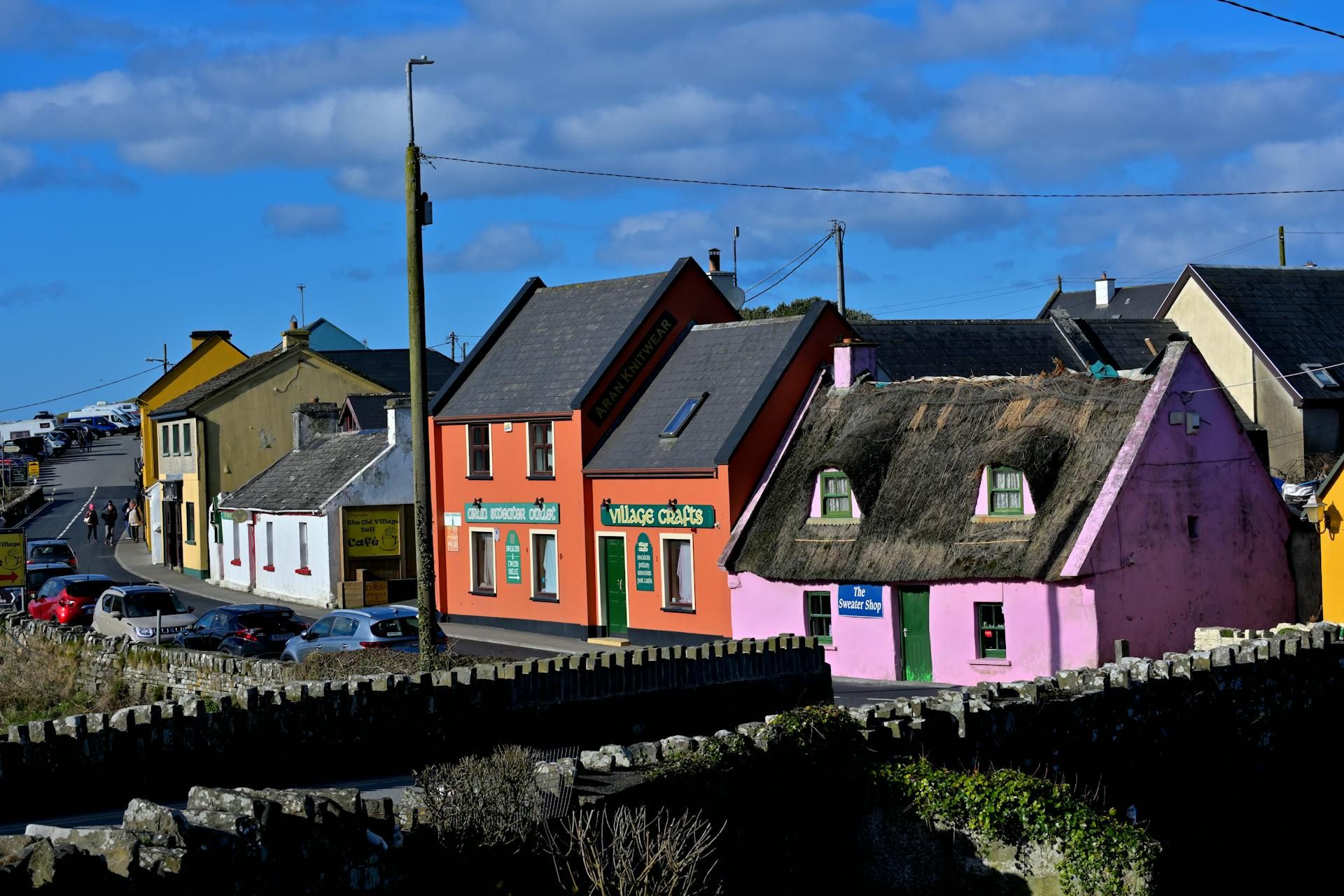
Do you own a place in Doolin, County Clare and you're weighing whether to put it on Airbnb or Vrbo? Well, the good news is that demand is never going to be your problem. Doolin is one of the busiest little villages on the whole Wild Atlantic Way, the launch point for the Aran Islands ferries and the Cliffs of Moher coastal walk, and Clare County Council's own development plan puts almost a million visitors a year through a settlement it still classes as a small village. If people paid for demand alone, you'd be booked out by Easter.
They don't, though, and this is where I have to be straight with you, because Doolin is a harder place to start a short-term rental than most of Ireland right now. Two rules stack here. Since 1 March 2026, national law treats any short letting as a material change of use that needs planning permission, wherever the property sits. On top of that, Doolin is one of thirteen Clare villages the council has flagged for having too many holiday homes already, and in those villages new homes are permitted for permanent occupancy only. So the demand is real, the paperwork is where it gets difficult.
What follows walks through the whole picture as it stands in 2026: what the national rule actually says, why Doolin's spot in the county plan matters more than the national rule for anyone buying in, what registration and tax you're signing up for, how hard Clare County Council pushes on enforcement, and who to call when you get stuck. Every figure below comes from the council's own plan, the Irish statute book or Revenue, checked in July 2026, and where something is genuinely still moving I've said so. If you're comparing Doolin against markets where a whole unit can go on Airbnb without this fight, run both through BNBCalc before you commit.
What are Short-Term Rental (Airbnb, VRBO) Regulations in Doolin, Ireland?
That gap between real demand and difficult paperwork comes down to two layers of rule, and separating them explains almost everything that confuses owners here. One layer is national and it's new. The other is local to Clare, and for Doolin it's the one that bites hardest.
Start with the national layer, because it now catches everyone. Under section 3A of the Planning and Development Act 2000, as rewritten with effect from 1 March 2026, "the use of a house, part of a house or unit for short term letting purposes is a material change in the use." A material change of use is development, and development needs planning permission unless it's specifically exempted. Short term letting means letting for payment for a period not exceeding 21 consecutive nights, and it covers a whole house, a converted outbuilding or a single room. The practical upshot is blunt. Putting a Doolin property on Airbnb for weekend and week-long stays is, in the eyes of the law, changing what that building is for, so you're expected to have permission for that change before the first guest arrives.
If that feels like a big shift from what you may have read a couple of years ago, it is, and it's the single most important thing to understand about 2026. The old version of this rule only applied inside a rent pressure zone. Doolin's electoral area wasn't even designated one until June 2025, so a 2024-era guide could reasonably tell a North Clare owner the permission requirement might never reach them. Rent pressure zones were then abolished nationally on 1 March 2026, replaced by national rent control, and the short-let permission requirement didn't disappear with them. It went the other way and became universal. So the geography that used to protect small villages is gone.
Now the local layer, which is where Doolin stops looking like everywhere else. The Clare County Development Plan 2023-2029, the statutory document the council decides planning applications against, singles Doolin out by name. Objective CDP5.14 records that certain settlements have "an overconcentration of holiday homes," lists Doolin among thirteen of them, and states that in those places the council will "permit new residential development for permanent occupancy only." The same objective goes further and says the council will support converting existing holiday-home units back into permanent homes. Keep that direction of travel in mind, because it tells you how a planner in Ennis is likely to read a proposal to add another short-let unit to a village the plan says already has too many.
Starting a Short-Term Rental Business in Doolin
Given that direction of travel, the honest starting point is still a hard one. Unfortunately for anyone picturing the classic play here, buying a cottage in Doolin just to run it whole on Airbnb is close to a non-starter under the current plan, and I'd rather you heard that before you view a property than after you've paid a deposit. The council's permanent-occupancy-only policy is aimed squarely at exactly that purchase, and its stated preference is to see holiday stock move back into full-time homes, not the reverse.
There's a physical limit sitting behind the policy too, and it's worth knowing because it isn't going away. Doolin has no public wastewater treatment infrastructure, which the development plan says "limits the capacity for development in the village." Any new build or change of use has to stand up its own private treatment system to the EPA's standards, on a coastline ringed with protected habitats. That's a real cost and a real planning hurdle before you've hosted a single guest, and it's part of why the council can be choosy about what it approves.
So what's actually left? A few narrower routes, and you'll want to work out which one you're in before you spend anything:
- Home-sharing your own home. National law has long exempted letting rooms in, or the whole of, your principal private residence for up to 90 days a year, using statutory Forms 15, 16 and 17. That's the route that best survives the local policy, since it's your actual home rather than a new holiday unit. Be aware, though, that the exemption's legal footing got shakier after the March 2026 rewrite, which I'll come back to, so do confirm it with the council rather than assume it.
- An established, already-operating let. If a property has genuinely been used as a short let for years, national policy is drifting toward recognising long-standing use, and Doolin's small size works in your favour here rather than against you. The draft national policy would presume against new permissions only in towns over 20,000 people, and Doolin is a fraction of that, so a small village gets a softer presumption. That's draft, not law, and CDP5.14 still governs new residential, so treat it as a reason to talk to the planners, not a green light.
- Converting an existing tourism building. Clare does grant change-of-use permissions for tourist accommodation in the right spot, and Doolin's Fitz's Cross area is flagged in the plan as a tourism growth centre. This is a planning conversation, not a form you file, and the answer depends heavily on the specific site.
If you already own a Doolin property and the sums only worked at nightly rates, the realistic pivot is the longer-stay furnished market, which sits outside the 21-night short-let regime entirely. The economics differ a lot depending on whether you're in a genuine tourism village or a commuter town, so the Bundoran guide is a useful read for another Atlantic seaside market under similar pressure, and the Limerick guide shows how the same national rules land in the nearest city.
Short-Term Rental Licensing Requirements in Doolin
Assuming you've settled on one of those routes and it might genuinely fly, the next question is what you actually apply for, and here's a thing that trips people up: there's no Doolin short-term rental licence to buy. Clare County Council doesn't run a local permit scheme or a local register. What you need instead is planning permission for the change of use, granted by the council, plus a national registration number that doesn't exist yet but will by the end of the year.
The cleanest first step is usually to ask the council whether you even need permission, rather than guessing. Clare offers a Section 5 declaration for exactly this: you describe what you're proposing, pay €80 on form P07 with a site location map, and the council formally rules on whether it's exempted development or needs a full application. If no further information is needed, a decision issues within four weeks, and you can appeal it to An Coimisiún Pleanála. It's cheap certainty, and given how much rides on the answer in a village like Doolin, it's money well spent before you commit to anything bigger.
Should the answer come back that you need full permission, the change-of-use application fee is €80 or €3.60 per square metre, whichever is greater, with retention permission (for something already done without consent) costing €240 or €10.80 per square metre. Budget roughly eight weeks for a straightforward decision, longer if the council seeks further information or if it goes to appeal, and remember that a grant can still carry conditions, which in Doolin may well touch wastewater, parking and the character of the streetscape.
Then there's the national piece, which is genuinely new and applies to you even if you never need planning permission. Ireland's short-term letting register, run by Fáilte Ireland, opens on 1 December 2026, with a legal obligation to register by 31 December 2026. Anyone offering paid accommodation for stays of 21 nights or fewer has to register each unit, display the registration number on every listing and advert, and make a legal declaration that the property complies with planning, building and fire-safety law. The fee hasn't been announced, so don't let anyone quote you one, and the number expires annually and has to be renewed. Watch out for that compliance declaration in particular: it's the point where the planning question and the registration question meet, because you can't honestly declare planning compliance you don't have.
Required Documents for Doolin Short-Term Rentals
Since that compliance declaration ties the register back to your planning status, it pays to have the paperwork straight across all three tracks: the Section 5 question, a full planning application if you need one, and eventually the register. Each asks for something different, and Clare returns applications that are missing pieces rather than chasing you for them, so it's worth getting right first time.
For a full planning or change-of-use application, Clare County Council expects the current official application form (older versions get rejected), scaled plans, drawings and site maps, a copy of the site notice you erected, a copy of the newspaper notice, and the correct fee. There's a form P02 checklist to validate against before you lodge, and the application is invalid if anything on it is missing. For the lighter Section 5 route, you'll need form P07, the site location map and enough detail for the planner to picture the use.
The home-share exemption, if it applies to you, runs on its own set of forms. National law requires written notice to the planning authority at least two weeks before you start, then Forms 15, 16 and 17, each carrying a statutory declaration. One is filed at the start of the year, one when you hit the 90-day cap, and one every January. Keep in mind that a statutory declaration is sworn, so the accuracy of what you put on it matters legally.
The register, by contrast, asks for surprisingly little at sign-up. Fáilte Ireland's own guidance says you won't upload supporting documents when you register; you make the compliance declaration and supply your unit details. That lightness is deceptive, though. The document you really need behind a Doolin registration is the planning consent or Section 5 exemption that lets you make the declaration truthfully, so treat the planning file as the real paperwork and the registration form as the easy part.
Doolin Short-Term Rental Taxes
Once you've cleared the planning and registration side and you're actually able to host, there's still the tax to sort out, and the good news here is that Doolin adds nothing of its own. There's no local bed tax, no tourist levy and no county occupancy charge anywhere in Ireland. What you owe is national, and it comes in a couple of layers depending on how much you earn.
| Charge | Rate | Who handles it | Notes |
|---|---|---|---|
| Income tax on your letting profit | Your marginal rate (plus USC and PRSI) | You, self-assessed | Taxed as trading or occasional income, never as rental income |
| VAT on the accommodation | 13.5% reduced rate | You, but only over the threshold | Registration only bites above €42,500 of turnover |
| Airbnb service-fee VAT | 23% | Airbnb, on its own fee | Applies to Airbnb's fee only, not to your nightly rate |
| Local tourist or bed tax | None | Not applicable | No such tax exists in Ireland |
Two of those rows catch people out, so it's worth slowing down on them. First, Revenue is clear that short-let income is not rental income. Guests hold a licence to occupy, not a tenancy, so your profit falls under Schedule D as trading or occasional income and goes on a Form 11 or Form 12, not the rental pages. That distinction matters because it also kills a relief people reach for: rent-a-room relief does not apply to short-term tourist accommodation, even where you're letting a room in your own home. Don't count on that €14,000 exemption, because Revenue wrote an anti-avoidance rule that closes off exactly this kind of short-stay tourist letting.
Second, VAT usually won't touch a single-property host, and that's the part worth being calm about. The 13.5% reduced rate does apply to guest and holiday accommodation, including web-based lettings, but you only have to register for VAT once your turnover crosses €42,500 in a year. A one-cottage Doolin operation earning below that stays outside VAT entirely. Push past it, though, whether by adding units or by charging premium peak-season rates in a village this busy, and you'll want an accountant on it before you cross the line, not after.
Ireland Wide Short-Term Rental Rules
Doolin's local layer makes far more sense once you can see how much of the framework is actually national law that every Irish host now lives under. The council applies the rules, but it doesn't write most of them, and the ones it doesn't write have all moved recently.
The foundation is the material-change-of-use rule already covered: since 1 March 2026, section 3A of the Planning and Development Act 2000 makes short letting development that needs permission, nationwide, at a 21-night threshold. That single change did more to reshape Irish short-term rentals than anything a council could do, because it swept away the rent-pressure-zone geography that used to decide who was caught. Every host in the State is now inside the same permission regime. Small tourism villages like Doolin often sat outside the old zones, yet they're squarely inside the new one.
On top of that sits the coming national register, plus an EU dimension worth a line. Regulation (EU) 2024/1028 requires short-let registration numbers in listings, monthly reporting by the platforms, and a single digital entry point, all of which Ireland has to have running by the end of 2026. So the register isn't just an Irish idea the government might drop; it's an EU obligation with a deadline, which is a good reason to assume it's really coming rather than betting it slips.
One more national development is worth tracking, and it cuts in Doolin's favour for a change. The government approved a draft National Planning Statement on short-term letting in June 2026. It proposes a presumption against new permissions in settlements over 20,000 people, a two-year compliance window and a presumption to grant in smaller places, and established-use recognition after seven years. Doolin, being tiny, sits on the gentler side of that line. Still, it's a draft going through environmental assessment and EU notification, with a final version expected in the autumn, so keep it in the "watch this" column rather than planning around it. For the wider national picture and how other markets compare, the Clonakilty guide covers another tourism-dependent coastal town working through the same national rules.
Does Doolin Strictly Enforce STR Rules?
That draft going Doolin's way shouldn't be read as the council going soft, because Clare has been notably direct about enforcement. In fact the council put owners on notice in writing. At its January 2026 monthly meeting, the senior planner told members that anyone intending to let for the 2026 season "should engage with the Planning Authority to establish what planning consent requirements they may have ahead of the season," and that letting without the right consent "will result in unauthorised development taking place and potential enforcement action." That's about as clear a warning as a council issues.
The enforcement machinery behind that warning is real, and the numbers aren't small. Clare's enforcement process starts with a warning letter within six weeks of a complaint, gives you four weeks to respond or put things right, and escalates to a formal Enforcement Notice if you ignore it. Push past that and it becomes a criminal matter, since a summary conviction can bring a fine of up to €5,000, while on indictment the penalties run to figures in the millions, alongside possible imprisonment and court injunctions to stop the use. Don't assume a small village means a quiet planning office, because the council has explicitly said the opposite.
Enforcement here also isn't hypothetical, and the weekly planning lists show it, because Clare has been granting genuine change-of-use permissions for short-let and tourist accommodation across rural West Clare, and it has been processing applications in Doolin itself, including a request for further information in March 2026 on a proposal to change part of a Doolin dwelling to short-term letting for tourism. Read that two ways. It confirms the council does expect these uses to come through the planning system, and it confirms that owners in Doolin are already going through it rather than flying under the radar. The realistic read for 2026 is that Clare enforces, has said so plainly, and has the tourism-town motivation to keep doing it.
How to Start a Short-Term Rental Business in Doolin
Taking that enforcement posture seriously, the order you do things in matters more than it looks, because the early steps tell you whether the later ones are worth the money at all. Working through them out of sequence is how people end up having paid for a property they can't legally let the way they planned.
- Check the property against CDP5.14 first. If you're buying with a whole-unit short let in mind, the permanent-occupancy-only policy for Doolin is the wall you hit first, so establish where a given site stands before anything else. This is a conversation with the planning office, not a guess.
- File a Section 5 declaration. For €80, get the council to rule formally on whether your specific plan needs permission or qualifies as exempted development. It's the cheapest certainty you'll buy in this whole process.
- If you need permission, prepare a proper application. Assemble the current form, plans, site and newspaper notices and the fee, and expect conditions around wastewater and parking given Doolin's constraints.
- Sort your private wastewater treatment. With no public system in the village, you'll need a compliant on-site solution designed for a sensitive coastal site, and it's better to know that cost up front.
- Register with Fáilte Ireland once the register opens. From 1 December 2026, register each unit, add the number to every listing, and make the compliance declaration honestly, which means the planning side has to be done first.
- Set your tax up before the first guest. Register for self-assessment, keep clean records of nights and income, and watch the €42,500 VAT threshold if you're pushing volume.
- Model the numbers on the legal version of the plan, not the one you wish you had. A hosted room-share or a compliant conversion earns differently from the whole-unit dream, so make sure you're pricing the rental you can actually run.
Who to Contact in Doolin about Short-Term Rental Regulations and Zoning?
Because nearly every step above runs through the council rather than any Doolin-based office, knowing exactly who to ring saves a lot of wasted time. Doolin has no town hall of its own; planning for the whole county is handled from Ennis.
The office you want for permission, exemptions and zoning is the Planning, Placemaking and Economic Development Department at Clare County Council. It handles the Section 5 declarations, change-of-use applications and any question about what the development plan allows on a given Doolin site.
- Address: New Road, Ennis, Co. Clare, V95 DXP2
- Planning phone: (065) 6846232
- Planning email: [email protected]
- Counter hours: Monday to Friday, 9:00 to 4:00
For anything that isn't strictly planning, the council's general customer service line is (065) 6821616 or [email protected], open Monday to Friday. That's also the route for reporting a suspected unauthorised short let, which the council takes through its enforcement process.
Two national bodies handle the layers the council doesn't. The register and the registration number are Fáilte Ireland's, so direct any question about the December 2026 register there, keeping in mind that Fáilte Ireland has said plainly it has no role in planning and can't advise on it. Anything about income tax, VAT or the rent-a-room point belongs with Revenue, not the council. Do check which body owns your question before you call, because the three genuinely don't cover for each other.
What Do Airbnb Hosts in Doolin on Reddit and Bigger Pockets Think about Local Regulations?
Those three bodies rarely speak with one voice, and neither do the hosts caught between them, so it's worth being honest about what I could and couldn't verify here. I couldn't read Reddit or BiggerPockets threads directly for Doolin, since Reddit blocks automated access and its terms don't allow the commercial use that would need, and I found no Doolin-specific investor thread I could stand over. What follows is my read of the recurring themes from the sources I could actually check, mostly Clare-wide local reporting and the council's own minutes, so do weigh it as informed impression rather than a survey.
- Established operators are anxious, and it's about certainty rather than the rate. Clare short-let owners have gone on local record worried that the new planning requirement could push them out, especially where they'd operated for years assuming they were fine. The recurring complaint isn't the cost of a permission; it's not knowing whether they'll get one, and having built a business before the rules changed under them.
- The council itself is ambivalent, which is unusual. Clare councillors described the national legislation as "not suitable for Clare in its current form" and floated deferring it. That tells you the political appetite locally leans toward protecting a tourism economy Doolin depends on, even as the planners enforce the letter of the rule. Hosts read that tension and aren't sure which way it breaks.
- Nobody serious now argues the rules don't apply. The debate has moved on from "will this reach a small village" to "how do I comply," which is a meaningful shift from a couple of years back. The permission requirement is treated as a fact to work around, not a risk to gamble on.
Take the anxiety seriously, because it's rational. The thing that makes Doolin hard isn't a fine you can price in; it's a permission you might not get, in a village whose own plan says it already has enough holiday homes.
Frequently Asked Questions
Can you legally run an Airbnb in Doolin in 2026?
Sometimes, but only with the right permission. Since 1 March 2026, every short-term let of 21 nights or fewer in Ireland is a material change of use that needs planning permission from Clare County Council unless it's exempted, such as home-sharing your own residence up to 90 days a year. Doolin is also named in the county development plan as a village with too many holiday homes, where new homes are permitted for permanent occupancy only, so a brand-new whole-unit Airbnb faces an uphill planning battle.
Do you need planning permission for a short-term let in Doolin?
Usually yes. National law now treats short letting as a material change of use, so unless your plan is an exempted home-share of your own principal residence, you need permission from Clare County Council before you let. The cheapest way to find out for certain is a Section 5 declaration, which costs €80 and gets the council to rule formally on whether your specific proposal is exempt or needs a full application.
Can you buy a house in Doolin just to run it as an Airbnb?
It's very difficult under the current county plan. Objective CDP5.14 lists Doolin as a settlement with an overconcentration of holiday homes and states that new residential development there is permitted for permanent occupancy only. The council even says it wants to convert existing holiday homes back into full-time homes. So a purchase aimed purely at whole-unit short letting runs directly against stated planning policy, and you'd want the planners' view on a specific site before buying.
How much tax do you pay on a short-term rental in Doolin?
Your letting profit is taxed at your marginal income tax rate, plus USC and PRSI, and it's treated as trading or occasional income rather than rental income, so rent-a-room relief doesn't apply. There's no local bed or tourist tax anywhere in Ireland. VAT at 13.5% only kicks in if your turnover passes €42,500 in a year, so most single-property hosts stay outside it.
When does Ireland's short-term letting register open?
Fáilte Ireland's national register opens on 1 December 2026, with a legal duty to register by 31 December 2026. Every host offering stays of 21 nights or fewer has to register each unit, display the number on every listing, and declare that the property complies with planning, building and fire-safety law. The fee hasn't been announced yet, and registration has to be renewed each year.
Strip out the local detail and Doolin is really a lesson in how fast a market can change under you: a village that was wide open on paper two years ago now sits behind a national permission rule and a local cap that most owners never saw coming. Wherever you're buying, the rule to carry away is to price the rental you can legally run, not the one the demand tempts you toward, and to check the planning position before the purchase rather than after. If you want the current numbers behind that judgement, BNBCalc's Ireland market data is the place to start.
Last verified: July 2026. Every ordinance, tax rate, state law, and contact detail in this guide links to or comes from its official source.
Airbnb Tax Deduction Calculator
Paying too much in taxes? We have the perfect solution. Simulate an Airbnb home purchase below.
Purchase Price
$450K
Structure Value
70%
Apply Trump's Tax Cut (Bonus Depreciation)
Depreciation
$117,695
Interest
$21,600
Tax
$6,750
Year 1 Deduction
$146,045
Want to claim this deduction? Get a free cost segregation benefit analysis from CSA Partners — no obligation.
Get Full Analysis