Free instant analysis
Reveal Airbnb revenue for any address or city
Reno Airbnb performance by bedroom
Market-wide Airbnb and Vrbo data for Reno.
Studio
Active listings
35
Lower-performing
Annual revenue
—
Nightly rate
$26.6
Occupancy
21%
Gross yield
—
Typical-performing
Annual revenue
—
Nightly rate
$85.7
Occupancy
18%
Gross yield
—
Higher-performing
Annual revenue
—
Nightly rate
$142.5
Occupancy
28%
Gross yield
—
1 bedroom
Active listings
185
Lower-performing
Annual revenue
—
Nightly rate
$113.1
Occupancy
27%
Gross yield
—
Typical-performing
Annual revenue
$25.0K
Nightly rate
$126.0
Occupancy
50%
Gross yield
10.7%
Higher-performing
Annual revenue
$35.6K
Nightly rate
$162.2
Occupancy
60%
Gross yield
14.8%
2 bedrooms
Active listings
233
Lower-performing
Annual revenue
—
Nightly rate
$196.4
Occupancy
31%
Gross yield
—
Typical-performing
Annual revenue
$33.6K
Nightly rate
$194.6
Occupancy
49%
Gross yield
8.8%
Higher-performing
Annual revenue
$57.4K
Nightly rate
$241.8
Occupancy
61%
Gross yield
17.2%
3 bedrooms
Active listings
229
Lower-performing
Annual revenue
$27.7K
Nightly rate
$251.1
Occupancy
26%
Gross yield
4.7%
Typical-performing
Annual revenue
$47.9K
Nightly rate
$267.8
Occupancy
51%
Gross yield
8.6%
Higher-performing
Annual revenue
$79.1K
Nightly rate
$308.1
Occupancy
65%
Gross yield
15.3%
4+ bedrooms
Active listings
196
Lower-performing
Annual revenue
—
Nightly rate
$398.5
Occupancy
30%
Gross yield
—
Typical-performing
Annual revenue
$41.9K
Nightly rate
$407.8
Occupancy
46%
Gross yield
6.8%
Higher-performing
Annual revenue
$82.6K
Nightly rate
$472.3
Occupancy
56%
Gross yield
13.2%
| Bedrooms | Performance group | Annual revenue | Nightly rate | Occupancy | Gross yield | Active listings |
|---|---|---|---|---|---|---|
| Studio | Lower-performing | — | $26.6 | 21% | — | 35 |
Typical-performing | — | $85.7 | 18% | — | ||
Higher-performing | — | $142.5 | 28% | — | ||
| 1 bedroom | Lower-performing | — | $113.1 | 27% | — | 185 |
Typical-performing | $25.0K | $126.0 | 50% | 10.7% | ||
Higher-performing | $35.6K | $162.2 | 60% | 14.8% | ||
| 2 bedrooms | Lower-performing | — | $196.4 | 31% | — | 233 |
Typical-performing | $33.6K | $194.6 | 49% | 8.8% | ||
Higher-performing | $57.4K | $241.8 | 61% | 17.2% | ||
| 3 bedrooms | Lower-performing | $27.7K | $251.1 | 26% | 4.7% | 229 |
Typical-performing | $47.9K | $267.8 | 51% | 8.6% | ||
Higher-performing | $79.1K | $308.1 | 65% | 15.3% | ||
| 4+ bedrooms | Lower-performing | — | $398.5 | 30% | — | 196 |
Typical-performing | $41.9K | $407.8 | 46% | 6.8% | ||
Higher-performing | $82.6K | $472.3 | 56% | 13.2% |
Lower, typical, and higher performance groups are market benchmarks, not guaranteed results. Data updated Sep 2026.
What does a Reno Airbnb bring in over a year, and what do you have to get from the city before you can rent one by the night?
Well, the second half is the short answer, because as of September 2026 there's no short-term rental permit to apply for. The City of Reno runs no short-term rental permit and no registration, nothing in its zoning code names a short-term rental as a use at all, and the Nevada statute that forces other Nevada cities to license nightly rentals is written so that it skips Reno. Sparks, next door, doesn't run one either. That's unusual for a city this size, and it means the thing that decides your deal here isn't paperwork at all. It's the address, since the middle listing in the strongest Reno ZIP code earns about double the middle listing in the weakest one.
A word on what "Reno" covers, because the figures below are the market's rather than the city's alone. BNBCalc's Reno market is the Truckee Meadows: Reno itself holds about 77% of the qualifying listings, Sparks another 16%, and the rest sit in unincorporated Washoe County or out east toward Fernley. All of it is in Nevada, and none of the listings in it reach the California side of Lake Tahoe. Over the eight months through August 2026, active listings ran about 3% below the same months of 2025 while the average nightly rate ran about 26% above them, which tells you most of what happened here this year.
How Much Do Reno Airbnbs Earn in 2026?
Inside Reno's city limits, the middle listing brought in $29,540 across its trailing twelve months, going by BNBCalc's September 2026 data, while the strongest quarter of listings opened at $40,708. Across the whole market the middle listing earned $30,582, though that figure gets pulled up by everything outside the city, where the middle listing cleared $35,681. These are medians rather than averages, so half the listings in each group finished below them.
Size explains most of the gap between one listing and the next, and it explains it in a fairly orderly way. Here's what the middle listing of each size earned inside the Reno city limits, alongside how much the top quarter of that size started at.
| Bedrooms (inside Reno city limits) | Median annual revenue | Median nightly rate | Median occupancy | Top quarter starts at |
|---|---|---|---|---|
| Studio | $17,157 | $134 | 35.3% | $19,515 |
| 1 bedroom | $19,541 | $146 | 37.1% | $24,101 |
| 2 bedrooms | $27,773 | $230 | 33.7% | $33,170 |
| 3 bedrooms | $35,187 | $302 | 35.0% | $43,376 |
| 4+ bedrooms | $50,191 | $477 | 32.1% | $66,185 |
Medians and 75th percentiles from BNBCalc listing data inside the Census boundary for Reno city, Nevada, pulled September 2026 and covering the trailing twelve months.
So a four-plus-bedroom house clears roughly two and a half times a one-bedroom's median, and it does it on rate rather than on nights: the bigger sizes fill slightly fewer of them. Notice how flat that occupancy column stays. From a studio to a four-plus-bedroom house the middle listing fills somewhere between 32% and 37% of its nights, which means nothing you buy here is going to run hot, and a pro forma built on 60% occupancy is fiction.
What's striking is how little those tiers overlap. The top quarter of three-bedrooms starts at $43,376, roughly 23% above the middle three-bedroom, and even that lands short of what the middle four-plus-bedroom takes. Bedroom count is doing more work here than it does in most markets, so the size you buy sets your ceiling and how well you run it decides where under that ceiling you land.
Gross yield tells a different story again, since it weighs each size's revenue against the purchase price a house that size commands. The short version is that one-bedrooms lead on yield by about two points, two- and three-bedrooms sit almost level behind them, and the biggest houses come last, about two points behind the three-bedrooms. If you'd like to see how the whole market stacks up statewide, the Nevada markets ranked by gross yield page lines Reno up next to every other Nevada market on that measure.
One more thing about who you're up against. Professional operators hold a large share of the listings here, so you'd be bidding for guests against companies running cleaning crews and pricing software across a whole portfolio, and guests don't stay especially long either. Two-bedrooms hold guests longest at about eight nights a stay, while four-plus-bedroom houses turn over closer to every seven. Whatever you buy, you're buying turnovers.
Is the Reno Airbnb Market Oversaturated?
No, and what makes that clear is that competition thinned rather than thickened. Over January through August 2026, active listings ran about 3% below the same eight months of 2025 while the average nightly rate ran about 26% above them.
| Measure, Jan to Aug 2026 against Jan to Aug 2025 | Direction |
|---|---|
| Active listings | About 3% fewer |
| Average nightly rate | About 26% higher |
| Booking lead time | About 14% longer |
| Home purchase prices | Roughly flat, up under 1% |
BNBCalc market-wide figures, recomputed September 2026. Occupancy is left out on purpose, for the reason given in the next paragraph but one.
Those eight months aren't an arbitrary slice, and it's worth a sentence on why. Reno's stored monthly history changed how it measures occupancy and nightly rates partway through, so a full twelve-month comparison would put two different definitions on either side of the same sum. January through August sits cleanly on one side of that change, which is why the window is short and why the months are named.
Occupancy is the one measure I won't give you a direction on, since recomputing it two defensible ways puts it slightly down one way and slightly up the other, and when a trend flips sign depending on how you slice the window, the honest answer is that it can't be settled yet. Rather than wait for a later release to settle it for you, pull up the listings closest to the house you're considering, the same size and the same part of town, note how full their calendars are, then look at that same set again a few months later. You'll learn more about your real competition that way than any market-wide percentage can tell you.
For a market where listings fell and rates climbed hard, the pressure isn't coming from new supply. It's coming from the fact that a 26% rate rise landed on housing stock that barely appreciated, so the numbers that work today were bought at yesterday's prices.
When Is Reno's Peak Airbnb Season?
Summer, and it isn't close, because Reno filled 50.6% of its available nights in July 2026, its best month of the year, against 37.7% in November 2025, its worst.
| Month | Occupancy | Average nightly rate |
|---|---|---|
| September 2025 | 40.9% | $229 |
| October 2025 | 42.9% | $215 |
| November 2025 | 37.7% | $220 |
| December 2025 | 38.0% | $281 |
| January 2026 | 40.8% | $231 |
| February 2026 | 40.1% | $228 |
| March 2026 | 42.6% | $225 |
| April 2026 | 47.8% | $277 |
| May 2026 | 44.6% | $278 |
| June 2026 | 49.3% | $291 |
| July 2026 | 50.6% | $288 |
| August 2026 | 50.4% | $294 |
BNBCalc market-wide monthly figures for the twelve months through August 2026.
Read down the rate column and December jumps out, because it pairs almost the worst occupancy of the year with the highest nightly rate outside high summer. That's the Sierra in one row: skiers heading up Mount Rose and holiday visitors will pay $281 a night in a month when fewer than two nights in five sell. If your pricing tool responds to a quiet December by cutting rates, it'll cost you real money here, so make sure you check what it does with that month before winter.
The rest of the year is gentler than you'd expect from a city that markets itself on events. Rates bottom out in October at $215 and the slow stretch runs through late fall rather than deep winter. August carries the year's highest average rate at $294. I'd put that down to the end-of-summer run of events, Burning Man traffic included, though I'd call the month strong rather than exceptional given how close July sits behind it.
Within any given week the weekend carries almost everything. Saturday runs about 24% above the week's average occupancy and Friday about 23%, while Monday sits about 18% below it. Rates follow the same shape but move less, with Friday and Saturday about 15% above average. So a Reno listing is really a two-night product with five nights of filler attached, and the way to grow revenue is to make Thursday and Sunday behave like weekend nights rather than to shave your Tuesday rate.
Guests are also booking earlier than they were, with lead time running about 14% longer than a year ago. That gives you more runway to price a summer weekend, and it punishes you harder for leaving one cheap.
Where Should You Buy an Airbnb in Reno?
Once you know the season, the next question is the street, and this is where Reno stops behaving the way you'd expect. The City of Reno doesn't publish neighborhood boundaries, so the table below splits the city by ZIP code, which is how people shop for houses here anyway.
| ZIP | What it covers | Median annual revenue | Median nightly rate | Median occupancy | Top quarter starts at |
|---|---|---|---|---|---|
| 89521 | South Meadows and Damonte Ranch | $47,810 | $409 | 35.5% | $58,944 |
| 89523 | Northwest Reno | $35,701 | $316 | 32.2% | $41,925 |
| 89503 | Old northwest, around Rancho San Rafael | $31,667 | $274 | 33.6% | $45,386 |
| 89512 | North Reno | $29,603 | $255 | 32.6% | $34,995 |
| 89511 | Far south, toward Mount Rose Highway | $28,668 | $225 | 35.7% | $33,898 |
| 89502 | East Reno and the airport | $27,184 | $217 | 37.3% | $37,766 |
| 89506 | North Valleys and Stead | $27,046 | $224 | 35.4% | $37,137 |
| 89509 | Midtown and the Old Southwest | $26,666 | $228 | 34.7% | $37,668 |
| 89501 | Downtown | $23,750 | $214 | 34.5% | $33,816 |
Medians and 75th percentiles from BNBCalc listing data, September 2026, for listings inside the Reno city limits, grouped by 2020 Census ZIP code tabulation areas. The two thinnest rows here, 89511 and 89506, sit close to the point where a handful of listings can move a median, so expect them to shift between refreshes.
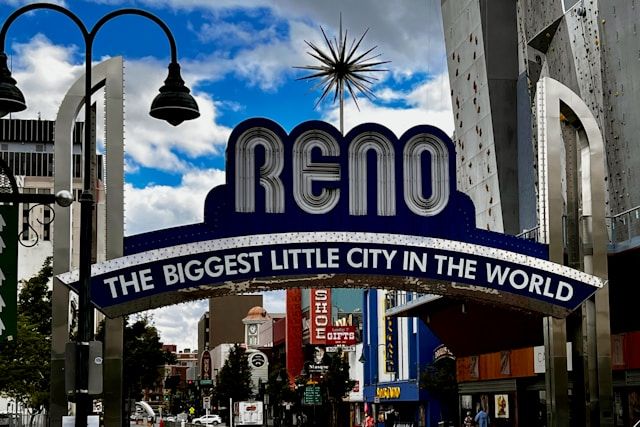
The headline is that downtown finishes last. Every casino, the arch, the events that put Reno on a map, and 89501 still pays the lowest median in the city, roughly half of what 89521 pays out in South Meadows and Damonte Ranch. That inverts what most older guides to this market will tell you, and it's worth understanding why before you read it as a stock tip.
Two things are doing it. The first is size: the top ZIP codes are where the bigger houses are, and 89521 and 89523 are subdivision country, whereas downtown's typical listing is a one-bedroom. The second is that occupancy barely moves across the city. From 32.2% in the northwest to 37.3% out by the airport, the whole spread is five points, so what the ranking really measures is nightly rate, and nightly rate mostly tracks how many people a house sleeps. Buy a three-bedroom in 89509 and you don't automatically get the 89509 median, you get closer to the three-bedroom median.
Then again, the pattern holds up for a real reason. A group driving in for a Tahoe weekend or a youth tournament wants a garage, a yard and four bedrooms, and the south end has those at prices the older core doesn't. Downtown also competes with actual hotel rooms at the exact price point a one-bedroom Airbnb sits in, which nowhere else in the city has to.
Look past the city line and the picture tilts further. The middle Sparks listing earned $36,135 with the top quarter starting at $49,587, beating every Reno ZIP code except 89521, and everything outside the Reno city limits taken together earned $35,681 against $29,540 inside them. Part of that is again size, since the typical listing outside the city has three bedrooms against two inside it. If you want the character-and-fit view of individual areas rather than the ranking, the best Reno neighborhoods for an Airbnb piece goes street by street, and the Reno market page shows where the market as a whole stands right now.
Two smaller pockets are worth naming before you go house-hunting, because both come with a different rulebook attached. Just under 4% of this market's listings sit in unincorporated Washoe County rather than in any city, and that's the one corner of the Truckee Meadows that runs a real short-term rental permit program. A smaller group sits further east in Fernley, whose middle listing earned $42,767, the strongest figure anywhere in this market outside 89521, although that row is thin enough that I wouldn't build a purchase around it, and Fernley isn't in Washoe County at all: it's Lyon County, with its own rules again. Neither pocket is big enough to move the market's averages, yet both are big enough to catch a buyer who assumes a Reno-area address means Reno-area rules.
Which Amenities Make the Most Money in Reno?
Wherever you land, the fit-out question comes next, and BNBCalc's amenity model answers it differently depending on how big the house is. Pooled across every size, as of September 2026, an EV charger is the one lift it publishes openly, at about 15%. That holds at two bedrooms, and at one bedroom it's closer to 11%.
Go bigger and the answer changes entirely. At three bedrooms, a hot tub carries about a 16% lift, and at four-plus bedrooms it's a pool at about 15%. So the single pooled number is wrong for the exact houses that earn the most here, which is a good argument for checking the figure at your own size before you spend anything.
The model also tracks lake access, a gym, a sauna, pets allowed, bicycles and internet in this market, and it finds a real signal on each of them, though it doesn't publish their lift values openly. I'm not going to invent numbers for them. What I'd take from the list is that it's a mountain-and-lake list rather than a casino list, and it lines up with where the money sits in the ZIP table. The model also leaves out the fixtures nearly every listing already has, on the reasoning that something universal tells you nothing about which listing is the strong one.
Cleaning fees are the piece most owners underthink. Fewer than half the listings here charge a cleaning fee, and where there is one it averages about $137, which works out to roughly $13 on the effective nightly rate and about $1,660 a year. At four-plus bedrooms it's about $212 a clean, roughly $20 on the nightly rate and about $2,470 a year. Since guests compare the total and not the nightly line, don't forget to test the fee against a higher nightly rate with no fee at all, because the two land very differently in search.
Is Airbnb Legal in Reno?
Yes, and no city permit stands between you and a listing, which is the part that surprises people.
I went looking for the ordinance and couldn't find one, because there isn't one. Reno's municipal code, current through Ordinance No. 6735 of February 25, 2026, carries no short-term rental permit, no registration and no short-term rental use type, and neither does the zoning code, while the codifier's own list of adopted-but-uncodified ordinances runs through No. 6747 of August 12, 2026 without any of them creating one. I checked both again on September 24, 2026.
Reno ends up out on its own because of a population threshold. Nevada's short-term rental statute for cities, NRS 268.09791 through 268.09799, covers exactly one category: "a city whose population is 25,000 or more in a county whose population is 700,000 or more." Reno clears the city half easily, yet Washoe County doesn't come close to the county half, at about 507,000 people on the Census Bureau's 2024 estimate, and Clark County is the only Nevada county over 700,000. So the framework that makes Las Vegas and its neighbors license nightly rentals, and that stops those cities banning them outright, never reaches Reno in the first place. Neither the licensing floor nor the protection that comes with it applies here.
What does apply is thinner than that, though you'll want all three parts of it.
A general business license, maybe. Reno licenses businesses under Titles 4 and 5 of its code, and the city's own licensing FAQ says you need one if you "rent or lease ... three or more residential dwelling units on one parcel of land in the city," which one house on Airbnb doesn't obviously do. That same FAQ says nothing about short-term rentals anywhere in it. The city did spend 2023 and 2024 drafting a rewrite of both titles that would've licensed short-term rentals directly, though it then announced the draft would be thrown out. Since the three-unit threshold doesn't cleanly answer the single-house case, call the Business License Division and get the answer for your own listing rather than guessing at it.
Zoning, which is the quieter risk. The code defines transient lodging as renting a room for less than 28 consecutive days, and it defines Household Living, the residential use category, as tenancy "arranged on a month-to-month or longer basis." Nothing in between those two is named. There's no short-term rental use to be permitted or refused, which cuts both ways: nobody can turn you down, and nobody can confirm you in writing either. Your HOA or your lease can still stop you regardless of what the city does, so read those first.
Lodging tax, which is the one obligation that's fully built. Reno, Sparks and Washoe County all handed collection to the Reno-Sparks Convention and Visitors Authority, and the rate depends on where the house sits: 13.0% across suburban Reno, and 13.5% downtown and within a one-mile radius of downtown. The guest pays it on top of your nightly rate, since the city's code has the operator add the tax to the room charge and collect it from the guest, so it never comes out of your own revenue. The authority still publishes an Airbnb host FAQ of its own, and it says Airbnb began collecting and passing on that tax for every booking on its platform in March 2016, and that a host whose rentals all come through Airbnb doesn't need a tax license, whereas anything booked away from Airbnb means you hold your own. Take that second part seriously, because the city's code makes it unlawful to rent transient lodging without the authority's license, and it counts every day you do as its own violation. The code also leaves the operator liable for the tax whether or not it ever got collected from the guest, which is the one route by which this does come out of your pocket. Stays of 28 consecutive days or more are exempt.
Enforcement follows from the gap. With no ordinance to enforce, a problem listing gets handled the way any residential nuisance does, through complaint-driven code enforcement, and the fines are set in the code: $100 for a first citation on a residential property, $250 for a second, and $500 for a third and every one after, with paying the fine excusing nothing. That's the same ladder your neighbor's overgrown yard is on.
Cross the city line and the rules change sharply. A small slice of this market sits in unincorporated Washoe County, and the county runs a real permit program there under Washoe County Code Chapter 110, Article 319, with tiered permits, building inspections and annual renewals, all of which the Washoe County short-term rental guide walks through. Sparks, despite holding about a sixth of the market, has no such program: its zoning code files bed and breakfasts and RV parks under a heading that mentions short-term rentals, but there's no permit, no registration and no short-term rental use type in it. The Sparks short-term rental guide covers what does apply there.
None of this is permanent, and I'd plan for a registration requirement to arrive rather than assume the gap holds, because a city this size with no rules is a standing agenda item. Keep clean records of your nights, rates and guest counts from day one, since that's what any future registration is going to ask you for. The full paperwork trail, the contacts and whatever has moved since is in BNBCalc's Reno short-term rental regulation guide.
How Does BNBCalc Track the Reno Airbnb Market?
That guide is where the paperwork side lives, whereas every figure in this article traces back to BNBCalc Markets. That's the research arm, and it exists so an investor can hold two short-term rental markets up against each other before choosing one. Every market there carries a month-by-month view of how occupancy and nightly rates move through the year, and that's the panel I'd sit with longest for Reno, because a December night and a July night sell for completely different reasons here. Look at the shape of the year before you set a base price.
How Do You Estimate Airbnb Revenue for a Reno Property?
City-wide medians can't price the house in front of you, so here's how I'd narrow it down. Start on the Reno market page for today's numbers and the seasonal pattern. Then check where Reno lands against the rest of Nevada on gross yield, and put the address itself into BNBCalc using the purchase price you'd pay, the rate you'd charge and the carrying costs you'd be signing for. The comps are yours to see and adjust, which matters more than usual in a market where the spread inside one bedroom count is this wide.
Three things are worth settling before you make an offer here.
First, find out which government the parcel answers to. A Reno mailing address doesn't settle it, and the difference between a Reno parcel, a Sparks parcel and an unincorporated Washoe County parcel is the difference between no permit at all and a tiered permit with inspections.
Second, work out which lodging-tax bracket the address falls in, because downtown and the mile around it sit at 13.5% while the rest of the city sits at 13.0%. It's the guest's half-point rather than yours, but it shows up in the total price a guest compares, and near the downtown boundary it's worth knowing which side you're on.
Third, be honest about occupancy. Nothing in this market fills much past the mid-thirties, and every ZIP code in the city lands within five points of every other one. If your model needs 55% to work, it isn't a Reno model.
What Reno really rewards is a willingness to ignore the obvious address. The casinos are the reason most people can name the city, and they're sitting in the ZIP code that earns the least, while the money is out in subdivisions that no visitor could name. That's a pattern worth checking in any market you look at, because the part of a city that's famous and the part that fills a calendar are rarely the same place.
Frequently Asked Questions
How Much Does an Airbnb Make in Reno, Nevada?
The middle listing inside Reno's city limits brought in $29,540 across the trailing twelve months, going by BNBCalc's September 2026 data, with the strongest quarter opening at $40,708. Bedroom count explains most of the gap, since the middle one-bedroom earned $19,541 and the middle four-plus-bedroom $50,191. Across the wider market, which includes Sparks and unincorporated Washoe County, the middle listing earned $30,582.
Do You Need a Permit to Run an Airbnb in Reno?
No. As of September 24, 2026 the City of Reno has no short-term rental permit, registration or license, and its zoning code contains no short-term rental use. The Nevada statute that requires other Nevada cities to license nightly rentals, NRS 268.09791, only reaches cities in counties of 700,000 or more, and Washoe County is well below that. A general city business license may still apply, since the city's own threshold is renting three or more dwelling units on one parcel, so ask the Business License Division about your specific case. If you take bookings anywhere other than Airbnb, you'll also need a transient lodging tax license from the Reno-Sparks Convention and Visitors Authority.
What Is the Lodging Tax on a Reno Short-Term Rental?
The transient lodging tax is 13.0% across suburban Reno and 13.5% in downtown Reno and within a one-mile radius of downtown, administered by the Reno-Sparks Convention and Visitors Authority for Reno, Sparks and Washoe County. Your guest is charged it on top of the nightly rate. The authority says Airbnb has collected and passed on the tax for bookings on its own platform since March 2016, so a host who books only through Airbnb doesn't need a separate tax license. Stays of 28 consecutive days or more are exempt.
When Is the Busiest Month for Reno Airbnbs?
July, at 50.6% occupancy in 2026, with August close behind at 50.4%. November 2025 was the quietest at 37.7%. Nightly rates peak in August at $294 and bottom out in October at $215. December is the outlier worth pricing for, pairing 38.0% occupancy with a $281 average rate as ski and holiday demand arrives, so a quiet December is not a cheap one.
Which Reno ZIP Codes Earn the Most on Airbnb?
89521, covering South Meadows and Damonte Ranch, leads the city at a $47,810 median with the top quarter starting at $58,944. Northwest Reno's 89523 follows at $35,701, then 89503 in the old northwest at $31,667. Downtown's 89501 finishes last at $23,750. Much of that ordering is house size rather than location, since occupancy across the city spans just five points, from 32.2% to 37.3%.
Which Amenities Add the Most Revenue to a Reno Airbnb?
That turns on how big the house is, which is the part most owners miss. Pooled across every bedroom count, BNBCalc's September 2026 amenity model publishes an EV charger at about 15%, and that figure holds at two bedrooms while a one-bedroom sees closer to 11%. Move up to three bedrooms and a hot tub takes over, at about 16%, while four-plus bedrooms answer to a pool at about 15%. Lake access, a gym, a sauna, pets allowed, bicycles and internet also register a signal in this market, without published values.
Is Sparks Different From Reno for Short-Term Rentals?
On the numbers, Sparks is stronger: its middle listing earned $36,135 against $29,540 inside Reno, and its top quarter starts at $49,587. On the rules, the two cities are alike, because Sparks has no short-term rental permit or registration either, and its zoning code defines no short-term rental use. Unincorporated Washoe County is the jurisdiction in this market that does run a permit program, under Washoe County Code Chapter 110, Article 319.
Airbnb Tax Deduction Calculator
Paying too much in taxes? We have the perfect solution. Simulate an Airbnb home purchase below.
Purchase Price
$450K
Structure Value
70%
Apply Trump's Tax Cut (Bonus Depreciation)
Depreciation
$117,695
Interest
$21,600
Tax
$6,750
Year 1 Deduction
$146,045
Want to claim this deduction? Get a free cost segregation benefit analysis from CSA Partners — no obligation.
Get Full Analysis