Analyse instantanée gratuite
Révélez les revenus Airbnb pour n'importe quelle adresse ou ville
Do you own a place in Athlone, County Westmeath (or across the river in the County Roscommon half of the town) and you're weighing whether to put it on Airbnb or Vrbo? Well, the good news is that nobody has banned short-term letting here, and Athlone is a genuine tourist town rather than a marginal market. The county's development plan makes it the principal visitor-services centre and the hub for Fáilte Ireland's Hidden Heartlands, so there's real demand to work with. The harder news is that the law underneath you was rewritten on 1 March 2026, and it moved in a direction that makes most of the older advice about Athlone out of date.
What changed is the trigger, because letting a house or part of a house on a short-term basis used to count as a material change of use only inside a rent pressure zone. Athlone wasn't in one until the countrywide designation of mid-2025, and now rent pressure zones don't exist at all, so section 30 of the Residential Tenancies (Miscellaneous Provisions) Act 2026 rewrote the rule and dropped the geography out of it. Short-term letting is a material change of use everywhere in the State now, the threshold moved from 14 days up to 21 consecutive nights, and the draft national policy would presume against granting permission at all in any settlement over 20,000 people. Athlone counted 22,869 at the 2022 census, which puts it firmly on the wrong side of that line.
There's a second wrinkle here that no other Irish town has in quite the same way, and you'll want to sort it before anything else. The River Shannon runs straight through Athlone, and it's also the county boundary, so the town is split between two separate planning authorities. So let's walk through what that actually means: which council rules your address, what a whole-property application costs, the exemption route that may or may not still work, the tax Revenue expects, how enforcement runs, and who to ring when the two councils give you different answers. Everything below comes from the Irish Statute Book, both councils' own pages, the CSO, Revenue and Fáilte Ireland, checked in July 2026, and where a rule is still moving I've said so. Assuming you're weighing Athlone against somewhere a whole unit can be let without a fight, run both through BNBCalc before you commit to anything.
What are Short-Term Rental (Airbnb, VRBO) Regulations in Athlone, Ireland?
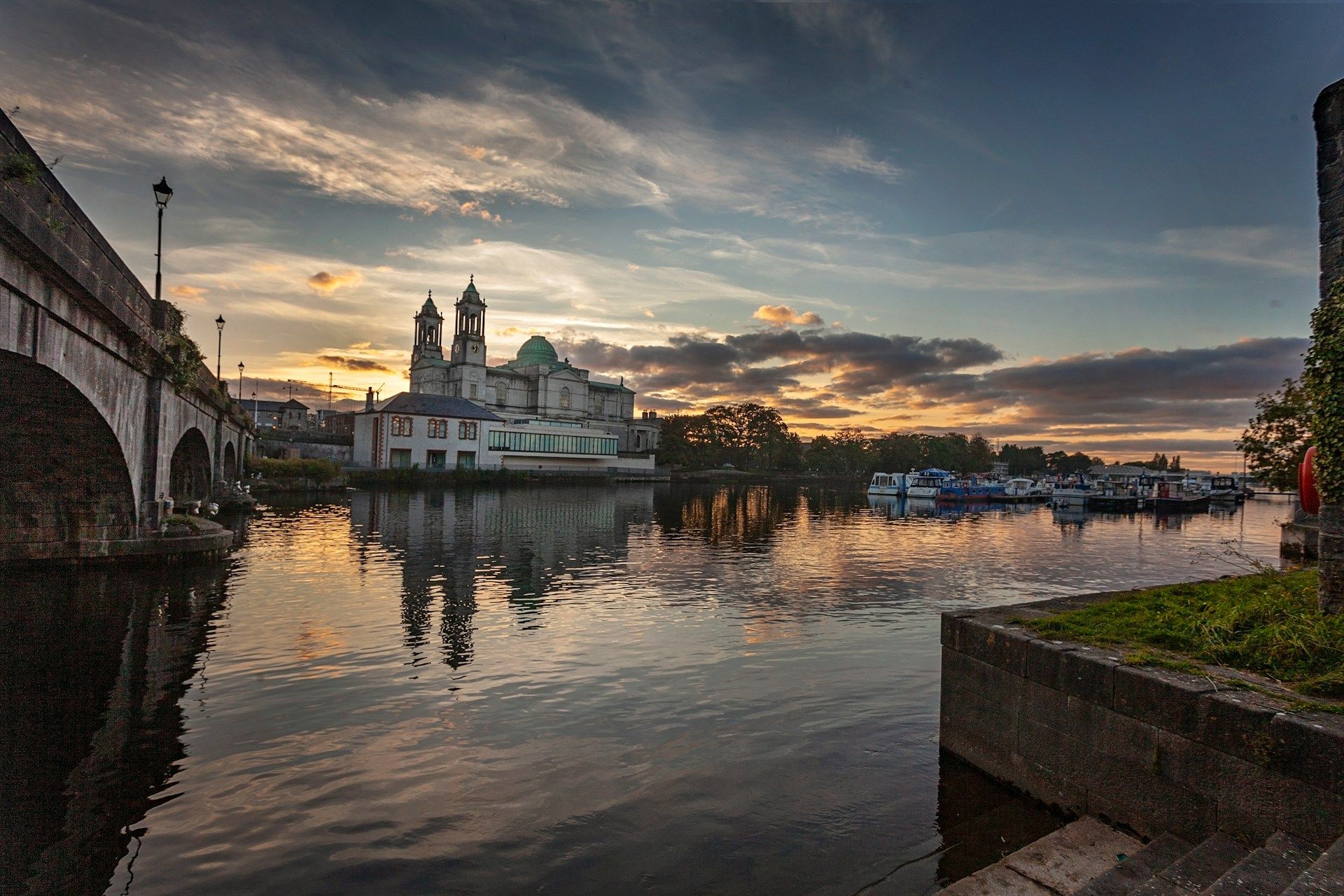
Since that split between two councils decides almost everything practical, start with the river. If your property sits on the east bank, the town-centre side including areas like Retreat, Bonavalley and Creggan, it's in County Westmeath and Westmeath County Council is your planning authority. If it's on the west bank, out towards Monksland, Bealnamulla and Summerhill, it's in County Roscommon and Roscommon County Council rules it instead. Athlone Town Council, which once ran the whole town, was abolished in the 2014 local-government reform, and a later boundary review left the county line down the Shannon exactly where it was. So there's no single "Athlone council" to apply to, and make sure you're talking to the right one, because an application lodged with the wrong authority is simply invalid.
Both councils apply the same national rule, though, so the split is about paperwork and phone numbers rather than about two different laws. That rule lives in section 3A of the Planning and Development Act 2000, and the 2026 substitution kept it short. In full, it reads, "The use of a house, part of a house or unit for short term letting purposes is a material change in the use of the house, part thereof or unit, as the case may be." A material change of use is development, and development needs permission unless something exempts it. The same section defines a short term letting as a letting "on a professional or non-professional basis" for "a period not exceeding 21 consecutive nights" for payment, and it catches a licence as well as a tenancy. That licence wording does more than it looks, since a guest booking through Airbnb holds a licence rather than a tenancy, which is exactly why the drafters put it in.
One thing you should know up front is that both council websites are behind the law as of July 2026. Westmeath's short-term letting page and Roscommon's short-term letting page both still describe the old rent-pressure-zone system and still give the old "not exceeding 14 days" definition, even though that framework was repealed on 1 March 2026. Neither page is wrong about the forms, but both are describing a world that no longer exists, so keep in mind that a page you read on either site may not reflect the 21-night rule you're actually bound by now.
Starting a Short-Term Rental Business in Athlone
Once you know which council owns your side of the river, the next question is which of three very different businesses you're actually starting, because the trigger sorts hosts into three groups that carry wildly different amounts of paperwork.
- Renting a room or two while you live there. Home-sharing in your principal private residence, with you in the house. This is the cheapest route by a distance, and it's the one most Athlone hosts will survive on.
- Letting your own home while you're away. Still your principal private residence, still capped, and still a notification rather than a full application.
- Letting a second property, or any unit you don't live in. This is the investor case, and in Athlone it's the one that now needs a grant of planning permission before you take a single booking.
That third case is where the town's population starts to matter against you. The Department of Enterprise, Tourism and Employment's June 2026 announcement of the draft National Planning Statement puts it plainly. For operators in a location with a population of over 20,000, it says, "there will be a presumption not to grant planning." Smaller settlements get the opposite treatment, a two-year window to become compliant and a presumption in favour, so long as the development doesn't create serious flooding, pollution or a traffic hazard. Athlone is over the line, and it's over it as a single settlement, which matters because the census counts both banks of the Shannon into one town of 22,869. A property in Monksland on the Roscommon side is still inside a 20,000-plus settlement even though its council is different, so you don't escape the presumption by being on the quieter bank.
Do keep in mind that the statement is still a draft. The Department of Housing published it on 17 June 2026 as proposed planning policy, and it has to clear a Strategic Environmental Assessment and an EU Services Directive notification before a final version goes back to Government, which the Department expects in the autumn. So a presumption against permission isn't the law in Athlone today, though it is the clear direction of travel, published by the department that sets planning policy, and it's the single thing to ask about before any money moves.
The local plans, for what it's worth, pull the other way. The Westmeath County Development Plan wants tourist beds in Athlone, since it names the town the county's principal visitor-services centre and backs its Cultural Quarter, and on the west bank the Roscommon side sits under the Monksland and Bellanamullia Local Area Plan. Neither of those overrides national policy, mind you, so the tension you'd be standing in the middle of is between county plans that want visitor accommodation and a national statement that wants houses. If the numbers stop working here, the nearest city worth comparing is an hour down the Shannon, and the Limerick short-term rental guide covers a market with the same national rules and the same over-20,000 argument.
Short-Term Rental Licensing Requirements in Athlone
That comparison only helps once you know what a "licence" even means here, and the honest answer is that there isn't one in the sense hosts from the United States or the UK expect. Neither Westmeath nor Roscommon issues a short-term rental permit, neither runs a local STR licence, and neither charges an annual hosting fee. What they issue instead is planning permission, and that's the only local consent that exists.
Planning Permission
For the investor case, the application is a change of use from residential to short-term letting or tourist accommodation, and you lodge it with the council for your side of the river. The fee is national, so it's the same in Westmeath and Roscommon: a change of use costs €80 or €3.60 per square metre of floor area, whichever is greater. You apply for retention permission instead when the letting has already been happening, and that one runs to €240 or €10.80 per square metre. Retention is three times the rate for the same building, so getting there first is worth real money. Apply before you let.
| Charge | Amount | Paid to |
|---|---|---|
| Change of use, planning permission | €80 or €3.60 per m², whichever is greater | your council (Westmeath or Roscommon) |
| Retention permission, same use | €240 or €10.80 per m², whichever is greater | your council (Westmeath or Roscommon) |
| Section 5 declaration | €80 | your council (Westmeath or Roscommon) |
| Exemption notification, Forms 15, 16 and 17 | no charge | your council (Westmeath or Roscommon) |
| Fáilte Ireland registration | not yet announced | Fáilte Ireland |
A straightforward application takes about eight weeks, according to Citizens Information, and longer once the council comes back asking for further information. A refusal goes on appeal to An Coimisiún Pleanála rather than back to the council, so budget for the possibility that a first answer isn't the final one.
Before you spend a four-figure sum finding out, there's a much cheaper question you can ask, and on the Westmeath side it's spelled out clearly. A Section 5 declaration is a formal ruling on whether what you're proposing needs permission at all. It costs €80, and Westmeath County Council says a decision issues within four weeks, with an appeal route if you disagree. That gets you a written answer with your own address on it, which is a far better thing to hand a solicitor or a lender than a general opinion. Roscommon operates the same Section 5 mechanism on its side. Eighty euro buys certainty, and given how much is unsettled right now, do consider it money well spent.
Notification and Registration
The home-sharing and 90-day routes skip planning permission, but they don't skip the council, because you still have to notify the planning authority to claim the exemption. S.I. No. 235 of 2019 inserted the exemption into the planning regulations and covered two things: home-sharing up to four bedrooms in your principal private residence with no more than four people per bedroom, and letting that whole residence while you're away for no more than 90 days a year. Both need written notice to your council plus Forms 15, 16 and 17 with statutory declarations, and registering for the exemption is free.
Here's where I have to be straight with you about the state of that exemption, though. The 2019 regulation exempts short-term letting "in a rent pressure zone" and takes the meaning of that phrase from the very subsection that was replaced on 1 March 2026, and no replacement regulation has been made since. Citizens Information still presents the exemption as live, and both Athlone councils still publish the old forms, yet the legal ground it stands on was pulled out from under it this year. So make sure you ring your planning office and get its position in writing before you rely on the exemption. Nobody but the council that rules your address can answer that cleanly.
Penalties for Non-Compliance
Letting without the consent you needed isn't a fee you settle later, because unauthorised development is a criminal matter under Part VIII of the Planning and Development Act 2000. A council issues a warning letter, then an enforcement notice, and ignoring that notice is an offence that goes to the District Court. Summary conviction carries a fine of up to €5,000 or up to six months' imprisonment or both, and conviction on indictment reaches €12,697,380.78 with up to two years, and a court injunction can order the use to stop on top of the fine. Now, nobody is going to jail over a spare room in Athlone, so read those numbers for what they are. They prove that this is planning law with teeth rather than a parking ticket, and be aware that it doesn't lapse when you sell the house.
Required Documents for Athlone Short-Term Rentals
Since the register and the planning consent are handled by bodies that don't talk to each other about your address, you'll still end up assembling two separate stacks of paper, and then a third if you go the exemption route.
For a change-of-use application, the stack is the ordinary planning one: the current official form for your council, a site location map and layout plans, floor plans of the accommodation as proposed, a newspaper notice in an approved paper, a copy of the site notice erected on the property, and the fee, which neither council will waive. An application that's missing a piece, or that uses an out-of-date form, is invalid, and an invalid application means starting again with a fresh newspaper notice. So don't rush the checklist to save a week, because a rejection costs you a month.
For the exemption route, the forms are prescribed in the schedule to the 2019 regulations, so their contents aren't up to the council. Form 15 is the start-of-year notification and asks for the address and Eircode, the planning authority's name, documentation confirming the property is your principal private residence, the owner's written consent where you aren't the owner, whether you're home-sharing or letting the whole house while away, and the dates and total days you intend to let. Form 16 goes in within two weeks of your ninetieth day, and Form 17 is the end-of-year return, due between 1 and 28 January. Each one travels with a statutory declaration that the house was your principal private residence during the lettings, which means a trip to a solicitor or a commissioner for oaths, so don't forget to build that into your January.
For Fáilte Ireland, registration is self-declared and lighter on documents but heavier on consequence. An individual host supplies name, address, email, phone, date of birth and PPSN, a company supplies its CRO number and legal representative, and everyone supplies the property address and Eircode, the type and size of the unit and its capacity. Then comes the legal declaration that the unit complies with planning, building and fire safety requirements. Nothing gets uploaded at that point, which sounds relaxed until you notice you're personally declaring the planning position of a property whose planning position, in Athlone in 2026, is the whole question.
Athlone Short-Term Rental Taxes
Assuming you clear the consent side and are able to start hosting, there's still tax to deal with, though this is the one part of the exercise where Ireland turns out simpler than most places you'll have read about.
There's no bed tax, no occupancy tax and no tourist levy in Athlone, and none anywhere in the State, so neither council collects anything per night and no platform collects anything per night on their behalf. Irish councils have lobbied for a visitor levy for years, yet none is in force. What you do owe is income tax, possibly VAT, and nothing else specific to lodging. That's the whole list.
| Charge | Rate | Collected by |
|---|---|---|
| Income tax on letting profit | your marginal rate, plus USC and PRSI | Revenue, self-assessed |
| VAT on the accommodation | 13.5%, once you cross the threshold | Revenue, remitted by you |
| VAT on Airbnb's service fee | 23% | Airbnb, charged to you |
| Local tourist or bed tax | none | not applicable |
Income Tax
The income tax point trips up almost every new host, because short-term letting income isn't rental income in Revenue's eyes. A guest holds a licence to occupy rather than a tenancy, so Revenue's tax and duty manual on the taxation of rents puts the income under Case I as trading income where you're running it as a business, or Case IV as miscellaneous income where it's occasional, and never under Case V. That means a Form 11 through ROS if you're self-assessed, or a Form 12 through myAccount if you're a PAYE taxpayer with a side income. The distinction isn't cosmetic, since the two cases treat losses and expenses differently.
Rent-a-room relief doesn't rescue you either, and it's the single most common thing hosts get wrong. That €14,000 exemption needs a letting of at least 28 consecutive days, and Revenue's manual on the relief puts it "beyond doubt that the relief does not apply to short term tourist accommodation based on home sharing, including where it is provided through online booking sites". So sharing a room in your Athlone house through Airbnb is taxable from the first euro.
Universal Social Charge (USC)
Because the profit is income rather than rental income in its own box, it joins your total income for the year, and the Universal Social Charge applies on the ordinary bands like any other earnings. There's nothing short-term-let-specific to calculate, so just remember that USC rides on top of income tax rather than instead of it, which is why a rough "I'll pay 20%" tends to understate what you owe.
Pay Related Social Insurance (PRSI)
PRSI works the same way, and whether it bites depends on how Revenue classifies your hosting. Run it as a genuine trade under Case I and you're likely paying Class S self-employed PRSI on the profit; treat it as occasional Case IV income and the position can differ. Since that same classification drives your income tax too, settle it early rather than at filing.
Local Property Tax (LPT)
Local Property Tax is the one charge that doesn't change because you're letting, since it's an annual charge on the residential property itself regardless of what happens inside it. You keep paying it, and be aware that it isn't deductible against your letting profit. One open question I couldn't settle, and I'd rather flag it than guess. Once a dwelling gets change of use to tourist accommodation, it stops being purely residential on paper, and I found no primary source on how either council and Tailte Éireann then treat it for commercial rates. Ask your council before assuming the answer is nothing.
Possible Deductions and Write-Offs
Because the income is trading or miscellaneous income rather than rental income, the deductions follow the ordinary rules for whichever case it falls under, and the split between personal and letting use does most of the work. Costs incurred wholly and exclusively for the letting are the straightforward ones, so platform commission, cleaning, laundry, guest consumables, listing photography, an insurance uplift for short-term letting and repairs to the let part of the property all qualify. Shared costs are where the care goes, since heat, light, broadband, waste charges, insurance and mortgage interest on a house you also live in have to be apportioned between your own occupation and the letting.
A defensible apportionment runs on rooms and on days let rather than a round number you picked, so keep the booking calendar as evidence for the days part. VAT only becomes your problem above a threshold most single-property hosts never reach: guest and holiday accommodation sits at the reduced rate of 13.5% under Revenue's VAT manual whatever the length of stay, and registration only bites once turnover from services passes €42,500. One Athlone property is unlikely to get you there, though a small portfolio can. Watch out for the meals point if you serve breakfast, since catering moved to 9% from 1 July 2026 while accommodation stayed at 13.5%. And remember that Airbnb applies 23% Irish VAT to its own service fee and to nothing else, so it isn't collecting accommodation VAT for you.
Ireland-Wide Short-Term Rental Rules
Getting the deductions right is the part you can control. The framework above them changed twice inside eighteen months, so it's worth seeing the whole sequence rather than the snapshot you'd get from any single page.
Fáilte Ireland Registration
Sitting above both councils is the national register, which isn't open yet. The Department of Enterprise, Tourism and Employment confirmed on a page last updated 6 August 2026 that it comes into effect on 1 December 2026, with a legal obligation on every operator to register by 31 December 2026. Fáilte Ireland's register page adds that each unit gets its own number, which has to appear on every listing, that platforms may only list units carrying a valid number, and that renewal is annual. Fees haven't been announced, so don't let anyone quote you a figure. Note too what Fáilte Ireland says about planning, because it's the sentence that sends you straight back to your council: it has no role in planning and cannot advise on it.
Planning Permission in Rent Pressure Zones
The heading most council pages still use is a museum piece, and understanding why explains the whole mess. Short-term letting first became a material change of use in 2019, and back then it only counted inside a rent pressure zone. The Residential Tenancies (Amendment) Act 2025 then extended rent pressure zones countrywide from June 2025, which swept every Irish address, Athlone included, into the same planning rule as a side effect. Then on 1 March 2026 the machinery went into reverse. Rent pressure zones were repealed outright, and as the Residential Tenancies Board puts it, "From 1 March 2026, Rent Pressure Zones are replaced by a national system of rent control." Rather than let the planning rule collapse with its old trigger, the Oireachtas rewrote section 3A so it no longer mentions rent pressure zones at all. That's why a short-term letting in Athlone is a material change of use today for reasons that have nothing to do with rent control any more, and why "rent pressure zone" on a council page in 2026 is a phrase to distrust.
Reporting and Tax Obligations
Those obligations reach you the same way in Athlone as anywhere else in the State, since they're all national. You self-assess your letting profit with Revenue as Case I or Case IV income, you forget rent-a-room relief, and you keep records that stand up to apportionment. From 20 May 2026, Regulation (EU) 2024/1028 also layers in platform-level reporting: numbers in listings, a Single Digital Entry Point, and monthly data from the booking sites to the authorities, with Ireland completing implementation by 31 December 2026. So the days when a listing sat quietly outside anyone's dataset are ending, and that's true whichever bank of the Shannon you're on.
Other Considerations
Planning fees, the 21-night definition and the exemption regulations are all national, so they read the same in Westmeath and Roscommon. What differs is how each council applies them, and that part is genuinely local, which is the whole reason Athlone's two-authority split is worth the attention. For a sense of how the same national framework lands in very different towns, the Clonakilty guide covers a small West Cork tourist town where the draft policy would work in a host's favour rather than against them, and the Dungarvan guide covers a coastal town in Waterford under a single county council, which is the ordinary shape Athlone doesn't quite fit.
Does Athlone Strictly Enforce STR Rules?
Enforcement in Athlone is really a question of two enforcement teams rather than one, since Westmeath handles complaints on the east bank and Roscommon handles them on the west. Both run the same way, and both run reactively: enforcement here is complaint-led rather than proactive. Under Part VIII of the Planning and Development Act 2000 a council must issue a warning letter after a complaint, give you a window to respond, and then decide whether to serve an enforcement notice, which is the step that turns non-compliance into a criminal matter. So the practical risk isn't a random inspection, it's a neighbour who objects to the comings and goings next door.
That complaint-led model has a soft spot that's about to close, though, and December is when it does. Right now, an unauthorised let survives as long as nobody reports it, which is how plenty of whole-property listings have carried on quietly. Once the Fáilte Ireland register is live, platforms may only list units carrying a valid number, with penalties of up to 2% of turnover for a platform that gets it wrong, so enforcement stops depending on a complaint from somebody in Athlone and starts depending on whether a booking can be processed at all. That's a far harder thing to route around than a planning inspector, and it doesn't care which council your street belongs to.
There's a second reason to take Athlone's enforcement seriously, and it's specific to the town's geography. A host who assumes the "other" county's rules are looser is assuming wrong, since both councils enforce the same national law and both publish their planning registers in full. A neighbour can read the register for your address as easily as you can read it for theirs, so do check your own status before you assume you're invisible.
How to Start a Short-Term Rental Business in Athlone
Given how much of that is still moving, the order you do things in matters more than usual, because two of the early steps can tell you to stop before you've spent anything meaningful.
- Work out which council rules your address. East bank of the Shannon is Westmeath, west bank is Roscommon. Everything downstream, forms, fees, phone numbers and enforcement, follows from that one fact, so pin it down first.
- Work out which of the three shapes you're in. A room in the home you live in, your whole home while you're away, or a property you don't live in. Only the third puts you in the presumption-against category, and only the third needs a full planning application.
- Ring the planning office before you buy or renovate. Ask how your council is operating the article 6(5) exemption now that rent pressure zones are gone, and whether it'll accept Forms 15, 16 and 17 for your address. Get the answer by email so you have it in writing.
- Spend the €80 on a Section 5 declaration if the answer is at all ambiguous. A formal written ruling on your own address beats a year of assuming, and it's the document a lender or a buyer will want to see.
- Apply for change of use if you need permission, using your council's current form, with the newspaper notice, the site notice, plans and the fee. Budget about eight weeks, and never start letting first, because retention costs three times as much for the same building.
- Diarise the exemption paperwork if you go that route. Form 15 within four weeks of the start of the year and at least two weeks before your first letting, Form 16 within two weeks of your ninetieth day, and Form 17 between 1 and 28 January.
- Sort tax before your first guest. Register for self-assessment, settle whether you're Case I or Case IV, forget rent-a-room relief, and keep the booking calendar for the apportionment.
- Register with Fáilte Ireland between 1 and 31 December 2026 and put the number on every listing. The declaration you sign is about planning compliance, so don't sign it until step 3 or step 5 is genuinely resolved.
- Re-check the National Planning Statement in the autumn, because the final version decides whether a new whole-property permission in Athlone is realistic at all.
Who to Contact in Athlone about Short-Term Rental Regulations and Zoning?
Step one on that list, working out which council owns your address, is also the one that decides who picks up the phone, so here are both.
If your property is on the Westmeath (east) side
Planning consent, exemptions, zoning and enforcement on the town-centre side all belong to Westmeath County Council.
- Headquarters: Áras an Chontae, Mount Street, Mullingar, Co. Westmeath, N91 FH4N
- Athlone office: Athlone Civic Centre, Church Street, Athlone, N37 P2T5
- Phone: 044-9332000
- Planning email: [email protected]
- Section 5 declarations: the Section 5 page carries the form and the €80 fee, with a decision inside four weeks
If your property is on the Roscommon (west) side
Monksland, Bealnamulla and the rest of the west bank fall to Roscommon County Council instead.
- Headquarters: Áras an Chontae, Roscommon, Co. Roscommon, F42 VR98
- Athlone area office: Monksland, Athlone, Co. Roscommon, N37 W5P9, on 090 6492161
- Main phone: 090 6637100
- Planning email: [email protected], which is where Forms 15, 16 and 17 go
- Public counter hours: Monday to Friday, 9:30 a.m. to 1:00 p.m. and 2:00 p.m. to 3:30 p.m.
For the national pieces, the same two bodies serve both banks. Registration questions belong to Fáilte Ireland, which publishes updates on its short-term letting register page, though don't ask them about planning, since they say plainly they have no role in it. Tax questions go to Revenue, through myAccount for a Form 12 or ROS for a Form 11, with the classification guidance sitting in tax and duty manual 04-01-20. Appeals against a refusal go to An Coimisiún Pleanála rather than back to the council, and the clock starts from the date of the decision.
If you want to see how the numbers behind all this look before you commit, the Ireland short-term rental market data is the place to start, since a spare-room home-share and a whole-property investment let are genuinely different businesses and the returns rarely resemble each other.
Frequently Asked Questions
Can you legally run an Airbnb in Athlone, Ireland in 2026?
Yes, but a whole-property listing needs planning permission first. Since 1 March 2026, section 3A of the Planning and Development Act 2000 treats any letting of 21 consecutive nights or fewer as a material change of use everywhere in Ireland, so a second property let short-term in Athlone needs a grant of change of use. Which council you apply to depends on which bank of the River Shannon the property sits on, Westmeath on the east or Roscommon on the west. Sharing a room in the home you actually live in is the lighter route, subject to a notification rather than an application.
Which council regulates short-term rentals in Athlone?
Both, because Athlone is split by the River Shannon, which is also the county boundary. Property on the east bank, including the town centre, is in County Westmeath and regulated by Westmeath County Council. Property on the west bank, out towards Monksland and Bealnamulla, is in County Roscommon and regulated by Roscommon County Council. The two apply the same national planning law, so the practical difference is which office you lodge forms with and which enforcement team handles a complaint. An application sent to the wrong council is invalid.
Do you need planning permission for a short-term let in Athlone?
For a property you don't live in, yes. Change of use from residential to short-term letting costs €80 or €3.60 per square metre, whichever is greater, and takes roughly eight weeks. Retention permission after the fact costs €240 or €10.80 per square metre, three times as much. A Section 5 declaration for €80 gets you a formal written ruling from your council on whether your specific proposal needs permission at all, usually within four weeks. Home-sharing a room in your own residence is exempt, subject to a free notification.
Is there a tourist tax or bed tax on short-term rentals in Athlone?
No. Ireland has no national tourist tax, no occupancy tax and no bed tax, and neither Westmeath nor Roscommon County Council charges a local levy on overnight stays. What you owe is income tax on the profit, self-assessed through Revenue as trading income or miscellaneous income rather than rental income, plus USC and PRSI, plus VAT at 13.5% on the accommodation once turnover from services passes €42,500. Airbnb charges 23% Irish VAT on its own service fee, and remits none of your tax for you.
Does the 90-day home-sharing exemption still apply in Athlone?
Unclear as of July 2026, so treat it as a phone call rather than an assumption. S.I. No. 235 of 2019 exempts home-sharing and 90 days of letting your own home while away, but it frames both as letting "in a rent pressure zone", and those were abolished on 1 March 2026 with no replacement regulation made. Both Athlone councils still publish the old forms and the old wording, which is why you should get your own council's position in writing before relying on it.
Whatever the final planning statement says this autumn, the lesson holds anywhere the rules are mid-rewrite and the map has two councils on it. Written consent on your own address, from the office that actually rules it, costs far less to get than to argue about later, and it beats any number of confident opinions about which side of the river the easier answer lives on.
Last verified: July 2026. Every ordinance, tax rate, state law, and contact detail in this guide links to or comes from its official source.
Airbnb Tax Deduction Calculator
Paying too much in taxes? We have the perfect solution. Simulate an Airbnb home purchase below.
Purchase Price
$450K
Structure Value
70%
Apply Trump's Tax Cut (Bonus Depreciation)
Depreciation
$117,695
Interest
$21,600
Tax
$6,750
Year 1 Deduction
$146,045
Want to claim this deduction? Get a free cost segregation benefit analysis from CSA Partners — no obligation.
Get Full Analysis